
Jerusalem — The Holy City
Click the title to view map
Introduction
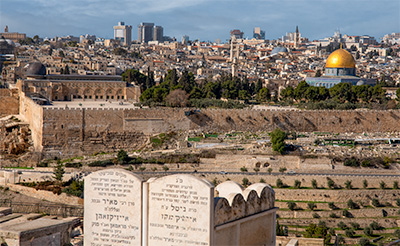
Few places have shaped biblical history more profoundly than Jerusalem. Situated high in the Judean Mountains, the city became the political and spiritual center of ancient Israel after King David captured the Jebusite stronghold and established it as his capital. Solomon later built the First Temple on Mount Moriah, making Jerusalem the focal point of Israelite worship for centuries.
Jerusalem witnessed many of the Bible’s defining events. Prophets preached within its walls, kings ruled from its palaces, and pilgrims traveled throughout the land to celebrate the great festivals at the temple. After the Babylonian destruction in 586 BC, the city was rebuilt during the Persian period, and Herod the Great later transformed the Second Temple into one of the most magnificent religious complexes of the ancient world.
For Christians, Jerusalem is inseparably connected with the final week of Jesus Christ’s mortal ministry. Here He taught in the temple, celebrated the Last Supper, suffered in Gethsemane, was crucified, buried, and rose again. The city also became the birthplace of the Christian Church on the Day of Pentecost.
Today’s Jerusalem preserves evidence of more than four thousand years of continuous history. Visitors encounter Canaanite fortifications, Israelite Jerusalem, the grandeur of the Second Temple period, and the churches, mosques, fortifications, and monuments left by later civilizations. Few cities in the world offer such a remarkable archaeological and religious heritage, as Jerusalem, the Holy City.
Jerusalem Slide and Gallery Index
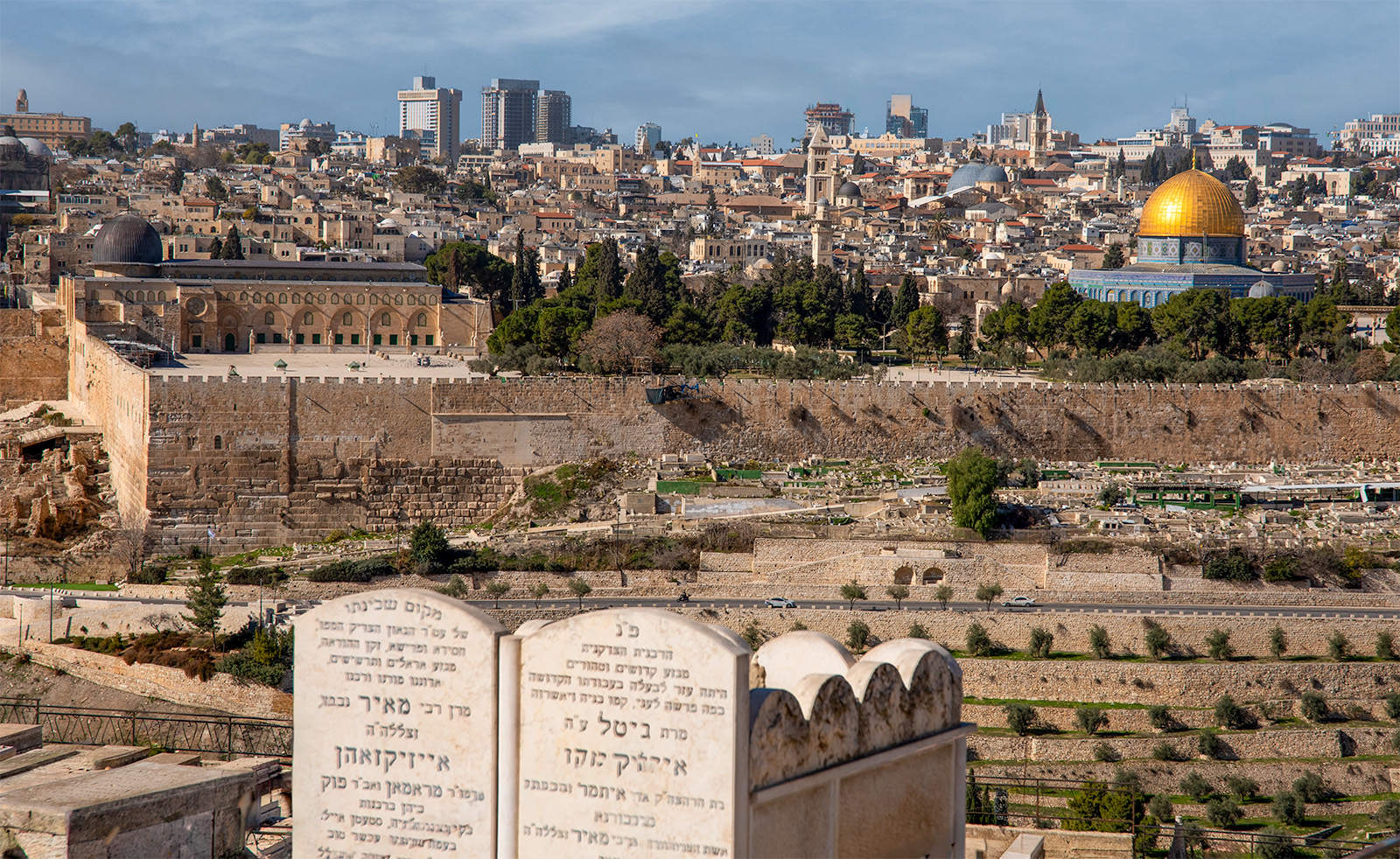
The Temple Mount dominates this view of Jerusalem. The gold-covered Dome of the Rock, completed in AD 691, is an Islamic shrine built over the rock traditionally associated with Abraham’s sacrifice of Isaac and the site of the Jewish temples. Beside it stands the Al-Aqsa Mosque, one of Islam’s holiest places, rebuilt several times since the early eighth century. Together they form the Haram al-Sharif, or Noble Sanctuary.
In the foreground is the ancient Jewish cemetery on the Mount of Olives. Used for more than 3,000 years, it is the oldest continuously used Jewish cemetery in the world. Many Jews have chosen to be buried here because of the traditional belief that the resurrection will begin on the Mount of Olives when the Messiah comes (Zech. 14:4). Today, more than 150,000 graves cover the hillside overlooking Jerusalem.
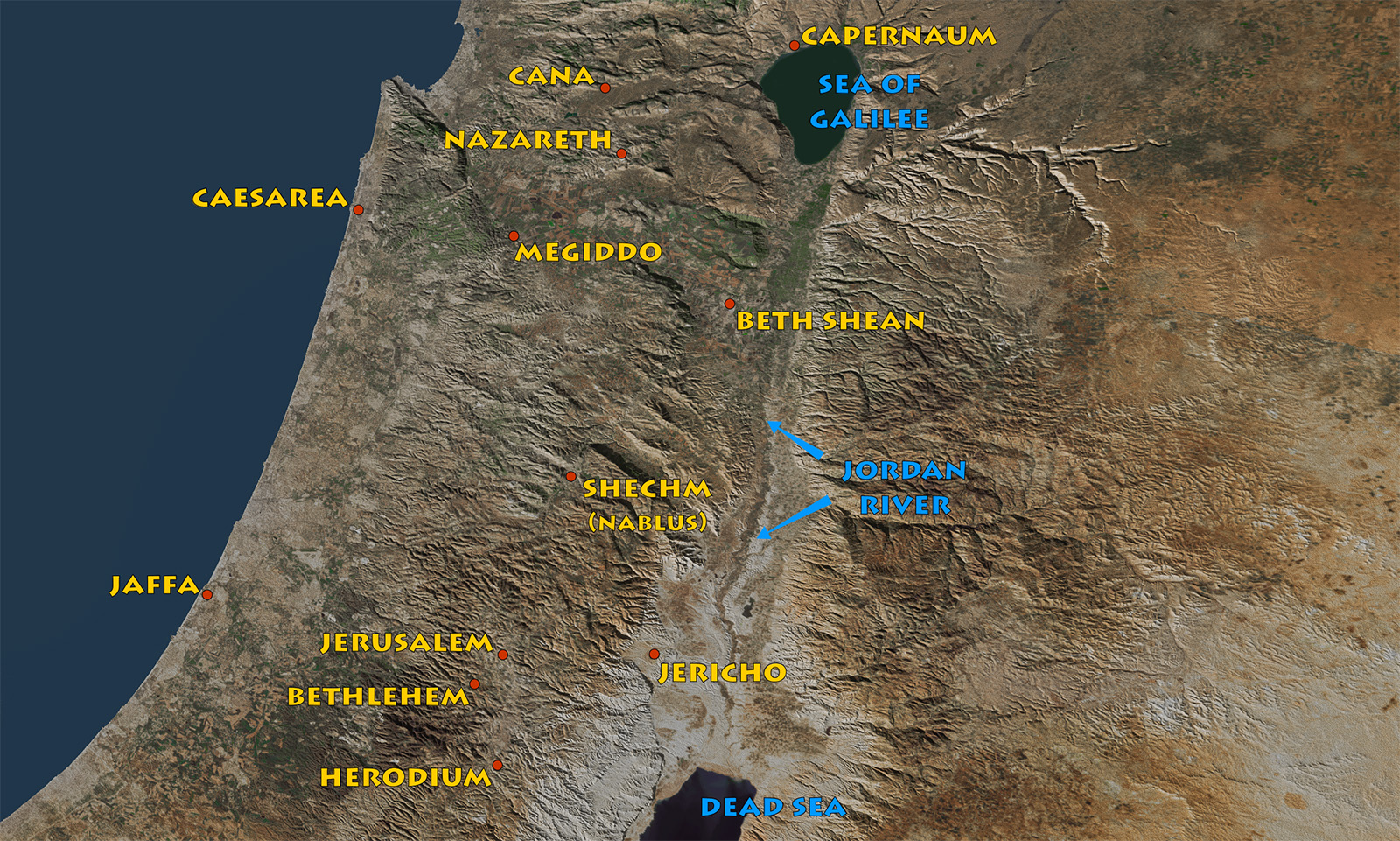
Major Events at Jerusalem
- Melchizedek, king of Salem, blesses Abraham — Gen. 14:18–20
- David captures Jerusalem and makes it the capital of Israel — 2 Sam. 5:6–10
- Solomon builds the First Temple (c. 957 BC) — 1 Kgs. 6–8
- The Assyrian army fails to capture Jerusalem during Hezekiah’s reign (701 BC) — 2 Kgs. 18–19; Isa. 36–37
- Babylon destroys Jerusalem and Solomon’s Temple (586 BC) — 2 Kgs. 25; 2 Chron. 36:17–21
- Jewish exiles return from Babylon and rebuild the Second Temple (dedicated 516 BC) — Ezra 1–6
- Nehemiah rebuilds Jerusalem’s walls — Neh. 2–6
- Herod the Great enlarges the Temple Mount and renovates the Second Temple (begun 20–19 BC)
- Jesus is presented at the temple as an infant — Luke 2:22–38
- At age twelve, Jesus teaches in the temple — Luke 2:41–52
- Jesus cleanses the temple — Matt. 21:12–17; Mark 11:15–19; Luke 19:45–48; John 2:13–22)
- Jesus teaches daily in the temple during His final week — Matt. 21–25; Mark 11–13; Luke 20–21
- Jesus enters Jerusalem in triumph — Matt. 21:1–11; Mark 11:1–11; Luke 19:28–44; John 12:12–19
- The Last Supper is observed in Jerusalem — Matt. 26:17–30; Mark 14:12–26; Luke 22:7–38
- Jesus prays in Gethsemane and is arrested — Matt. 26:36–56; Mark 14:32–52; Luke 22:39–53; John 18:1–12
- Jesus is tried, crucified, buried, and resurrected — Matt. 26–28; Mark 14–16; Luke 22–24; John 18–20
- The Holy Spirit is poured out on the Day of Pentecost — Acts 2
- Stephen becomes the first Christian martyr — Acts 6:8–7:60
- The Jerusalem Council meets — Acts 15
- Romans destroy Jerusalem and the Second Temple (AD 70)
- Hadrian rebuilds Jerusalem as Aelia Capitolina (AD 132–135)
- Constantine builds the Church of the Holy Sepulchre (dedicated AD 335)
- Muslims capture Jerusalem (AD 638)
- The Dome of the Rock is completed (AD 691)
- Crusaders capture Jerusalem (AD 1099)
- Saladin recaptures Jerusalem (AD 1187)
- Suleiman the Magnificent rebuilds Jerusalem’s city walls (AD 1537–1541)
- Jerusalem comes under Israeli control during the Six-Day War (1967)