Scroll To Top
Scroll To Top

Jerusalem — Via Dolorosa Photo Gallery

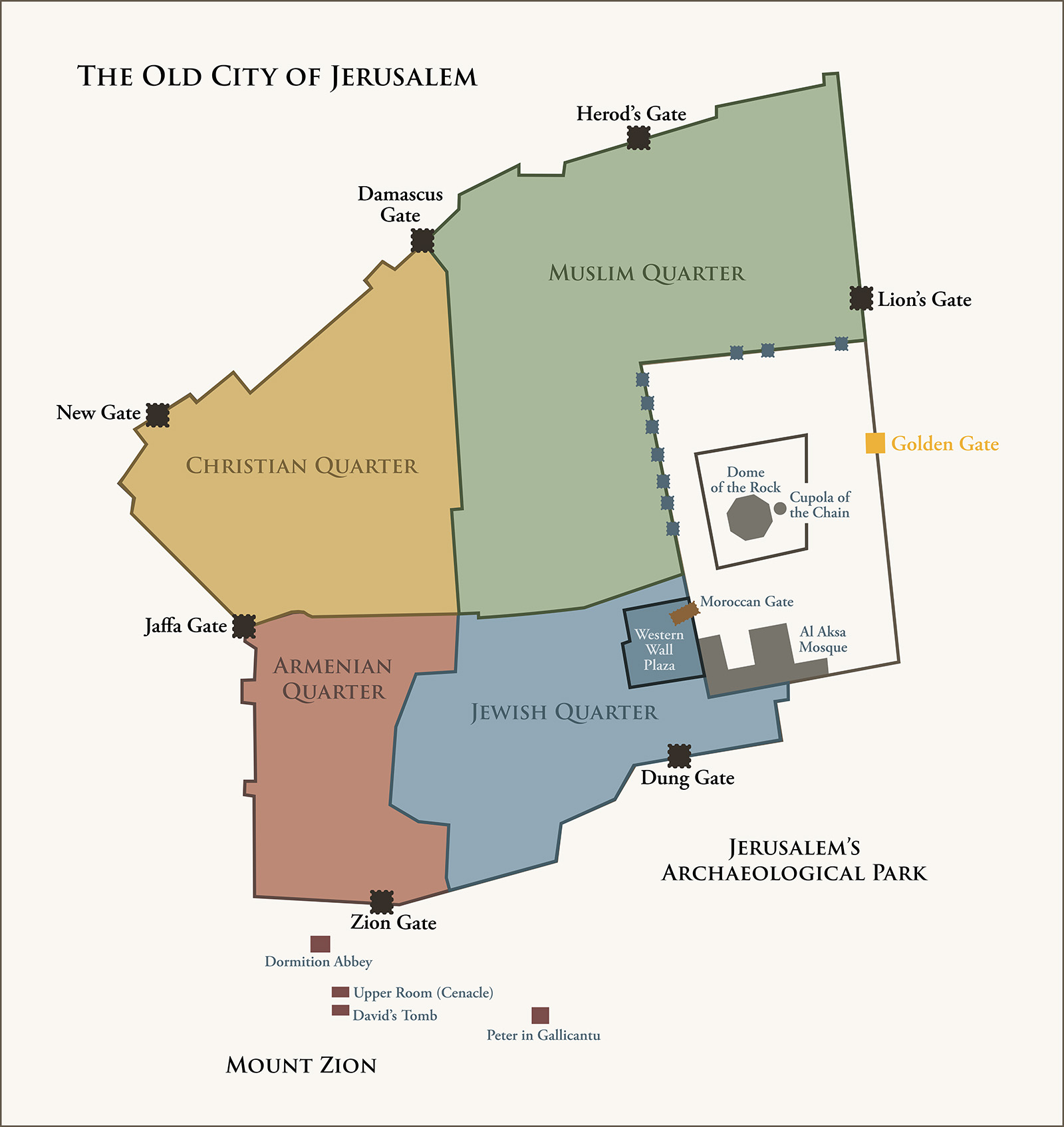
Click the title to view map


Jerusalem Overview

Introduction

Church of the Holy Sepulchre
Church of the Holy Sepulcher

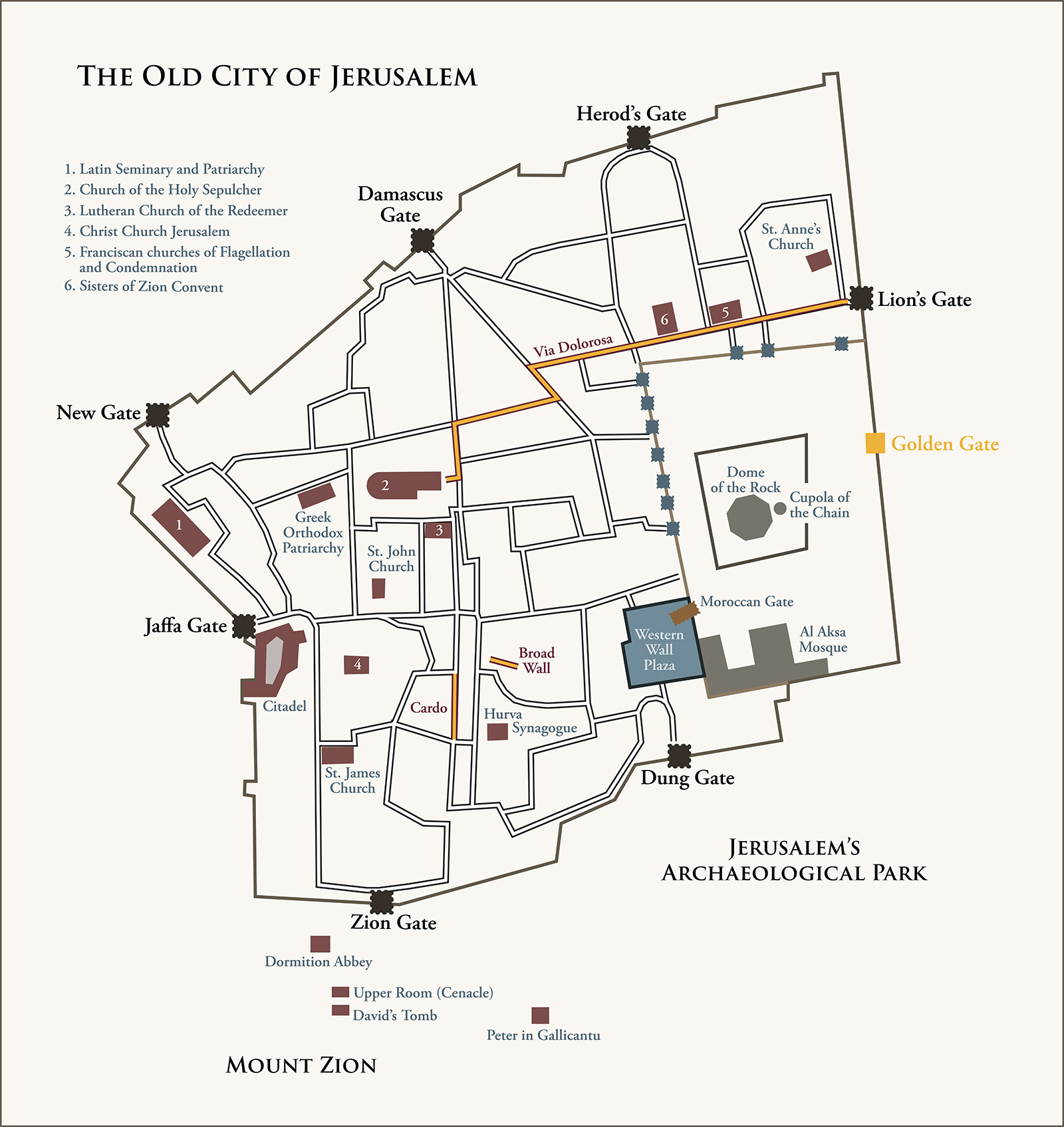
The Via Dolorosa (“Way of Suffering”) follows the traditional route Jesus walked from His trial before Pontius Pilate to His crucifixion at Golgotha and burial in the nearby tomb. For centuries, Christian pilgrims have retraced these final steps through the narrow streets of Jerusalem's Old City, pausing at the Stations of the Cross to reflect on the Savior's suffering and sacrifice. Although the precise route has changed over time as the city evolved, the Via Dolorosa remains one of Christianity’s most sacred pilgrimage paths. This gallery explores the principal sites along the route, their history, and the events associated with the final hours of Jesus’s mortal ministry.

Slide Presentation Major Events

Click the photo to hide or show the overlay

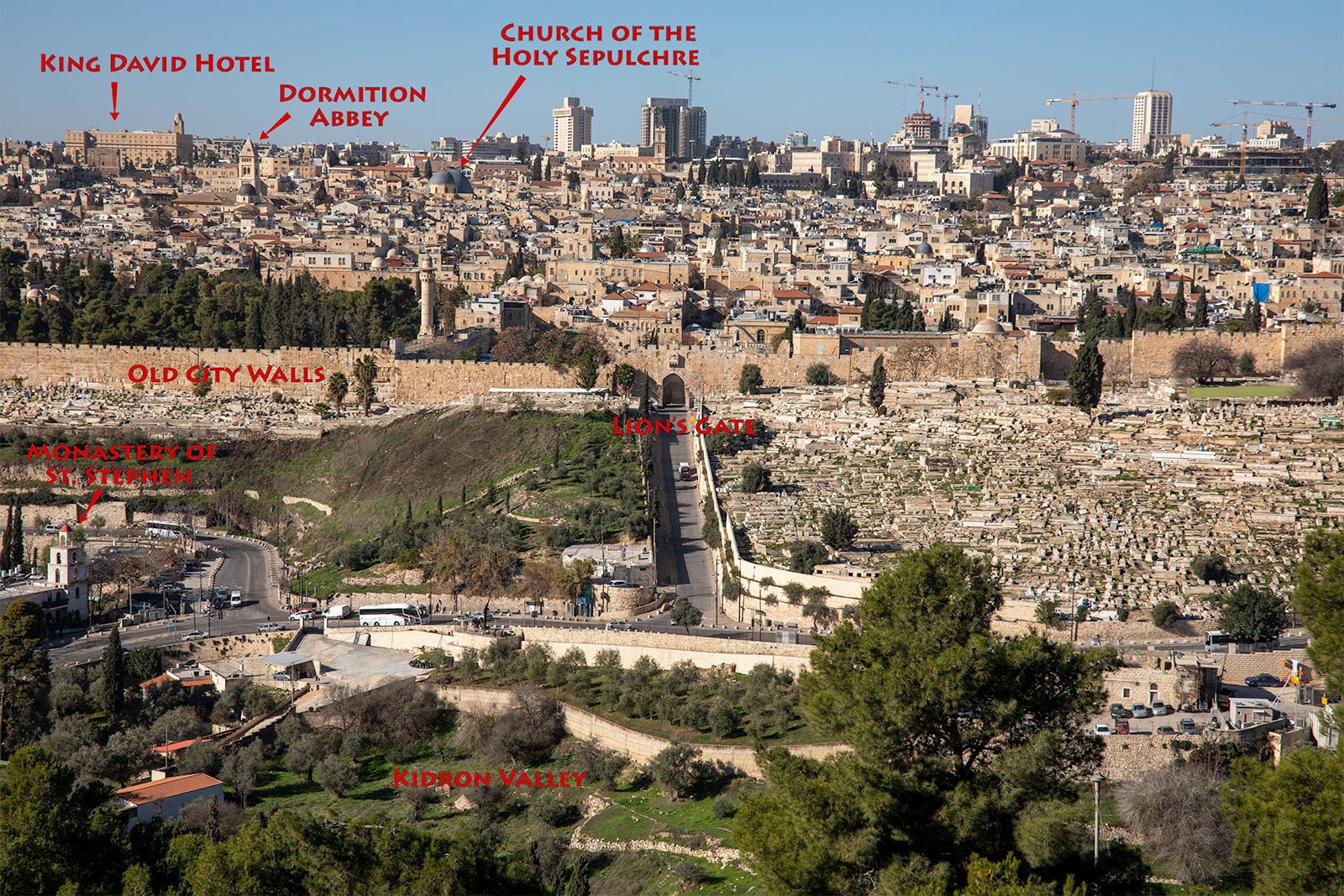
Lion's Gate - Jerusalem

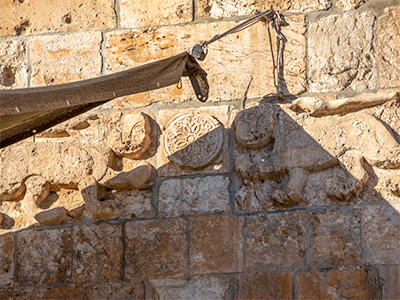
The present gate was constructed in AD 1538–1539 during the reign of Suleiman the Magnificent as part of Jerusalem’s Ottoman walls. The carved animals above the entrance were probably reused from an earlier Mamluk structure or intentionally incorporated into the new gate. Although they were likely intended to represent leopards—the official emblem of the Mamluk sultan Baybars—they came to be identified as lions, giving the gate its modern English name.

The gate is also known by several other names. Christians often call it St. Stephen’s Gate because of its traditional association with the martyrdom of Saint Stephen, although most scholars believe his execution occurred elsewhere. It is sometimes called the Sheep Gate because of its proximity to the traditional location of the biblical Sheep Gate mentioned in John 5. Its Arabic name, Bab al-Asbat ("Gate of the Tribes"), refers to the Tribes of Israel.

Lion's Gate - Jerusalem

Although known today as Lion’s Gate, the carved animals above the entrance were probably intended to represent leopards, the official emblem of the Mamluk sultan Baybars. Like a modern logo or national seal, the emblem identified the ruler responsible for the structure. Over the centuries, the stylized leopards came to be identified as lions, giving the gate the name by which it is now universally known.

Church of the Holy Sepulchre

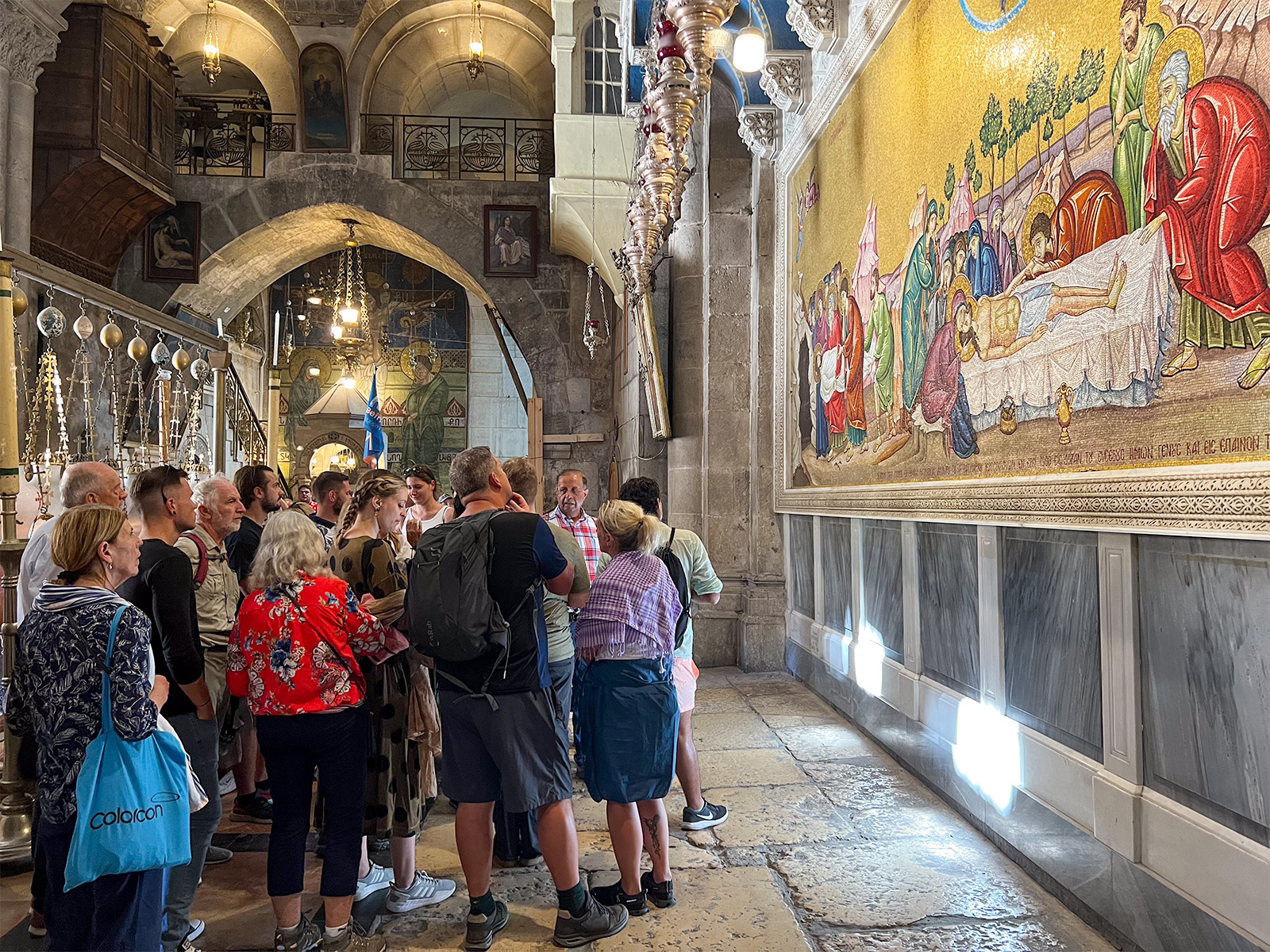
Pilgrims gather beside the Stone of Anointing just inside the entrance to the Church of the Holy Sepulcher. According to Christian tradition, this marks the place where Jesus’s body was prepared for burial after His crucifixion. The large mosaic on the wall illustrates Joseph of Arimathea and Nicodemus anointing the Savior’s body with spices before it was wrapped in linen and placed in the nearby tomb (John 19:38–40). Today, visitors from around the world pause here to pray, reflect, and honor the events commemorated within Christianity's holiest church.
Lion's Gate - Jerusalem

Detail of the animal carvings on the right side of Lion’s Gate. Although traditionally identified as lions, the figures were probably intended to represent leopards, the heraldic emblem of the Mamluk sultan Baybars, who rebuilt the gate in the thirteenth century. Over time, the emblem came to be associated with lions, giving the gate its modern name.

St. Ann's Church

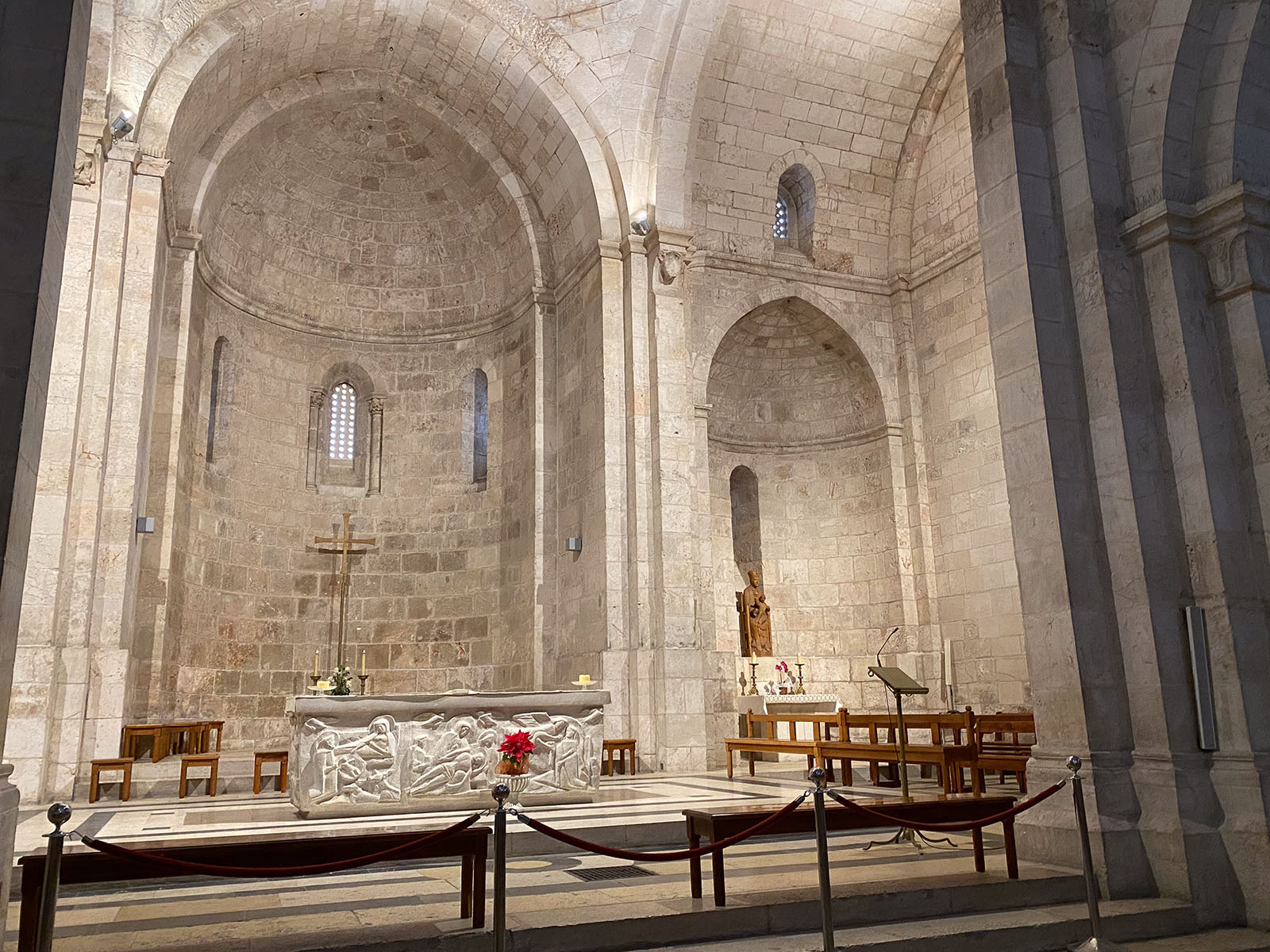
Built by the Crusaders about AD 1140, the Church of St. Ann is one of Jerusalem’s best-preserved medieval churches. Christian tradition identifies this area as the home of Joachim and Anne, the parents of Mary, and the place where Mary was born.

St. Ann's Church

The church’s simple Romanesque architecture creates remarkable natural acoustics, making it a favorite place for visiting choirs. Its quiet interior invites reflection near the traditional site associated with the birth of Mary.

St. Ann's Church

This monument honors Cardinal Charles Lavigerie (1825–1892), founder of the White Fathers (Missionaries of Africa). Since 1878, the White Fathers have cared for St. Ann’s Church, preserving one of Jerusalem's finest Crusader churches and welcoming pilgrims from around the world.

The peaceful gardens surrounding the Church provide a welcome contrast to the busy streets outside the Old City. Shaded walkways and flowering beds create a tranquil setting beside the nearby Pool of Bethesda.

Pool of Bethesda

The ruins of the Pool of Bethesda preserve the remains of one of Jerusalem’s most famous biblical sites. According to John 5, Jesus healed a man here who had been unable to walk for thirty-eight years. Excavations have uncovered pools, reservoirs, and later Roman and Byzantine structures spanning nearly a thousand years of history.

Pool of Bethesda

The Pool of Bethesda originally consisted of two large reservoirs separated by a central dividing wall. The northern pool was constructed during the First Temple period (c. 957–586 BC) to collect rainwater, while the southern pool was enlarged and modified during the Second Temple period (516 BC–AD 70). This two-pool configuration existed in the days of Jesus.

Pool of Bethesda

This chamber preserves part of the southern pool as it existed during the first century AD. It was here, according to the Gospel of John, that Jesus healed the man who had waited many years beside the waters, demonstrating that true healing came through Him rather than the pool itself.

Church of the Flagellation

The Church of the Flagellation marks the traditional site where Jesus was scourged before His crucifixion (Matt. 27:26). Built by the Franciscans in 1929 on the foundations of earlier Byzantine and Crusader churches, it forms part of the Franciscan Monastery of the Flagellation, which also includes the neighboring Church of the Condemnation, a museum, and the Studium Biblicum Franciscanum. Most pilgrims begin their walk along the Via Dolorosa by entering the gate to the monastery.

Church of the Flagellation

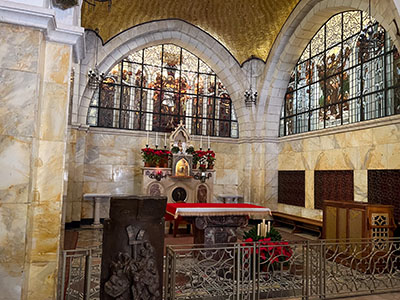
The interior of the Church of the Flagellation reflects the events traditionally commemorated here. Three stained-glass windows depict Pilate washing his hands, Jesus being scourged, and Barabbas being released. The church serves as a place of prayer and reflection for pilgrims beginning the Via Dolorosa, the traditional route from Jesus’s trial to His crucifixion.

Church of the Condemnation

Adjacent to the Church of the Flagellation, the Church of the Condemnation commemorates the traditional site where Pontius Pilate sentenced Jesus to death and presented Him to the crowd before leading Him away to be crucified (John 19:13–16). The present church, completed in 1904, preserves portions of an earlier medieval structure. Together, the two churches form the heart of the Franciscan Monastery of the Flagellation, one of the principal pilgrimage sites along the Via Dolorosa.

Ecce Homo Arch

The Ecce Homo Arch spans the Via Dolorosa near the Sisters of Zion Convent. Tradition associates it with Pontius Pilate’s words, “Behold the man” (Ecce Homo) as he presented Jesus to the crowd (John 19:5). Archaeological evidence, however, indicates the arch was built by Emperor Hadrian around AD 135 as part of a monumental gateway to the Roman forum of Aelia Capitolina, nearly a century after Jesus’s death. For this reason, most modern scholars conclude that Jesus’s trial took place not at the Antonia Fortress, but at Herod’s Palace near today’s Jaffa Gate. Even so, the Ecce Homo Arch remains an important landmark along the traditional Via Dolorosa.

Sisters of Zion Convent

Beneath the convent are extensive Roman flagstones once identified as the Lithostrotos (“stone pavement”) mentioned in John 19:13, where Jesus stood before Pontius Pilate. Archaeologists now date these pavements to the rebuilding of Jerusalem as Aelia Capitolina following the Bar Kokhba Revolt (AD 132–135), about a century after the crucifixion. While earlier pilgrims believed these stones belonged to the Antonia Fortress, most scholars today conclude they are part of the Roman forum constructed after Jerusalem’s destruction in AD 70.

Sisters of Zion Convent - Prayer Chapel

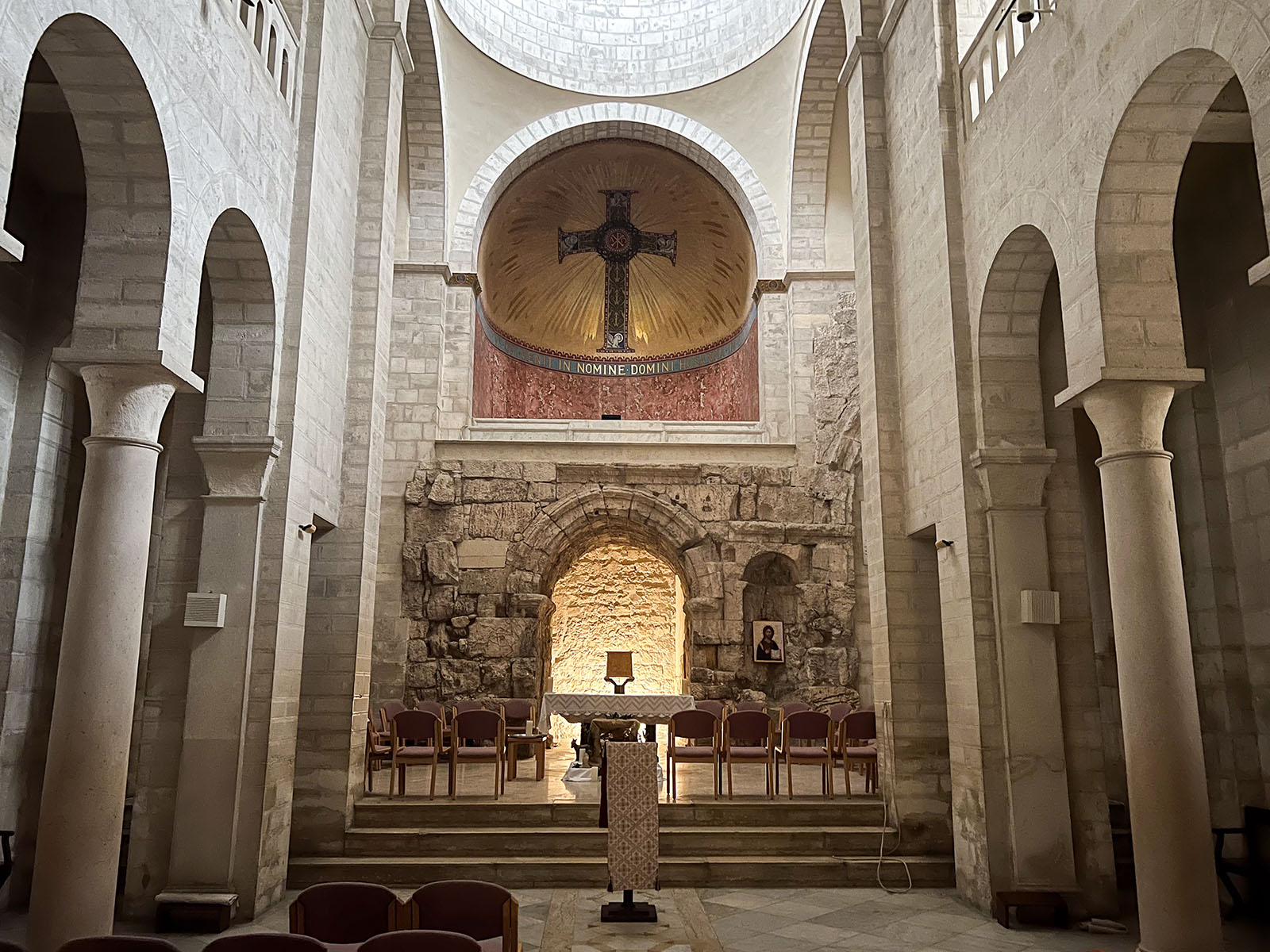
The Sisters of Zion Convent was founded in the nineteenth century above important archaeological remains associated with the traditional route of the Via Dolorosa. Beneath the chapel and surrounding buildings are remnants of ancient Jerusalem, including Roman pavements, cisterns, and portions of the city's later fortifications. The convent continues to welcome pilgrims while preserving one of the Old City’s most significant archaeological sites.

Sisters of Zion Convent

The entrance to the Sisters of Zion Convent (Notre Dame de Sion) is located along the Via Dolorosa, just beyond the Church of the Condemnation and the Ecce Homo Arch. Beneath the convent are some of Jerusalem’s most important Roman-period archaeological remains, including the Lithostrotos pavement and the Struthion Pool.

The Israeli soldiers in this photograph reflect the heightened security that is common throughout Jerusalem’s Old City, where religious, historical, and political significance converge within a remarkably small area.

Sisters of Zion Convent

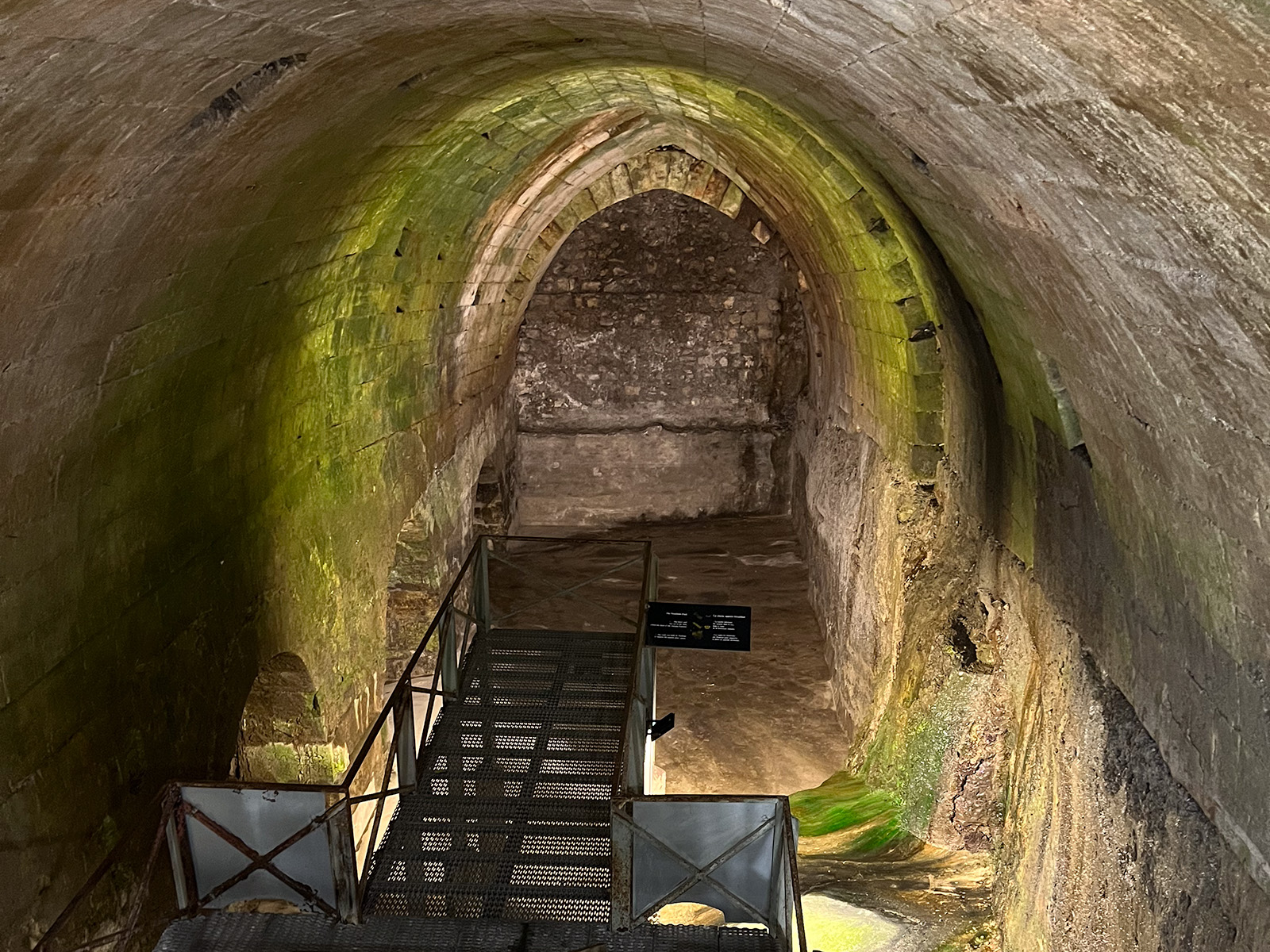
The Struthion Pool is a large rock-cut reservoir constructed during the Second Temple period, probably in the second or first century BC, to collect rainwater for Jerusalem. It was known to the first-century Jewish historian Josephus, who called it the “Struthion Pool.” The origin of the name remains uncertain. Visitors who continue to the lower level can see the preserved remains of the reservoir.

After the Bar Kokhba Revolt (AD 132–135), Emperor Hadrian incorporated part of the pool beneath his new Roman forum by constructing the massive vault that visitors see today. The vault supported the forum, or marketplace, above.

Sisters of Zion Convent

Several of the Roman paving stones beneath the Sisters of Zion Convent bear carved game boards cut into their surfaces by Roman soldiers. One popular game, known as the Game of the King (Basilicus), involved moving marked pieces across a carved grid. Because these markings appear on the Roman pavement, they were once thought to support the tradition that Jesus was mocked by Roman soldiers at this location. Archaeologists now date the pavement to about AD 135, nearly a century after the crucifixion, indicating the carvings belong to the later Roman city of Aelia Capitolina rather than the Jerusalem of Jesus’s day.

Old City - Jerusalem

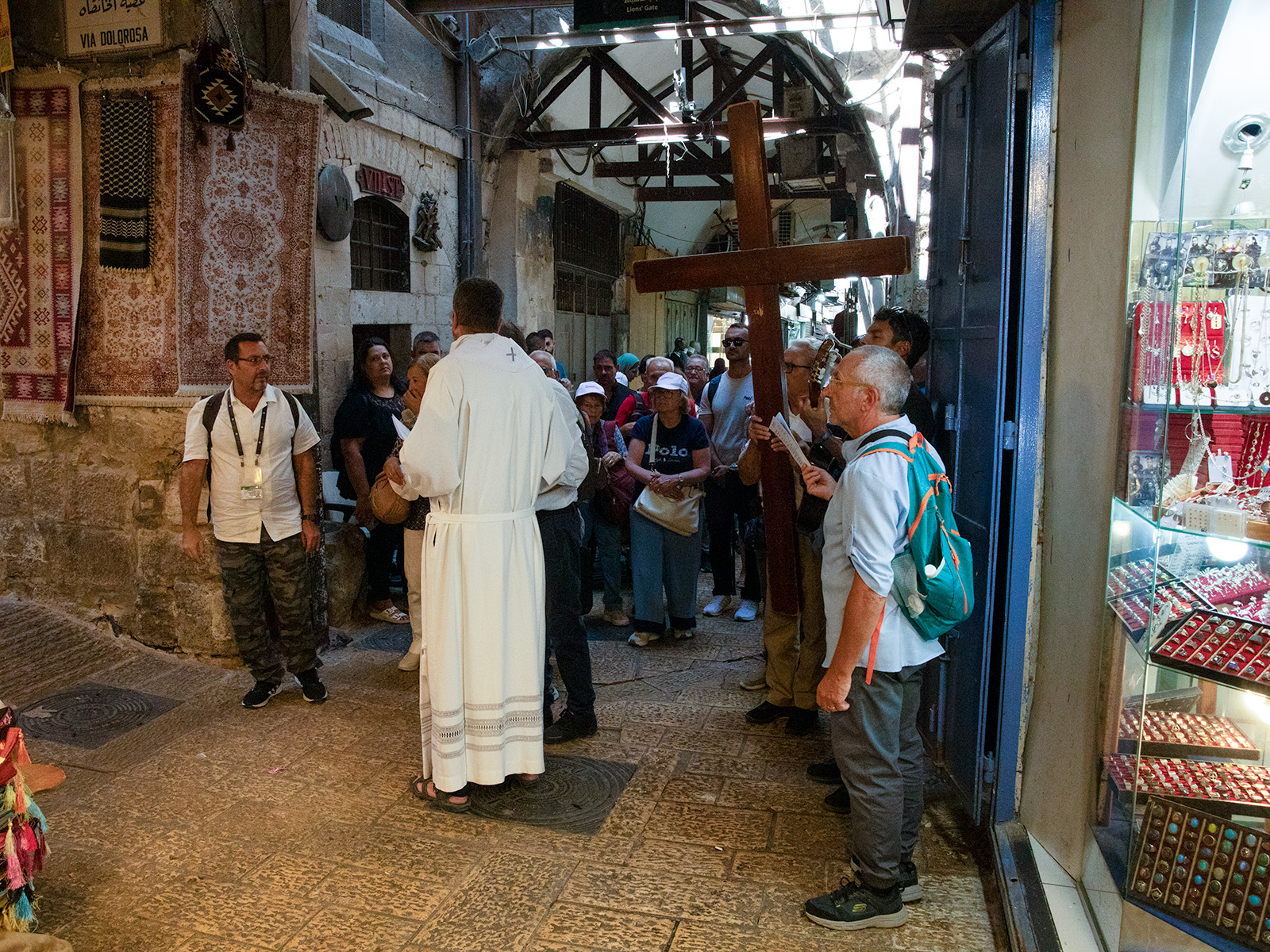
Pilgrims from around the world walk the Via Dolorosa to commemorate Jesus’s journey from His trial to the place of His crucifixion. Many groups carry a wooden cross while stopping to read scripture, sing hymns, and pray at the traditional Stations of the Cross. Although the exact route Jesus followed is unknown, the Via Dolorosa has served as Jerusalem's principal Christian pilgrimage route for centuries.

Via Dolorosa

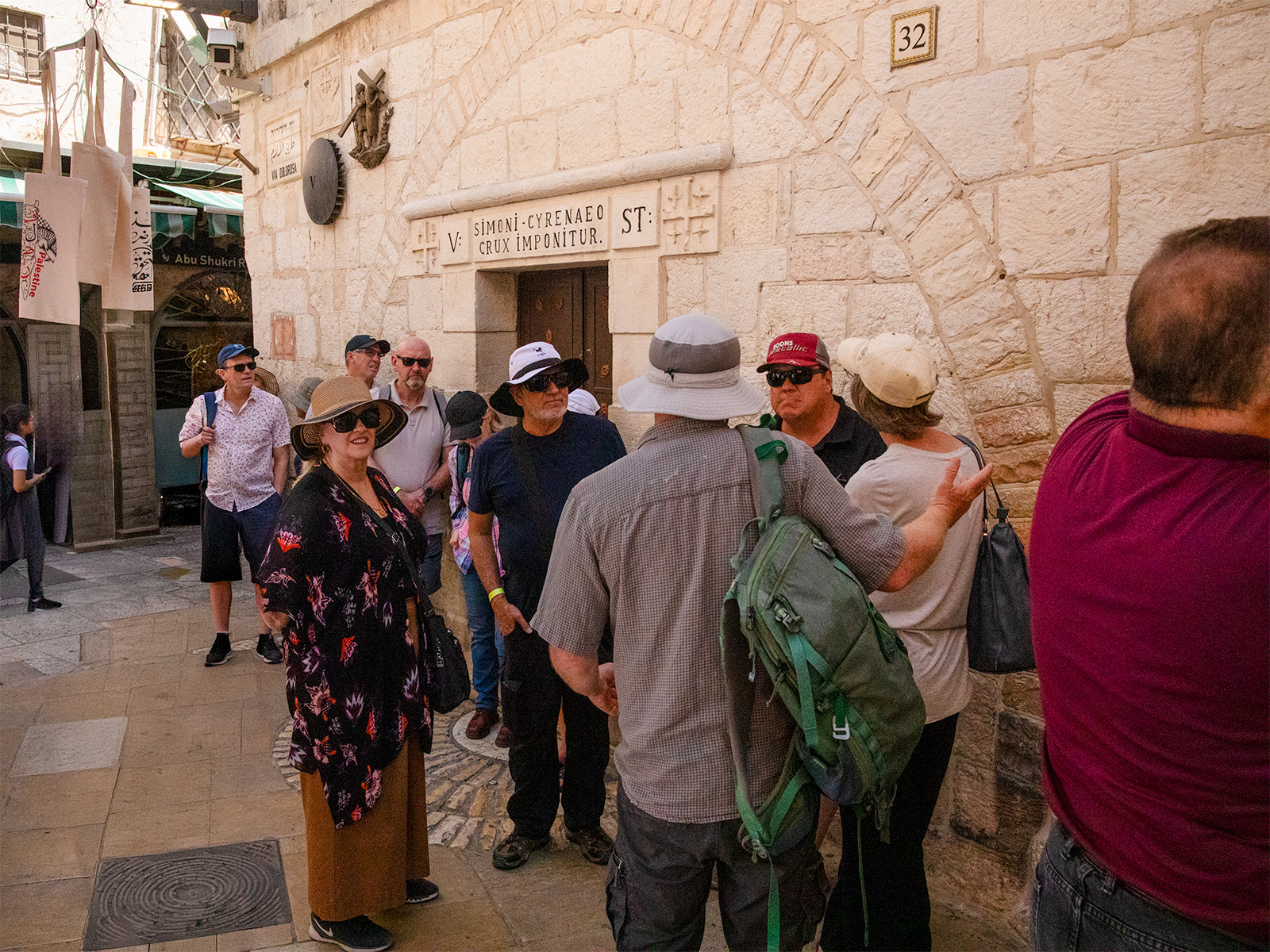
This small Franciscan chapel marks the traditional Fifth Station of the Cross, where Simon of Cyrene was compelled by Roman soldiers to help Jesus carry His cross to Golgotha ( Matt. 27:32; Mark 15:21; Luke 23:26). According to tradition, Simon placed his hand against the wall as he took up the cross. Many pilgrims touch the stone in remembrance of that event; in this photograph, the man in the maroon shirt is doing so. Today, pilgrims pause here to read the Gospel account before continuing along the Via Dolorosa toward the Church of the Holy Sepulchre.

The Latin inscription above the entrance—Simoni Cyrenaeo Crux Imponitur (“The cross is laid upon Simon of Cyrene”)—has identified this site as the Fifth Station of the Cross for generations of pilgrims. It is a detail that many visitors walk past without noticing.

Church of the Redeemer

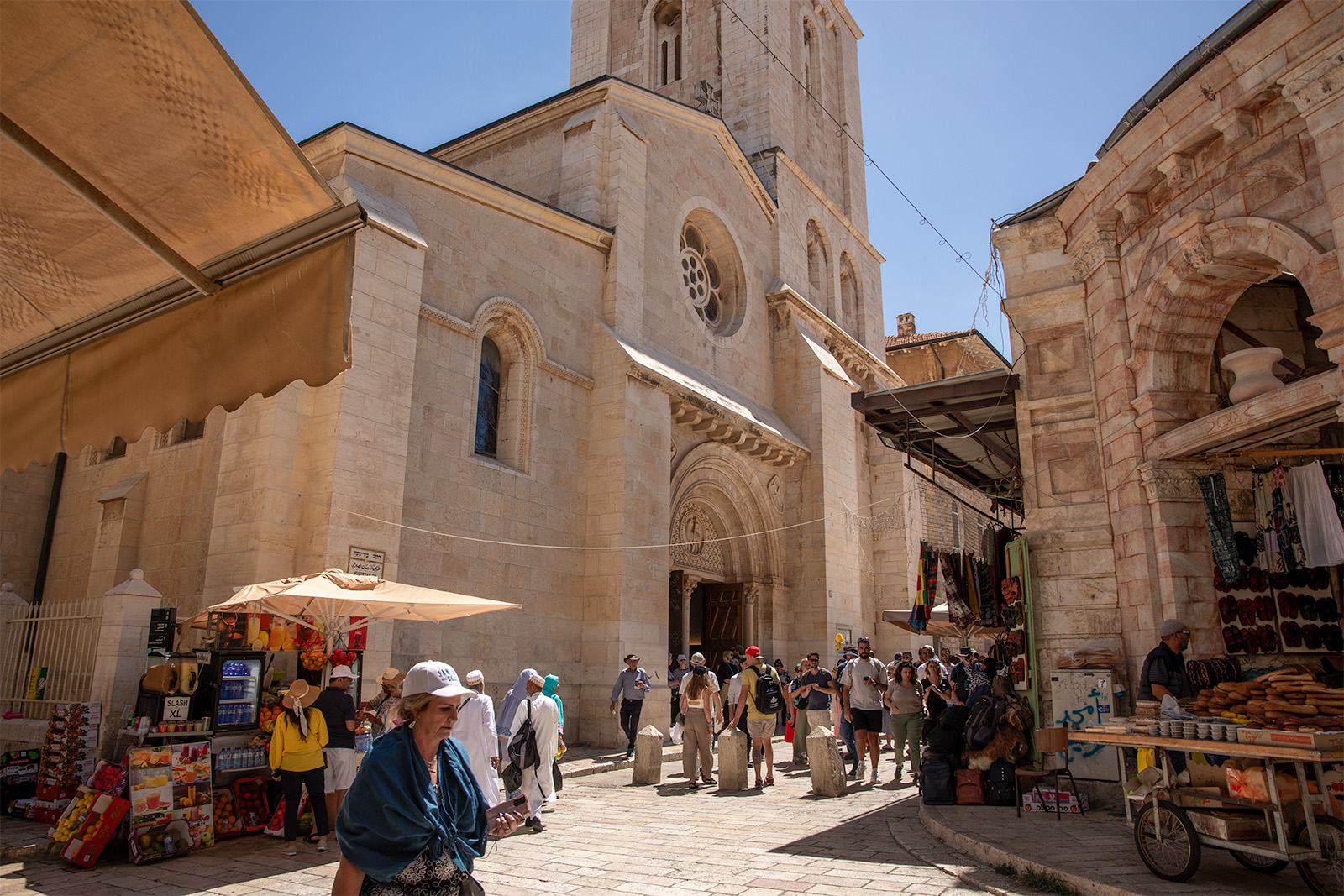
The Lutheran Church of the Redeemer stands just a short walk from the Church of the Holy Sepulchre. Consecrated in 1898, it was built on the site of an earlier Crusader church and offers one of the finest panoramic views of Jerusalem from its bell tower. The church serves the German Protestant congregation in the Holy Land and is a familiar landmark for visitors approaching the Church of the Holy Sepulchre.

Church of the Holy Sepulchre

The narrow streets leading to the Church of the Holy Sepulchre have welcomed Christian pilgrims for more than 1,600 years. Lined with shops, cafés, and homes, this historic quarter preserves much of the atmosphere of Jerusalem’s Old City. Just beyond this passage lies the courtyard and entrance to Christianity’s holiest church.

Church of the Holy Sepulchre

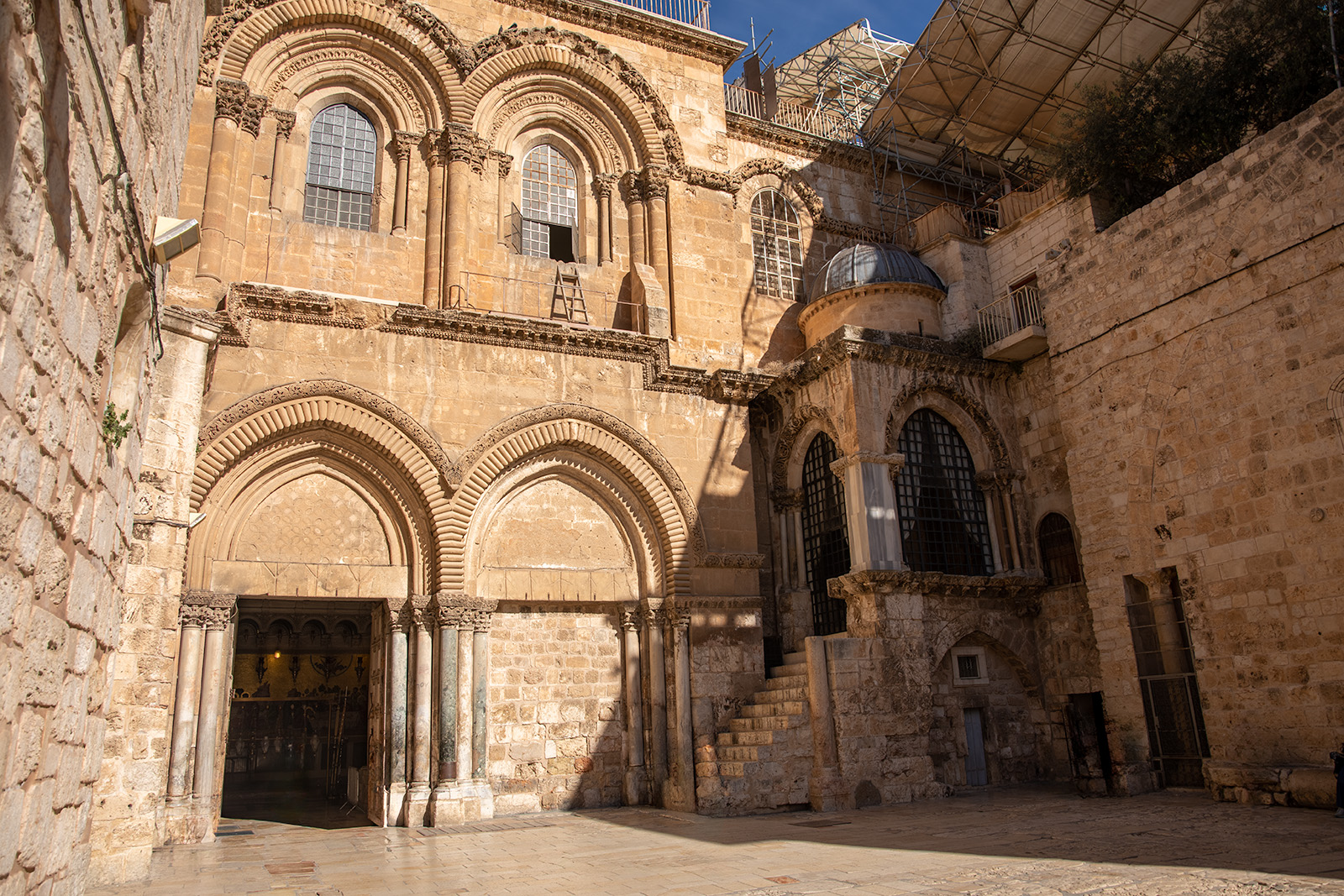
The Church of the Holy Sepulchre was first built by Emperor Constantine in the fourth century over the traditional sites of Jesus’s crucifixion, burial, and resurrection. Destroyed, rebuilt, and enlarged over the centuries, the present church reflects Byzantine, Crusader, and later architectural styles. Today it is shared by six Christian communities under a long-standing arrangement known as the Status Quo.

Many Latter-day Saint visitors traditionally associate the events of Jesus’s crucifixion and burial with the Garden Tomb. However, most archaeologists today conclude that the Church of the Holy Sepulchre is the most likely location of both Golgotha and Jesus’s tomb. The site lay outside Jerusalem’s city walls in the first century, as required by the Gospel accounts, and contains an ancient quarry and rock-cut tombs dating to the time of Jesus. As a result, many scholars regard the Church of the Holy Sepulchre as preserving the most probable location of Christ’s crucifixion, burial, and resurrection.

Church of the Holy Sepulchre

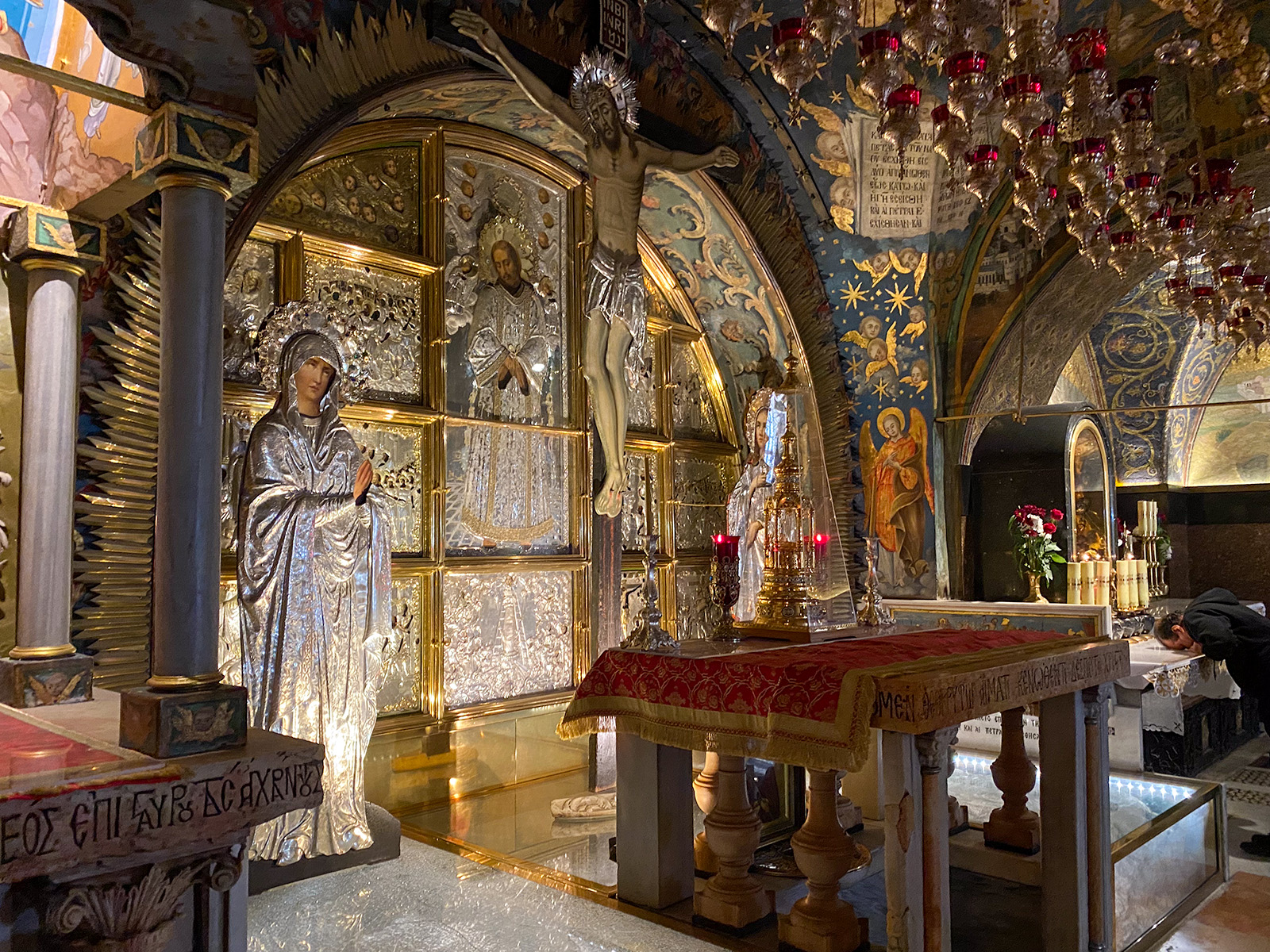
This richly decorated chapel marks the traditional summit of Golgotha, or Calvary, where Jesus was crucified ( Matt. 27:33–50; Mark 15:22–37; Luke 23:33–46; John 19:17–30). Pilgrims may kneel beneath the altar and touch the exposed bedrock through an opening beneath the cross, commemorating the place where Christ gave His life for the sins of the world.

Church of the Holy Sepulchre

According to Christian tradition, the body of Jesus was prepared for burial on the Stone of Anointing after being removed from the cross (John 19:38–40). Although the present stone was installed during the nineteenth century, it commemorates the traditional place where Jesus’s body was wrapped with linen and spices before being laid in the nearby tomb. Pilgrims often kneel here to pray and place devotional objects on the stone.

Church of the Holy Sepulchre

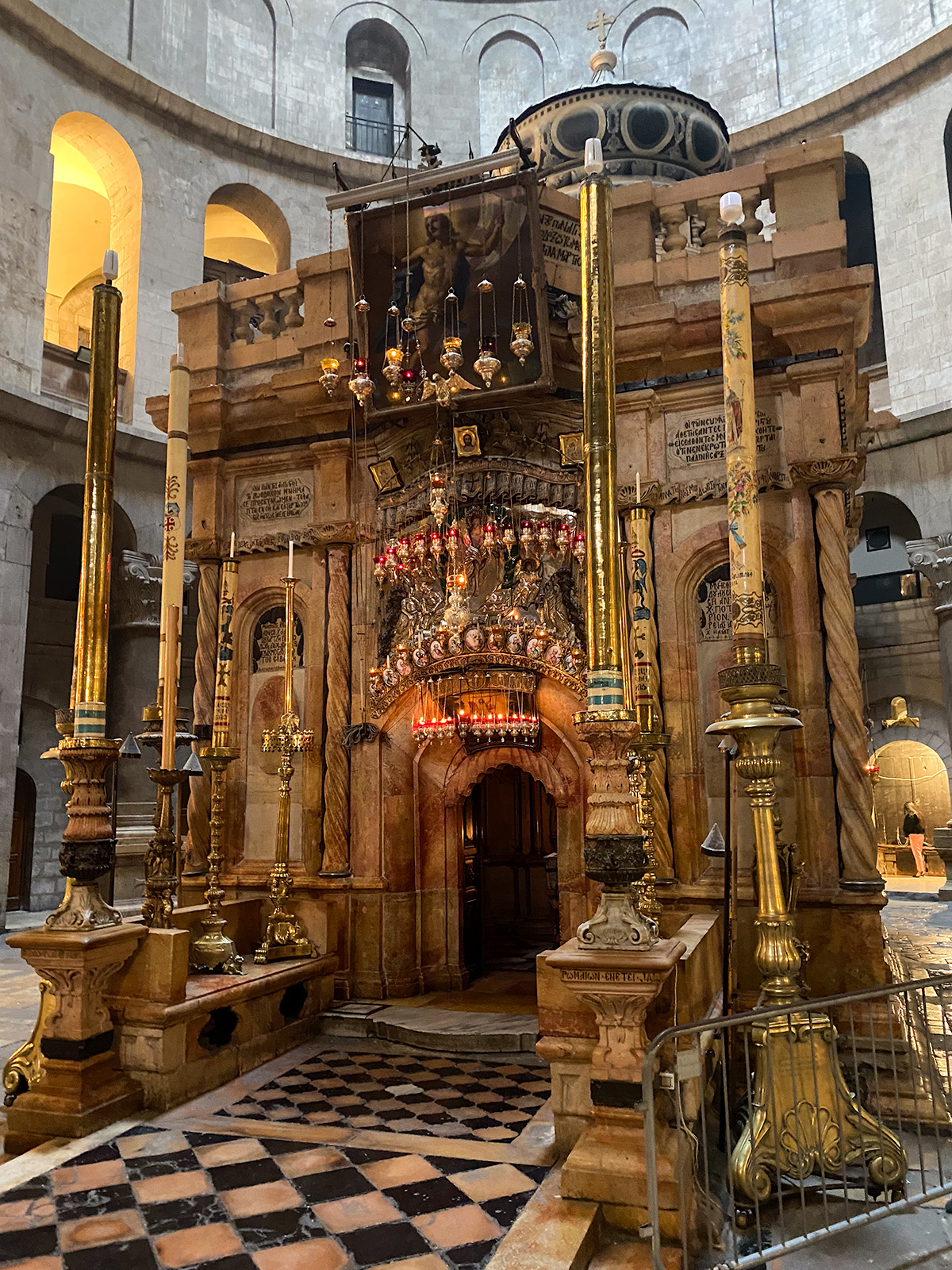
At the heart of the Church of the Holy Sepulchre stands the Edicule, the small shrine that encloses the traditional tomb of Jesus. The present structure, completed in the early nineteenth century and carefully restored in 2016–2017, protects the burial chamber where Christians have commemorated Christ’s burial and resurrection since the time of Constantine in the fourth century.

Church of the Holy Sepulchre

Viewed from the Tower of David Jerusalem Museum near Jaffa Gate, the gray domes of the Church of the Holy Sepulchre dominate Jerusalem’s Christian Quarter. The bell tower of the Lutheran Church of the Redeemer rises prominently to the right, while the Mount of Olives forms the distant skyline. This telephoto view highlights the close proximity of two of Jerusalem’s most important Christian landmarks.

Visible on the hillside beyond the Church of the Redeemer is the BYU Jerusalem Center for Near Eastern Studies, recognized by its distinctive series of arches overlooking the Old City. Since its dedication in 1989, the center has served as a campus for Brigham Young University students studying the history, culture, and languages of the Bible.

Major Events at Jerusalem

Click the map to show or hide the overlay
Map