Scroll To Top
Scroll To Top

Nazareth Photo Gallery

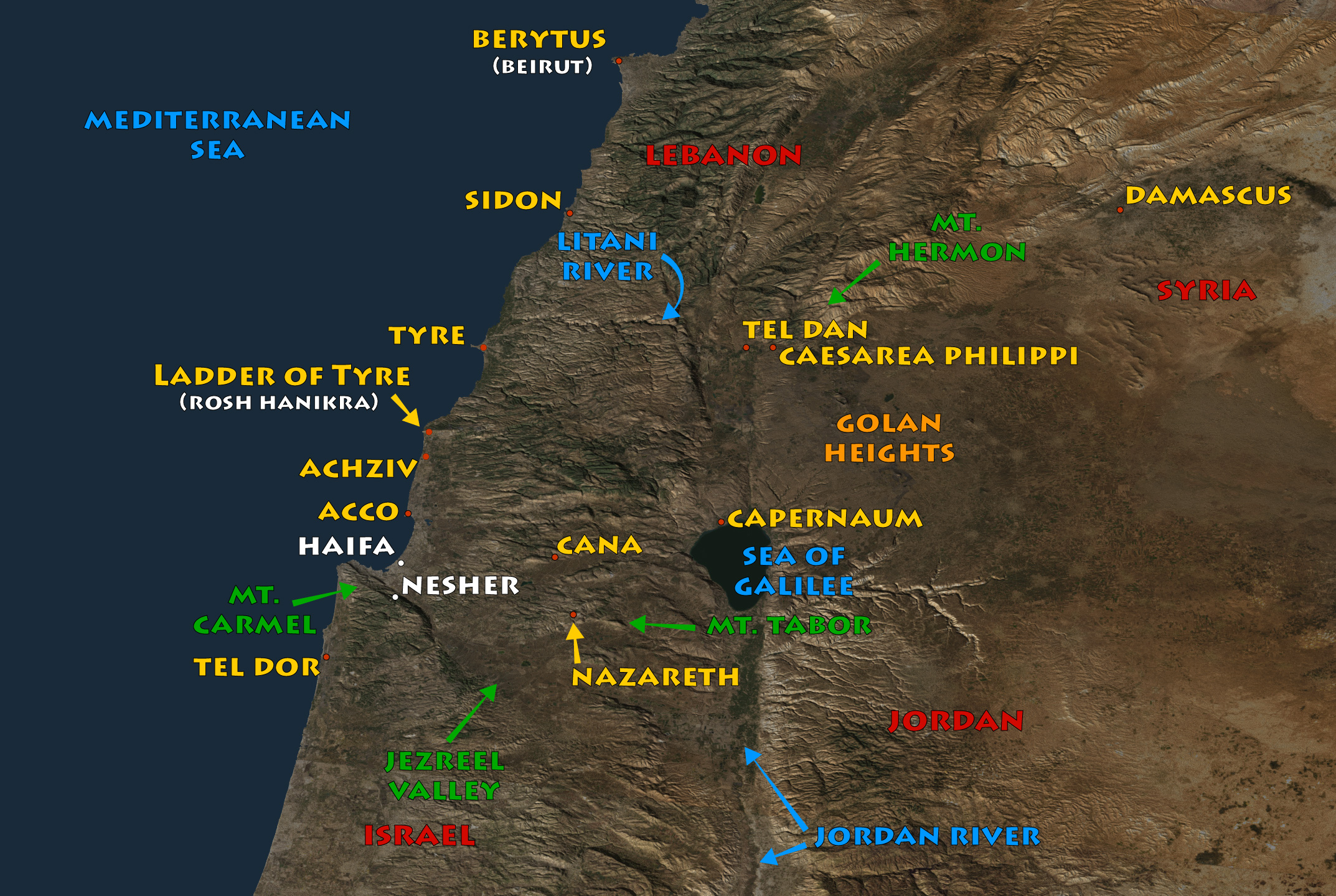
Click the title to view map


Site Overview

Where Jesus Grew in Wisdom and Favor

Nazareth - Mary, Jesus, and Joseph
Mary, Jesus, and Joseph

Hidden among the hills of Lower Galilee, Nazareth was an unremarkable village during the time of Jesus—small, agricultural, and far removed from the political and religious centers of Jerusalem. Yet it was here that Mary received the angel Gabriel’s announcement that she would bear the Son of God, and here that Jesus spent nearly thirty years of His earthly life before beginning His public ministry.

Although modern Nazareth has grown into Israel’s largest Arab city, the ancient village can still be glimpsed beneath today’s streets and churches. Archaeological excavations have uncovered first-century homes, winepresses, cisterns, tombs, and agricultural terraces, providing a fascinating window into the humble world in which Jesus was raised.

Visitors typically explore the magnificent Basilica of the Annunciation, the nearby Church of St. Joseph, Mary’s Well, the Nazareth Village living-history museum, and the winding streets of the Old City. Together, these sites help bring to life the setting where Jesus “increased in wisdom and stature, and in favour with God and man” (Luke 2:52).

Introduction to the Photo Gallery

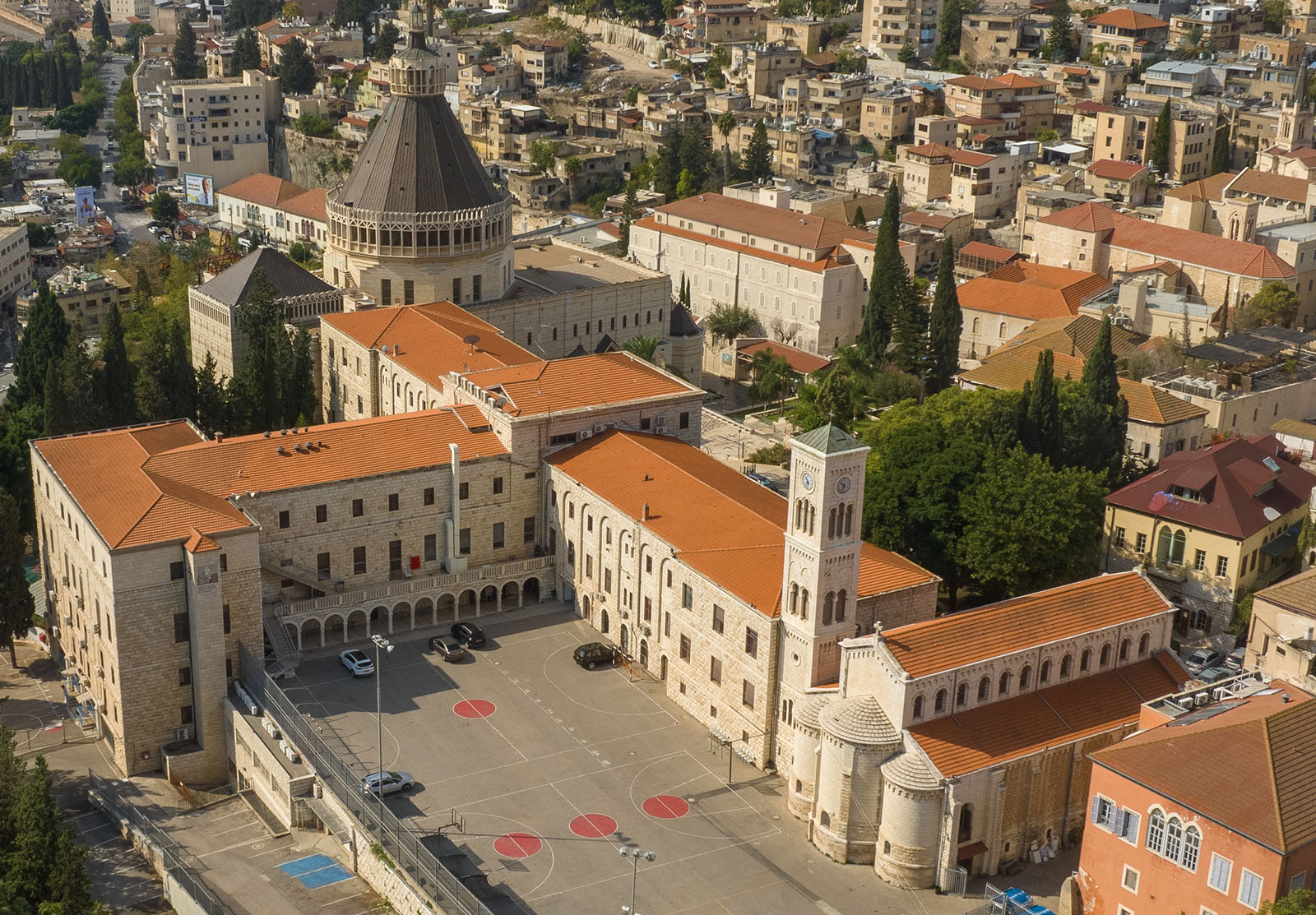
Terra Sancta School
Terra Sancta School

Nazareth often surprises first-time visitors. Many expect to find a quiet biblical village, only to discover a bustling modern city built upon centuries of history. Yet beneath the traffic, churches, and marketplaces lies the landscape of Jesus’s youth.

This gallery explores both worlds. You’ll visit the churches that commemorate the Annunciation and the Holy Family, discover archaeological remains from the first century, wander the colorful streets of the Old City, and see the surrounding hills that formed the backdrop of Jesus’s early life.

Not every traditional site can be verified archaeologically, but together they preserve nearly two thousand years of Christian memory while helping visitors visualize daily life in first-century Nazareth. As you explore these photographs, consider how the Savior spent the vast majority of His mortal life—not performing miracles before crowds, but living quietly among family, neighbors, craftsmen, and farmers in this Galilean village. It was here that He prepared for the ministry that would ultimately change the world.

Slide Presentation Major Events

Basilica of the Annunciation

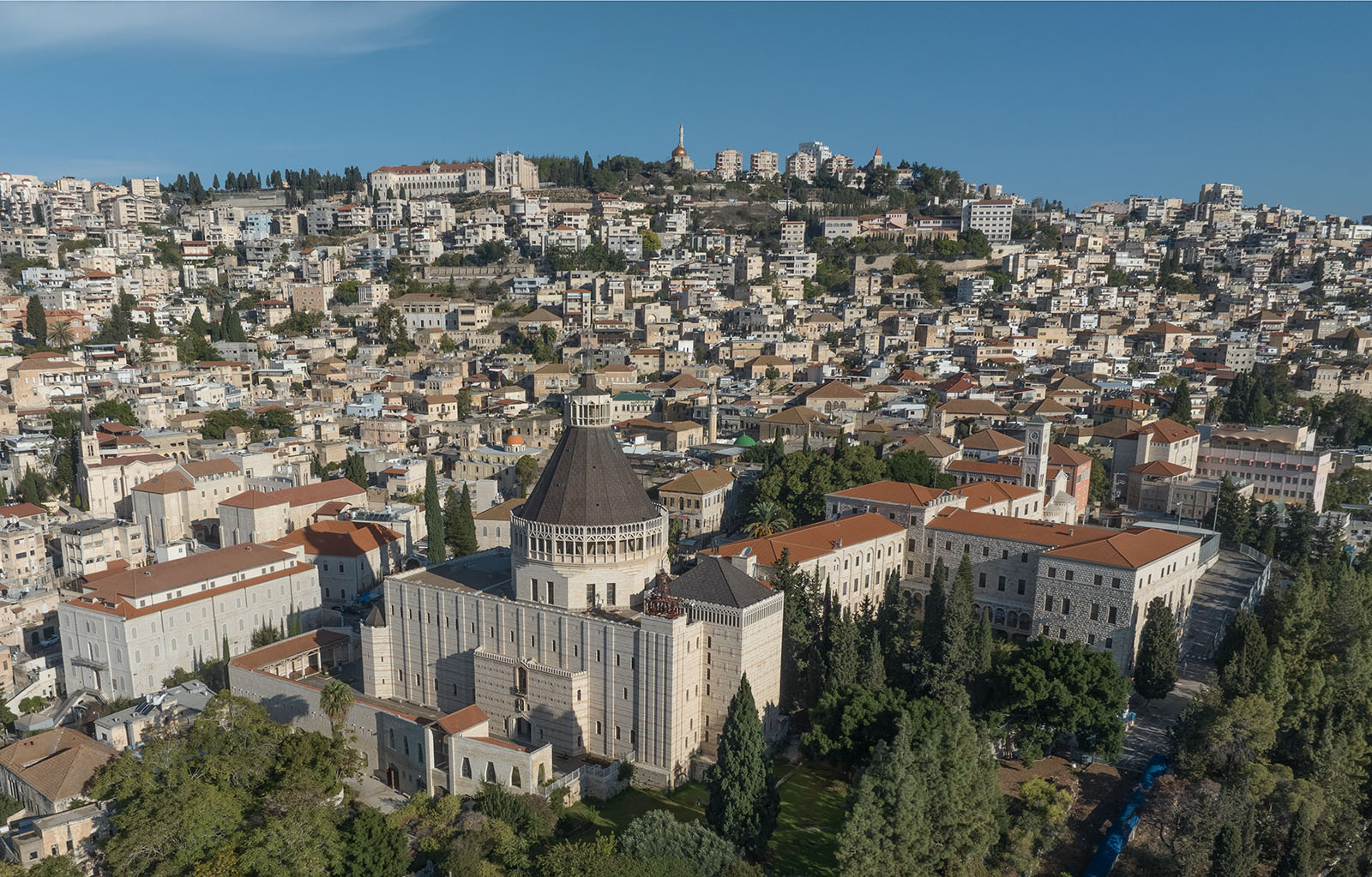
The Basilica of the Annunciation dominates Nazareth’s skyline with its distinctive cone-shaped dome, designed to resemble an inverted lily, a traditional symbol of the Virgin Mary. Built in 1969 over the traditional site of the Annunciation, it remains one of Christianity’s most important pilgrimage destinations. This photo was taken from Mount Precipice with a telephoto lense.

Basilica of the Annunciation

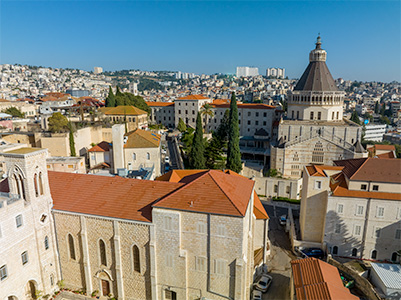
Surrounded by the homes and hillsides of modern Nazareth, the Basilica of the Annunciation stands at the heart of the city where Jesus spent His childhood. The contrast between the ancient Christian sanctuary and the bustling modern city illustrates how biblical Nazareth has grown over two thousand years.

Basilica of the Annunciation

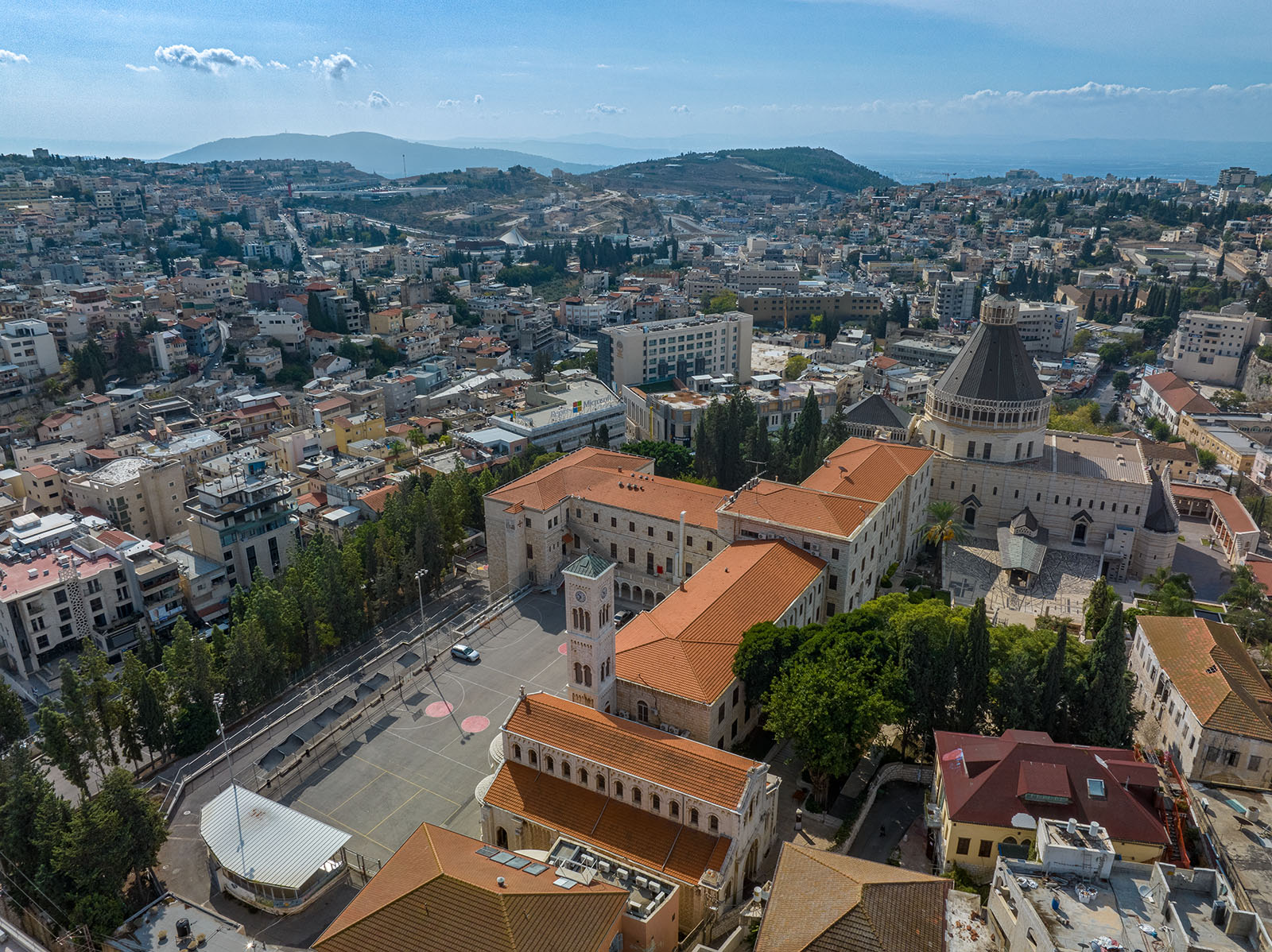
This aerial view reveals the full extent of the Basilica of the Annunciation and its spacious forecourt. Pilgrims from around the world gather here before entering the Basilica and lower grotto, traditionally revered as the place where Mary received the angel Gabriel’s message. In the foreground, the surrounding Franciscan convent and Terra Sancta School frame a large courtyard, while the adjacent Church of St. Joseph—with its three-nave basilica and bell tower—marks the traditional site of Joseph’s workshop and home. Together these buildings form the center of Nazareth’s principal Christian pilgrimage complex.

Basilica of the Annunciation

Seen from above, the Basilica of the Annunciation anchors the historic center of Nazareth amid a city that now stretches across the surrounding hills. On the distant skyline rises Mount Precipice, traditionally associated with the account in Luke 4 where the people of Nazareth attempted to throw Jesus from the cliff after He declared His messianic mission in the synagogue. What was once a small Galilean village has become Israel’s largest Arab city while preserving its association with the Savior’s early life./p>

Basilica of the Annunciation

From the courtyard of the Church of St. Joseph, the Basilica of the Annunciation rises above the trees and surrounding buildings. The short walk between these two churches invites visitors to reflect on Nazareth as the setting for both the Annunciation and the quiet years when Jesus lived and worked with Mary and Joseph before beginning His ministry.

Basilica of the Annunciation

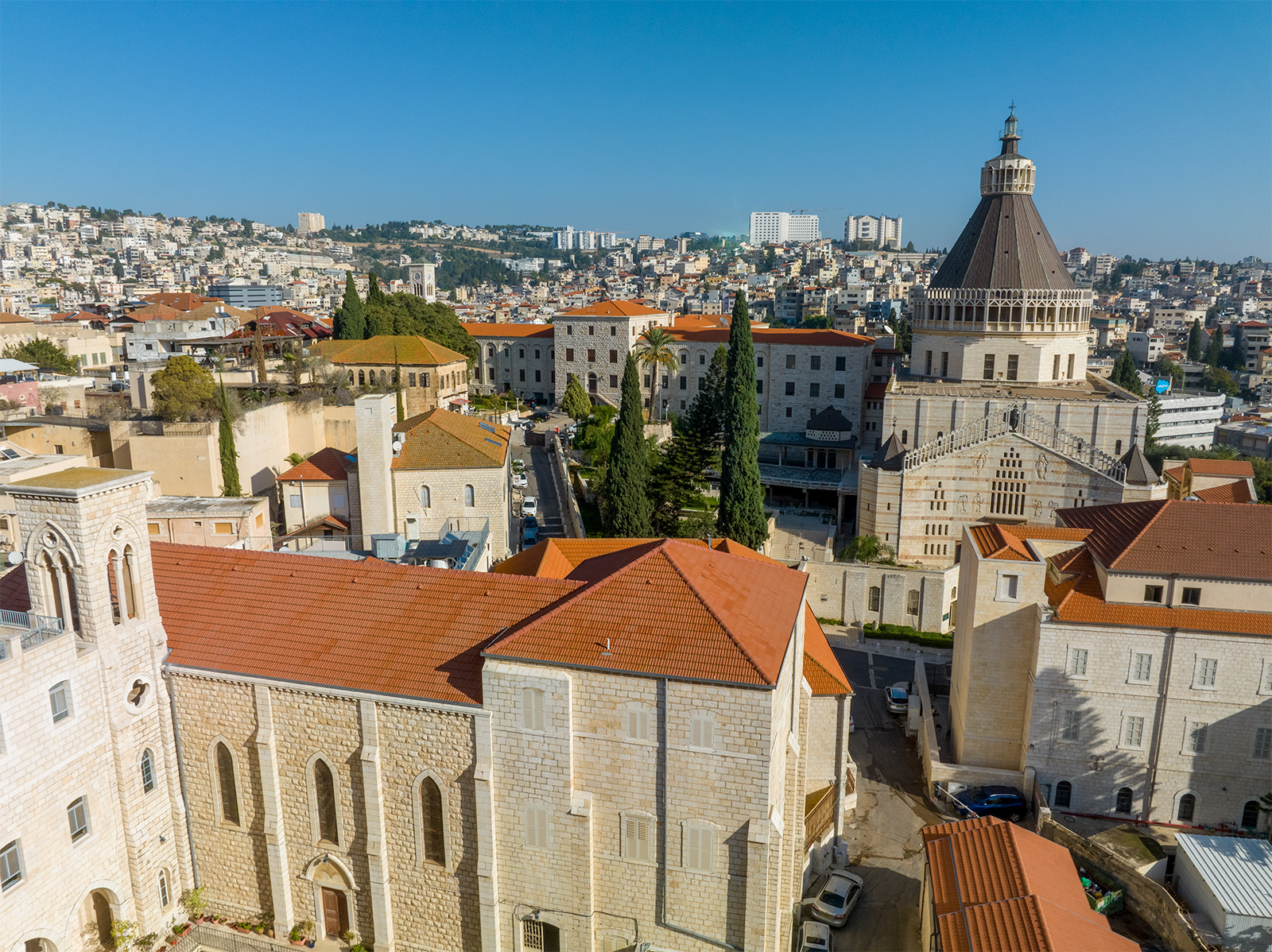
View east: Seen from above, the Basilica of the Annunciation anchors the historic center of Nazareth amid a city that now stretches across the surrounding hills. In the foreground stands the Melkite Greek Catholic Synagogue Church, traditionally associated with the synagogue where Jesus worshipped and later proclaimed His messianic mission (Luke 4:16–30).

St. Joseph - Basilica of the Annunciation

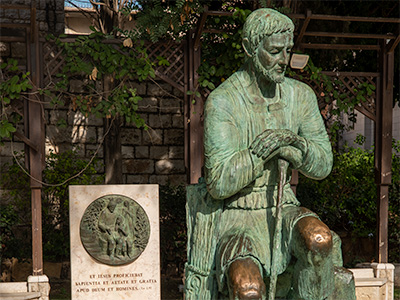
Just before entering the Church of St. Joseph, visitors pass this peaceful garden honoring the carpenter of Nazareth who faithfully cared for Mary and helped raise Jesus. Bronze reliefs portray scenes from the hidden years of the Holy Family. The nearby plaque quotes Luke 2:52: “Jesus increased in wisdom and stature, and in favor with God and man.” Rather than showing Joseph at work, the sculptor portrays him seated in quiet contemplation, emphasizing the humility, patience, and faithful guardianship that characterize his life in the Gospels—even though no words spoken by Joseph are recorded in Scripture. The memorial invites visitors to reflect on the quiet years in Nazareth, where the Savior learned, worked, and matured under Joseph’s loving care.

Basilica of the Annunciation

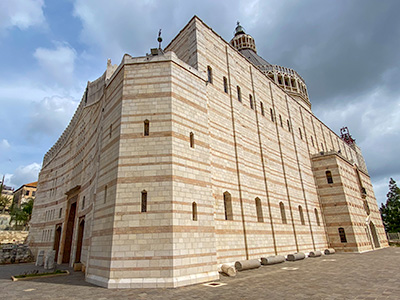
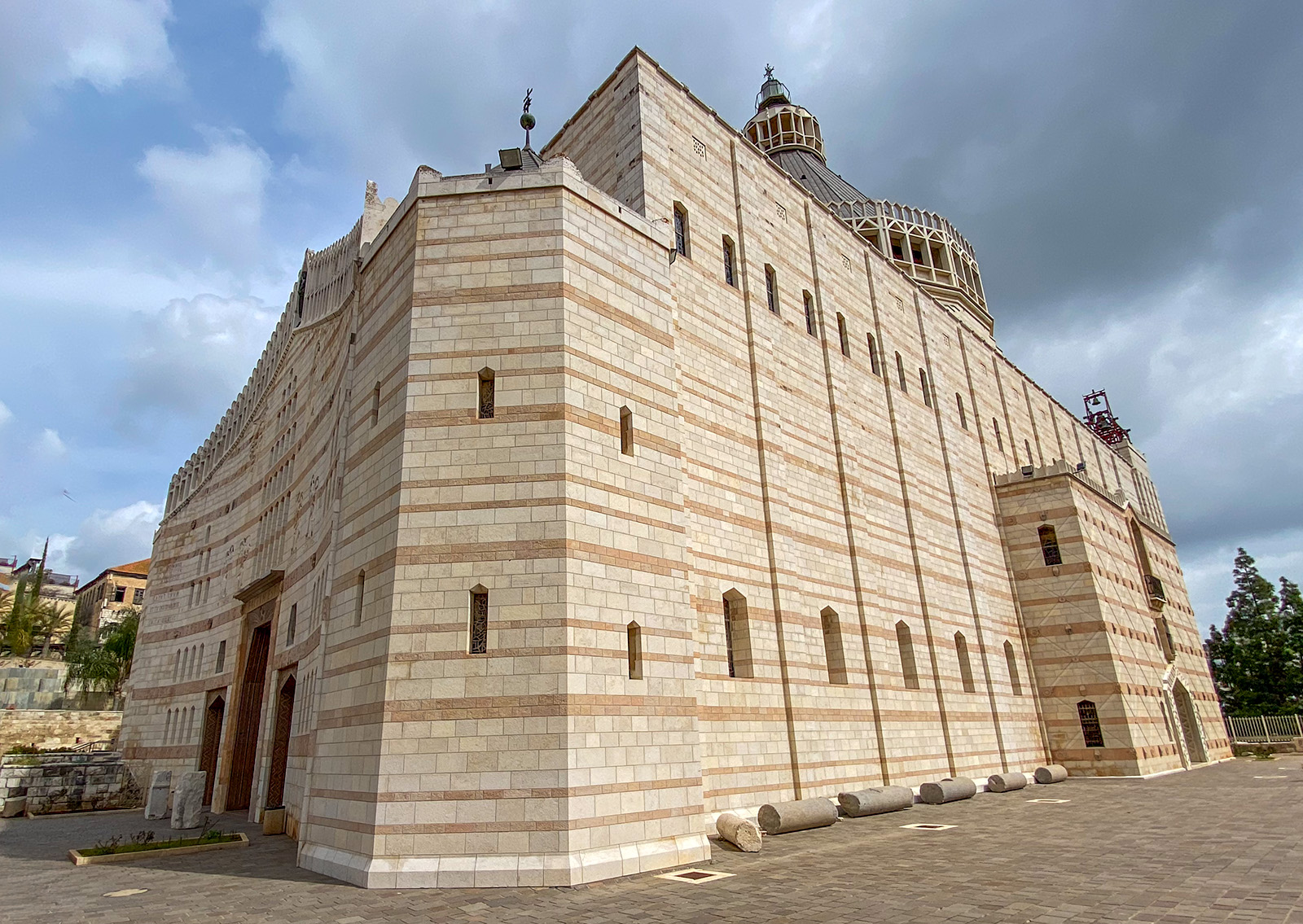
The Basilica of the Annunciation rises above the courtyard that welcomes visitors to Christianity’s most important site in Nazareth. Completed in 1969 over the remains of earlier churches, its distinctive design symbolizes a tent, recalling both the dwelling place of God among His people and Mary’s role in receiving the Savior into the world.
Basilica of the Annunciation

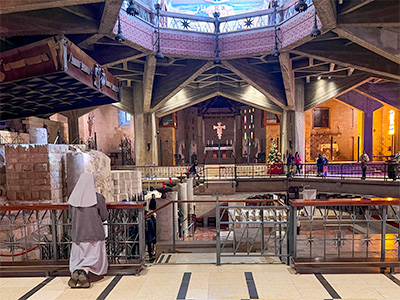
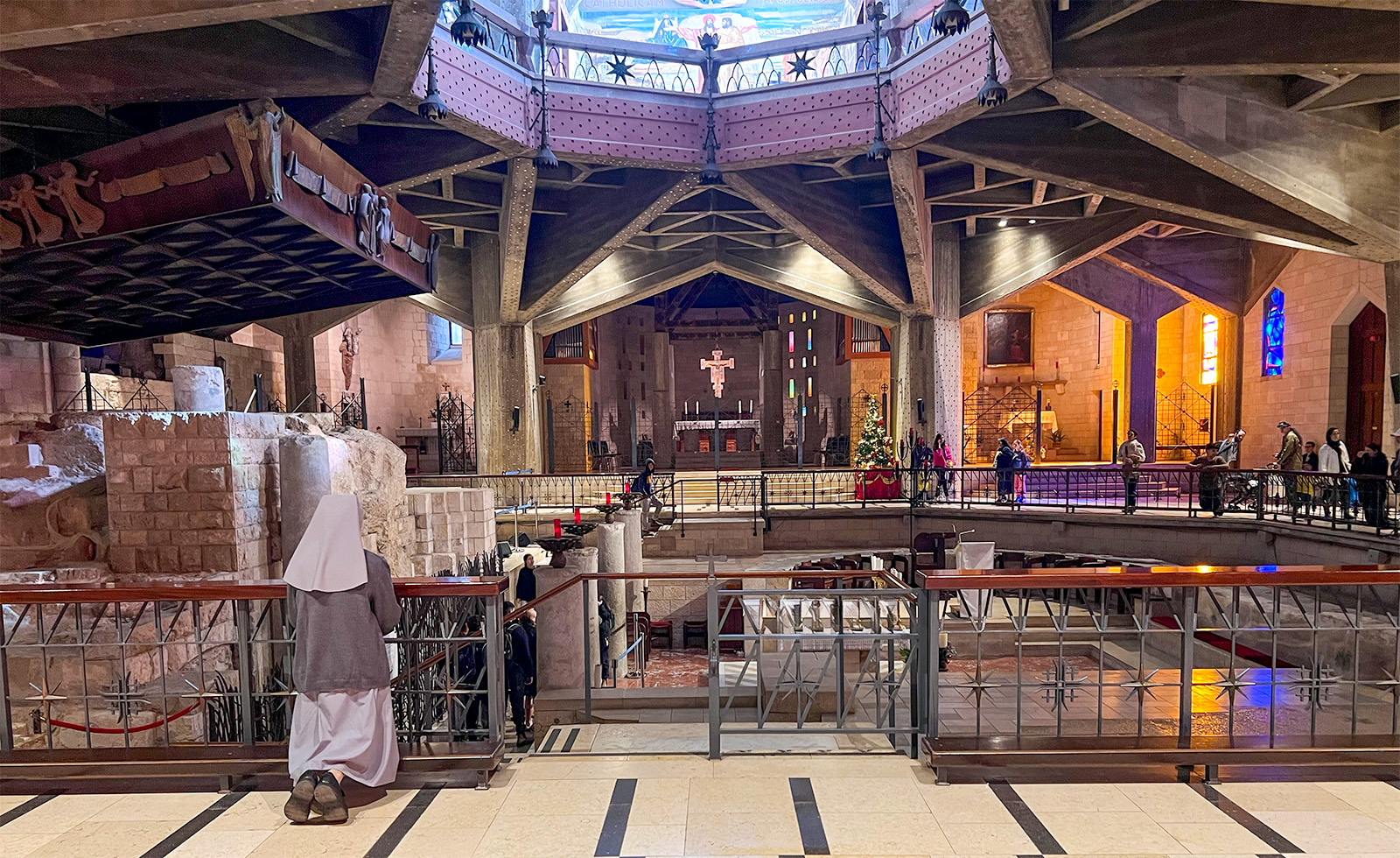
From the entrance, the lower level of the basilica draws the eye toward the Grotto of the Annunciation beneath the central altar. This modern church was carefully designed so that the ancient shrine remains the focal point, connecting today’s pilgrims with nearly two thousand years of Christian devotion.

Basilica of the Annunciation

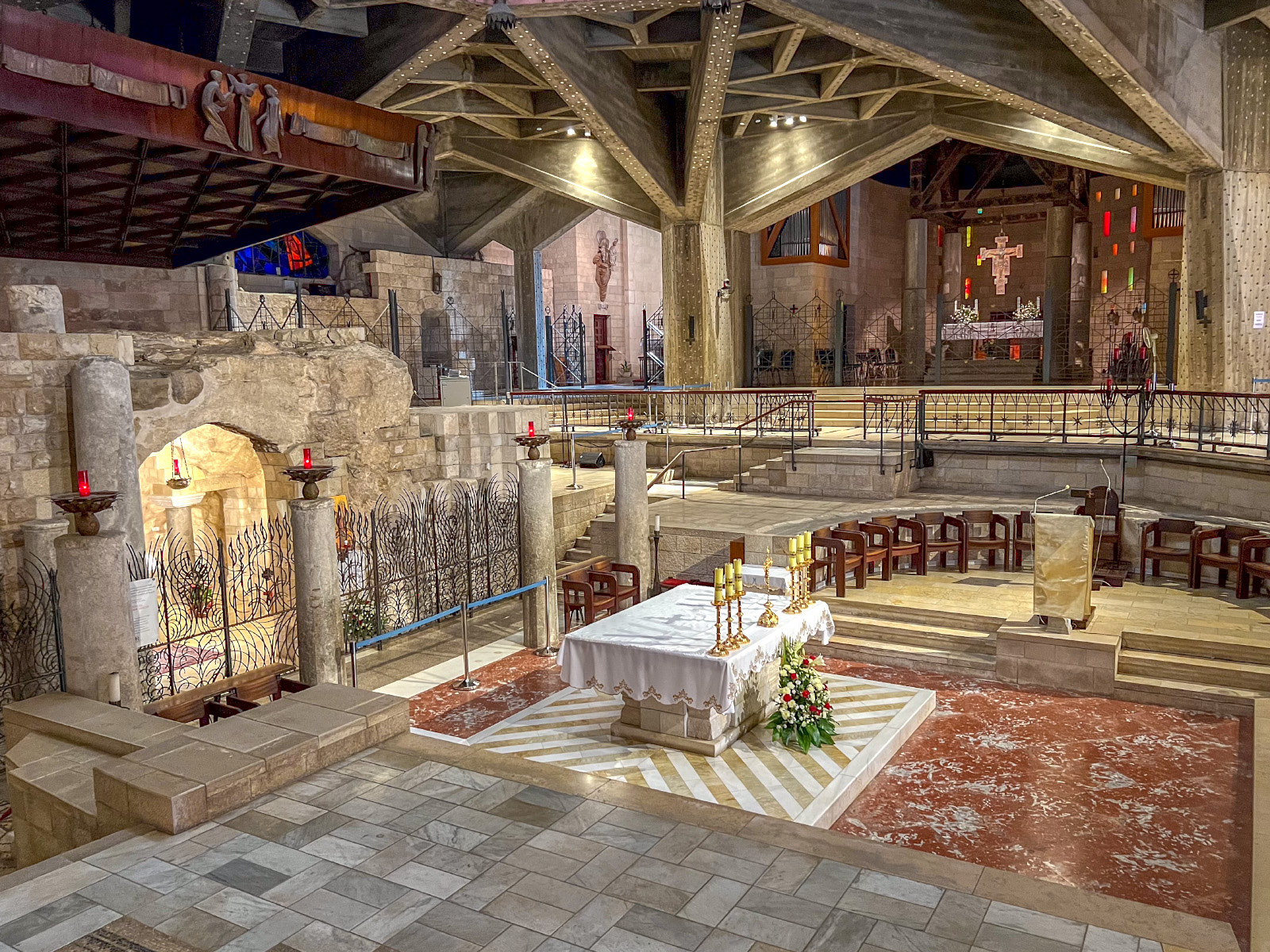
The lower basilica blends modern architecture with the remains of earlier Byzantine and Crusader churches. Stone foundations, ancient walls, and archaeological remains remind visitors that generations of Christians have gathered here to commemorate the angel Gabriel’s announcement to Mary.

Basilica of the Annunciation

According to longstanding Christian tradition, this grotto marks the home of Mary and the place where the angel Gabriel announced that she would become the mother of Jesus (Luke 1:26–38). Whether or not the exact location can be established with certainty, pilgrims have honored this site since the earliest centuries of Christianity.

Basilica of the Annunciation

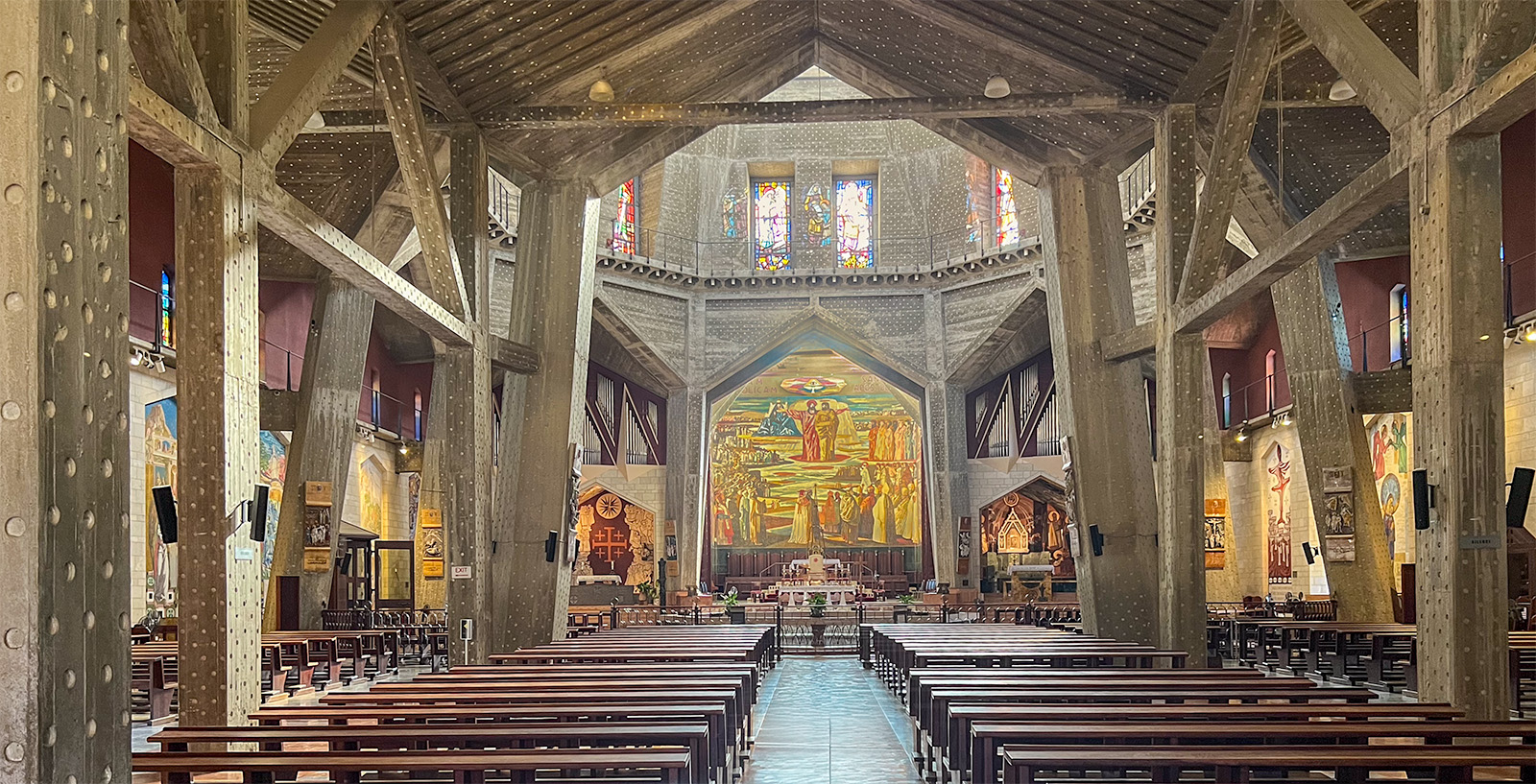
The bright upper church serves as the principal worship space of the Basilica of the Annunciation. Filled with natural light, colorful stained glass, and a striking mosaic of the risen Christ, it provides a dramatic contrast to the quiet, cave-like atmosphere of the ancient grotto below.

Mary's Well

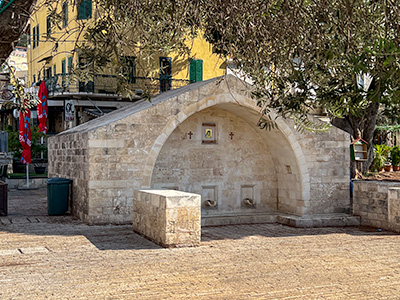
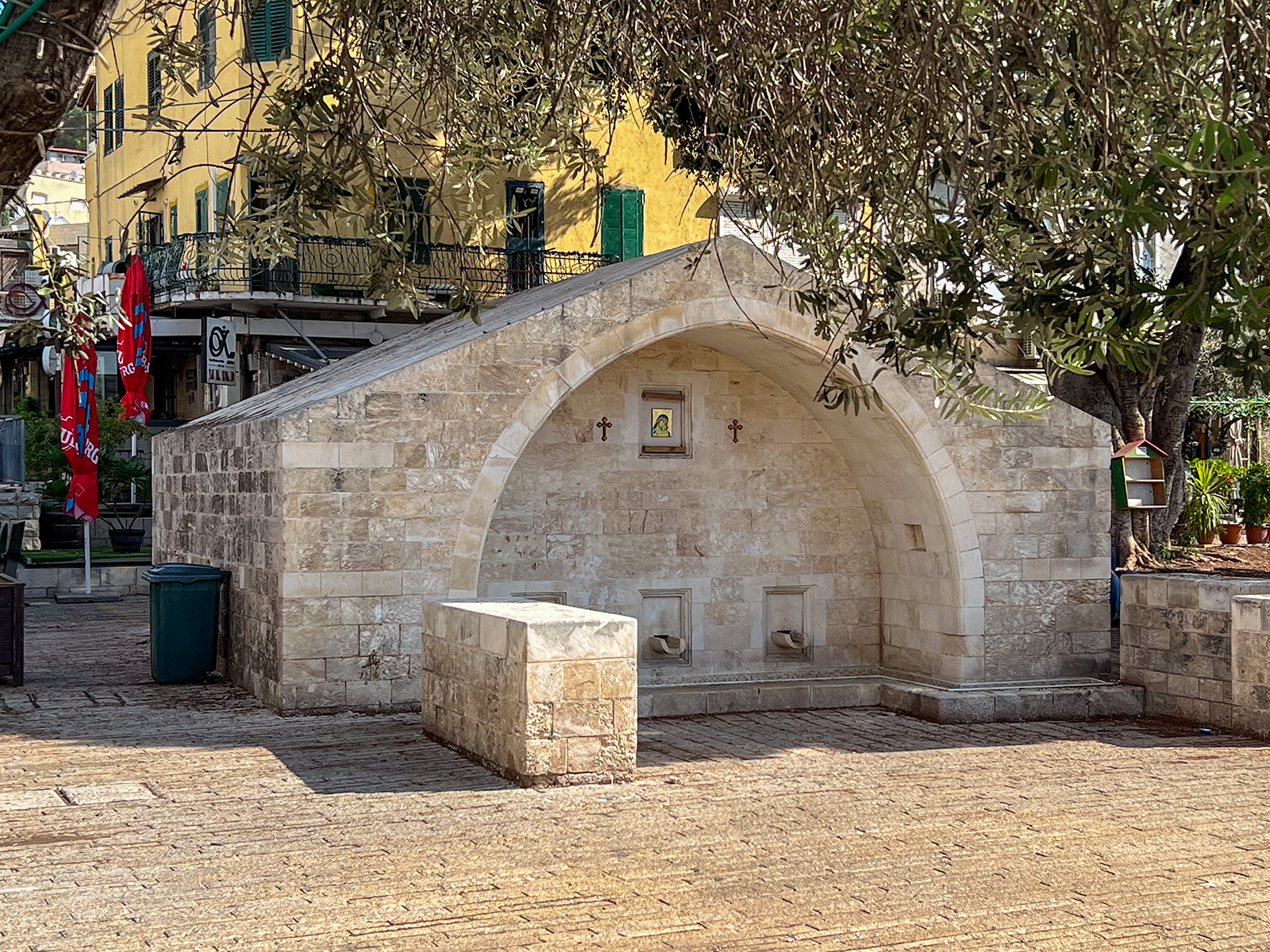
For centuries, Mary’s Well has been one of Nazareth’s best-known landmarks. Fed by the town's ancient spring, it provided water for generations of local families. Christian tradition associates the well with the daily life of Mary, making it a natural place for pilgrims to reflect on the ordinary setting in which the Savior spent His childhood, the place where He “grew, and waxed strong in spirit” (Luke 2:40).

St. Joseph's Church

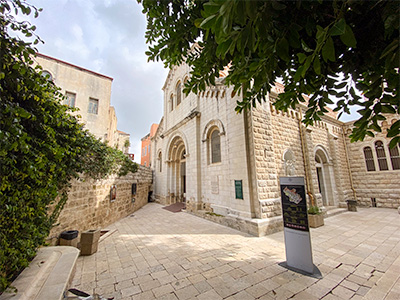
View north: The Church of St. Joseph stands just north of the Basilica of the Annunciation, connected by a quiet courtyard shaded by mature trees. Built over the remains of earlier Byzantine and Crusader churches, the present Franciscan church commemorates Joseph, the earthly guardian of Jesus, and the traditional location of his workshop.

St. Joseph's Church

View north: Seen from the grounds of the Basilica of the Annunciation, the Church of St. Joseph occupies the neighboring property immediately to the north. This southern entrance opens to the stairway leading down to the archaeological excavations beneath the church. The close relationship between the two churches reflects the Christian tradition that associates this area with the home of the Holy Family during Jesus' childhood in Nazareth.

St. Joseph's Church

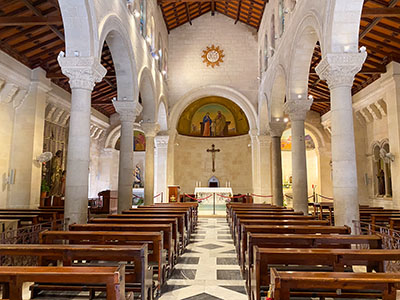
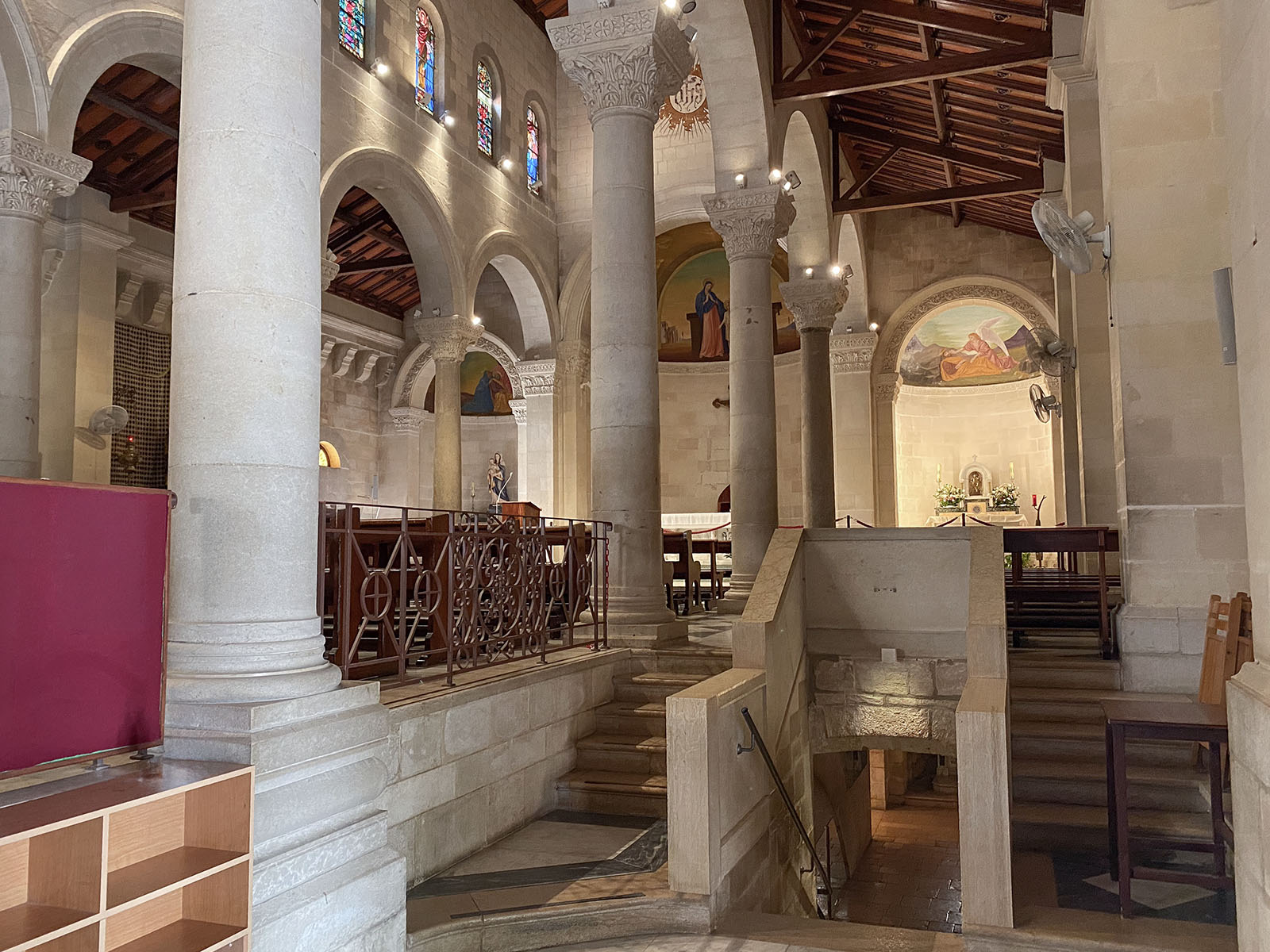
The interior of the Church of St. Joseph reflects the simplicity traditionally associated with the Holy Family's life in Nazareth. Romanesque arches, limestone columns, and a modest sanctuary create a peaceful setting for worship and reflection above the archaeological remains below.

St. Joseph's Church

A stairway beside the nave leads visitors beneath the church to an extensive archaeological complex. The excavations preserve caves, cisterns, and the foundations of earlier churches built over what has long been revered as the site of Joseph's workshop and the Holy Family's home.

St. Joseph's Church

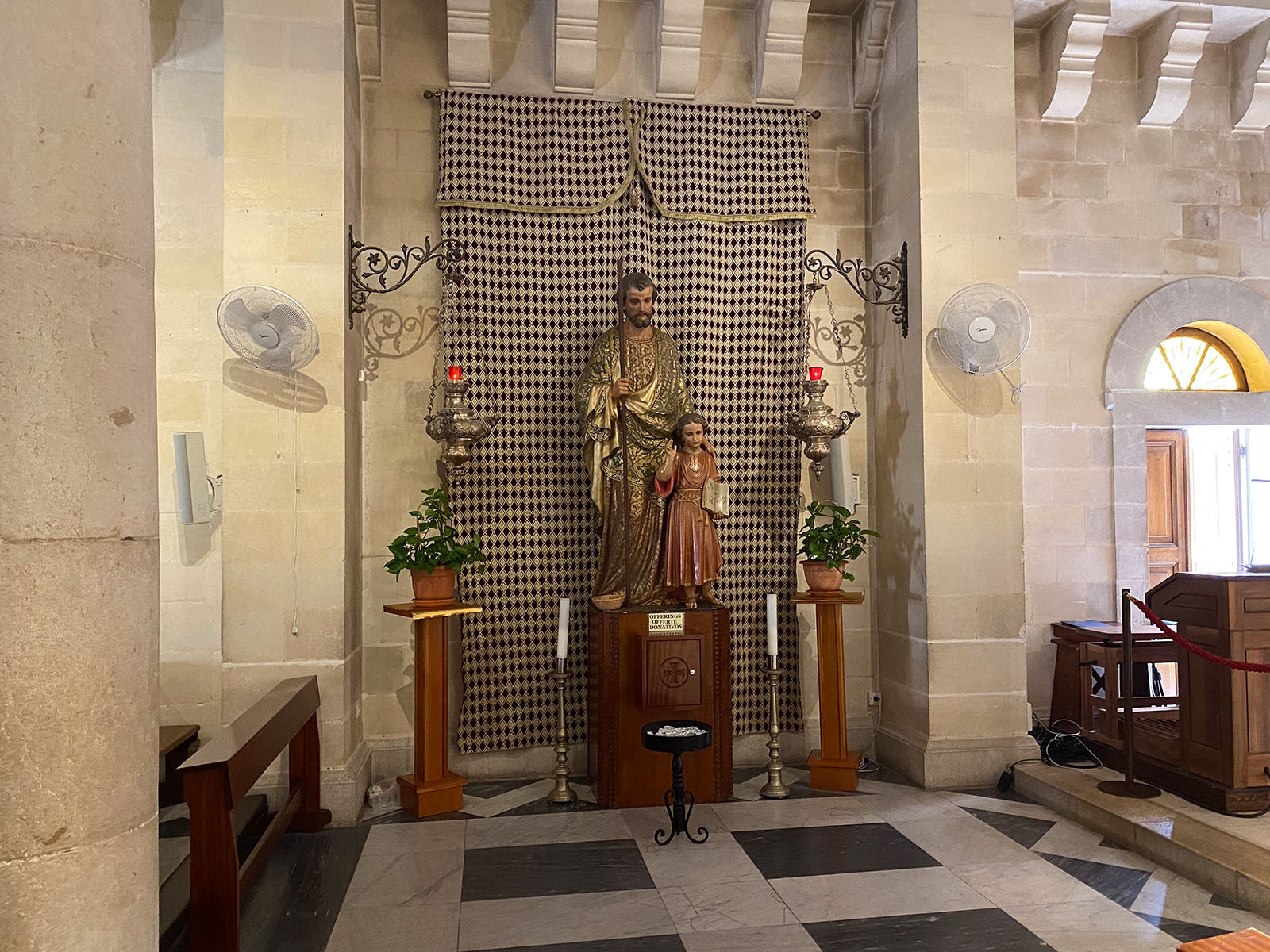
A statue of St. Joseph holding the Christ Child reminds visitors of Joseph's sacred role as protector, provider, and teacher of Jesus. Throughout the Gospels, Joseph is portrayed as a righteous and obedient man who faithfully carried out the responsibilities entrusted to him by God.

St. Joseph's Church

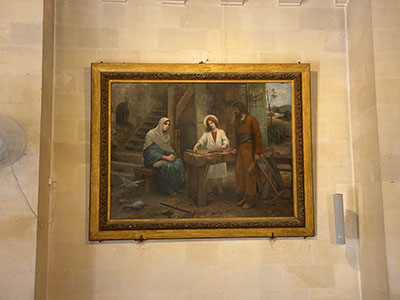
This painting depicts the Holy Family gathered around Joseph's carpenter's bench, reflecting the traditional Christian understanding that Jesus was raised in Joseph's household and learned his trade. Though the scene is devotional rather than historical, it invites visitors to reflect on the quiet years of the Savior's life in Nazareth.

St. Joseph's Church

Viewed from the streets of Nazareth, the Church of St. Joseph rises above the surrounding stone buildings with architecture that complements the neighboring Basilica of the Annunciation. Together, the two churches form one of Christianity's most significant pilgrimage destinations.

St. Joseph's Church

Beneath the Church of St. Joseph lie rock-cut chambers and ancient remains that have been venerated by Christian pilgrims for centuries. While archaeology cannot prove these caves were Joseph's workshop, they preserve a first-century domestic setting that helps visitors visualize the environment in which Jesus spent His youth in Nazareth.

Terra Sancta School

Students from the Terra Sancta School stream down the steps at the end of the school day. Located between the Basilica of the Annunciation and St. Joseph’s Church, this everyday school scene beautifully illustrates how modern Nazareth continues to thrive around the places where Jesus spent His childhood.

Nazareth - Mary, Jesus, and Joseph

Though He was the Son of God, Jesus experienced the ordinary blessings of family life. Under the loving care of Mary and Joseph, He learned the scriptures, the traditions of His people, and the values of faith, obedience, and compassion. Luke records that “Jesus increased in wisdom and stature, and in favor with God and man” (Luke 2:52).

Major Events at Nazareth

  • Jesus returns to Nazareth and is rejected. This is Mark’s parallel account and includes the familiar saying, “A prophet is not without honor...” — Mark 6:1–6
  • Matthew's parallel account of the rejection at Nazareth. — Matt. 13:53–58
  • Nathanael’s famous question: “Can there any good thing come out of Nazareth?” This illustrates Nazareth’s obscure reputation in the first century. — John 1:45–46
  • The Jewish leaders argue that the Messiah cannot come from Galilee, revealing the common misconception about Jesus’s birthplace and hometown. — John 7:41–42, 52

Nazareth Village

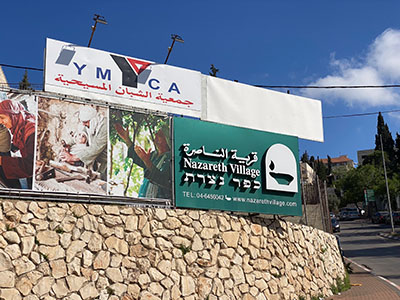
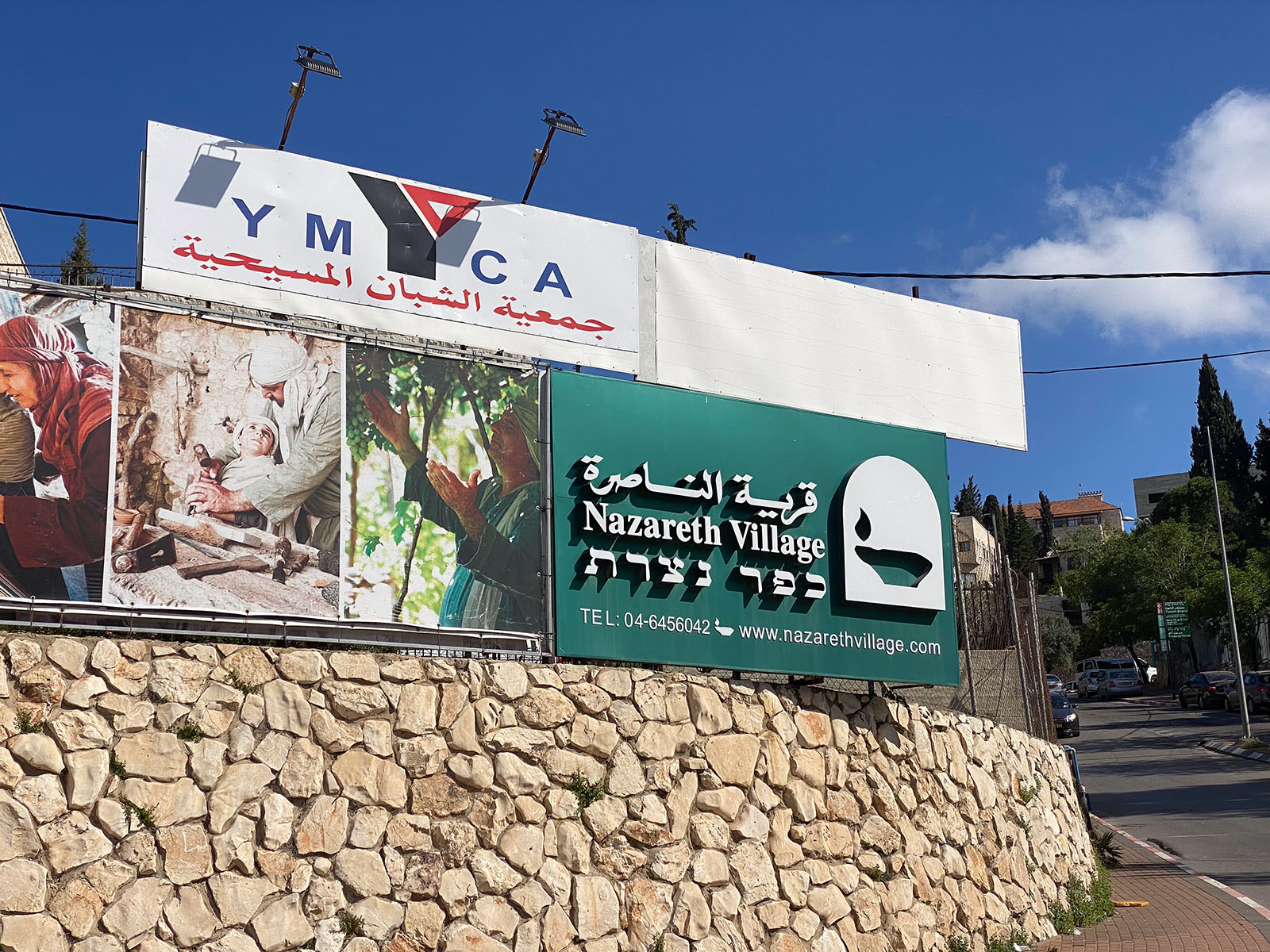
Nazareth Village is a living-history museum that recreates daily life in first-century Galilee. Located a short walk from the Basilica of the Annunciation, it offers one of the best opportunities in Israel to visualize the environment where Jesus spent His youth.

Nazareth Village

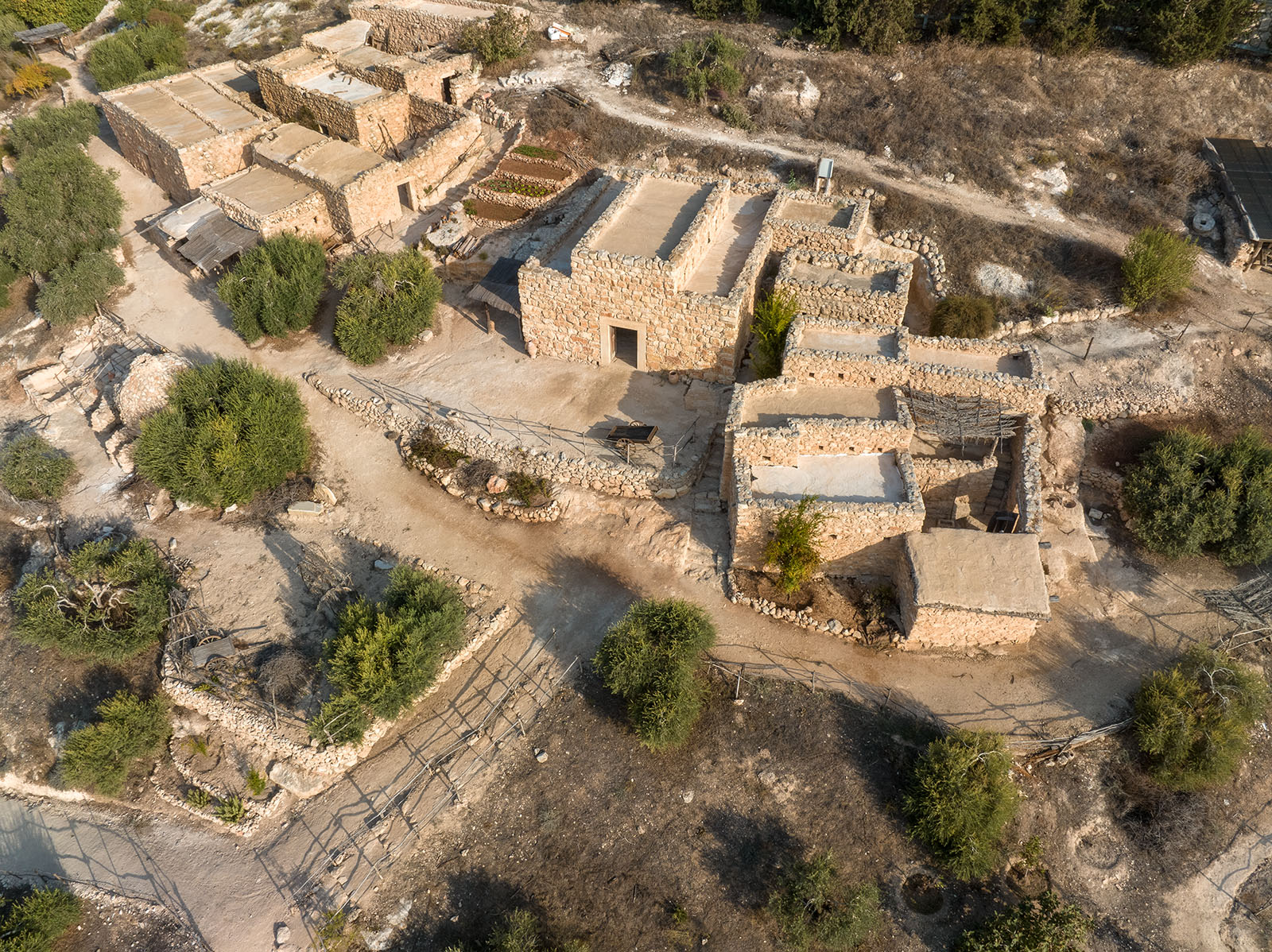
An aerial view of Nazareth Village highlights its reconstructed first-century synagogue and surrounding farmstead. The buildings, terraces, vineyards, and fields have been carefully designed from archaeological and historical evidence to portray a typical Galilean village of Jesus’s day.

Nazareth Village

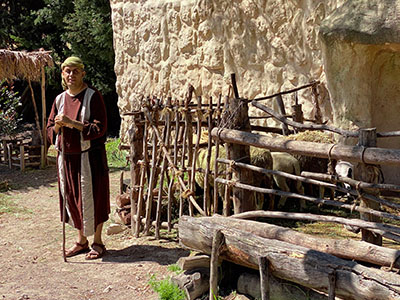
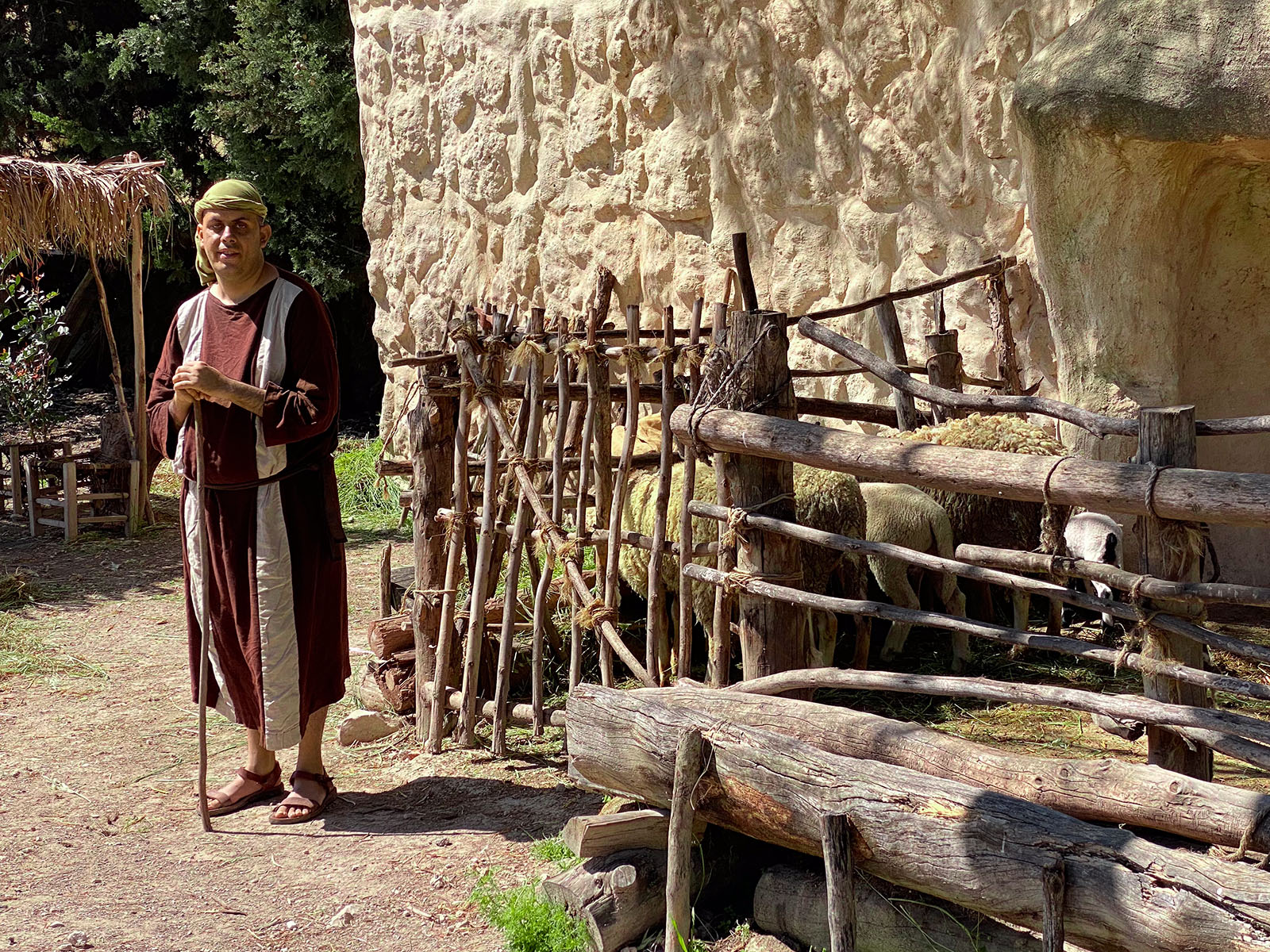
Costumed interpreters bring the village to life by demonstrating the occupations and routines of first-century Galilee. Scenes such as this remind visitors that shepherding and small-scale farming were familiar parts of everyday life in the world where Jesus grew up.

Nazareth Village

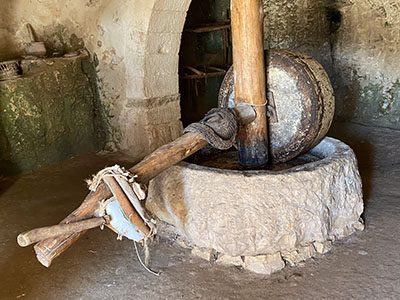
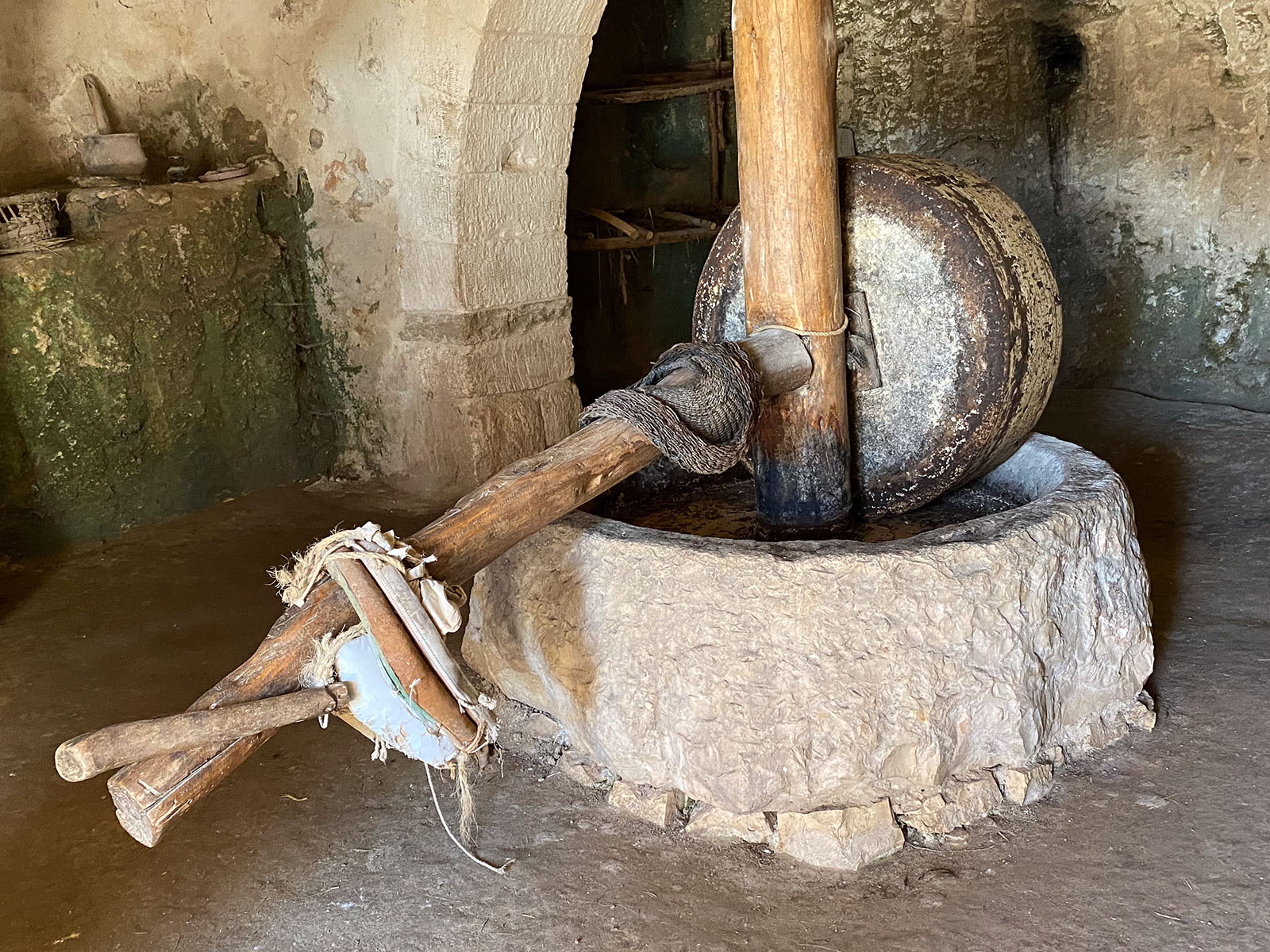
This reconstructed olive press illustrates one of the village’s most important agricultural industries. Olives were crushed beneath a heavy stone wheel before the pulp was pressed to produce oil used for cooking, lighting, medicine, and religious anointing.

Nazareth Village

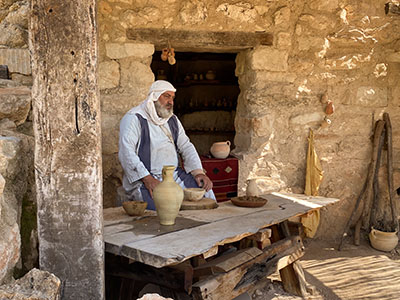
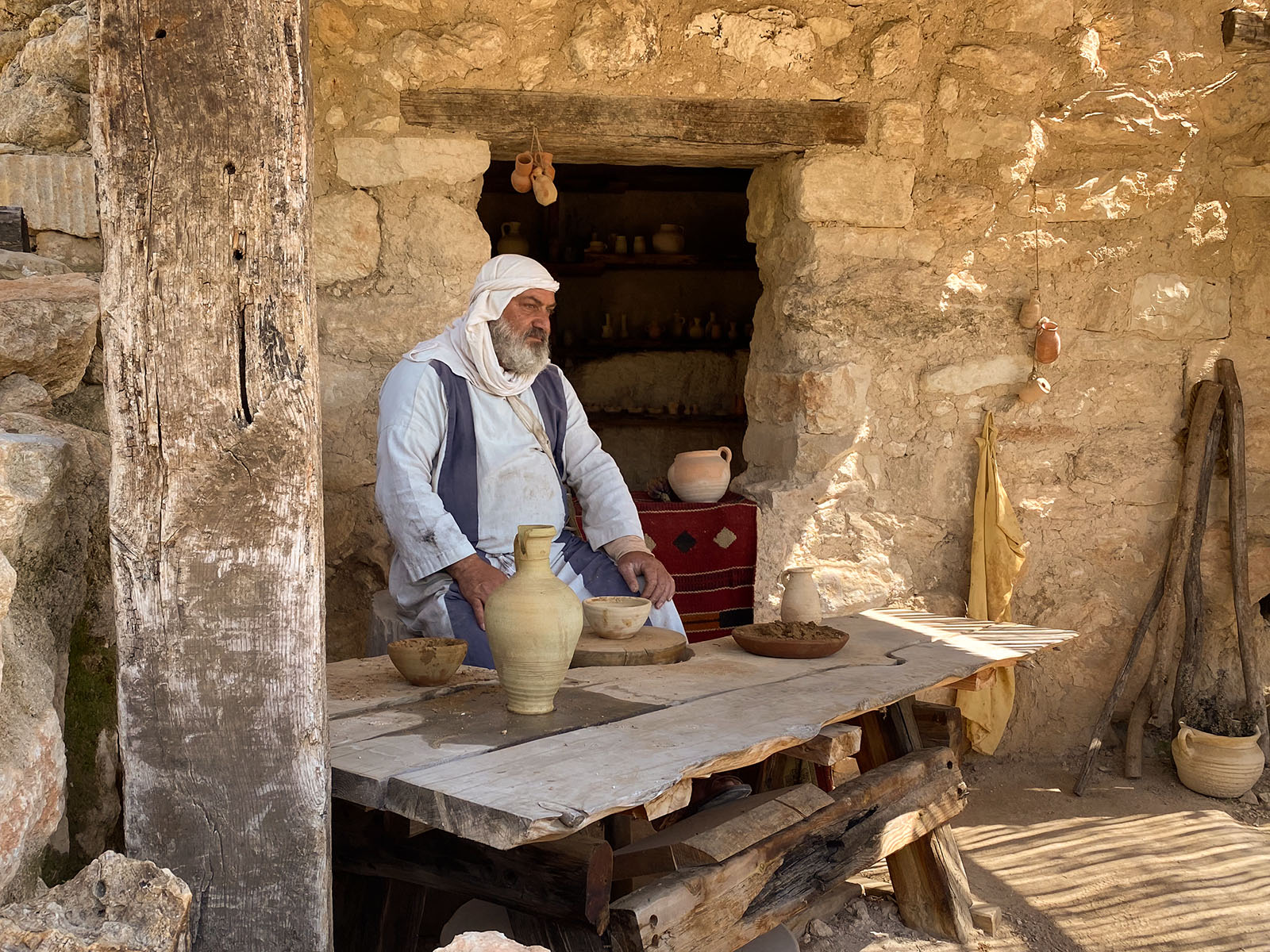
A village potter demonstrates an ancient craft practiced throughout Galilee. Clay vessels were essential household items, used for storing food, carrying water, preparing meals, and serving at the family table.

Nazareth Village

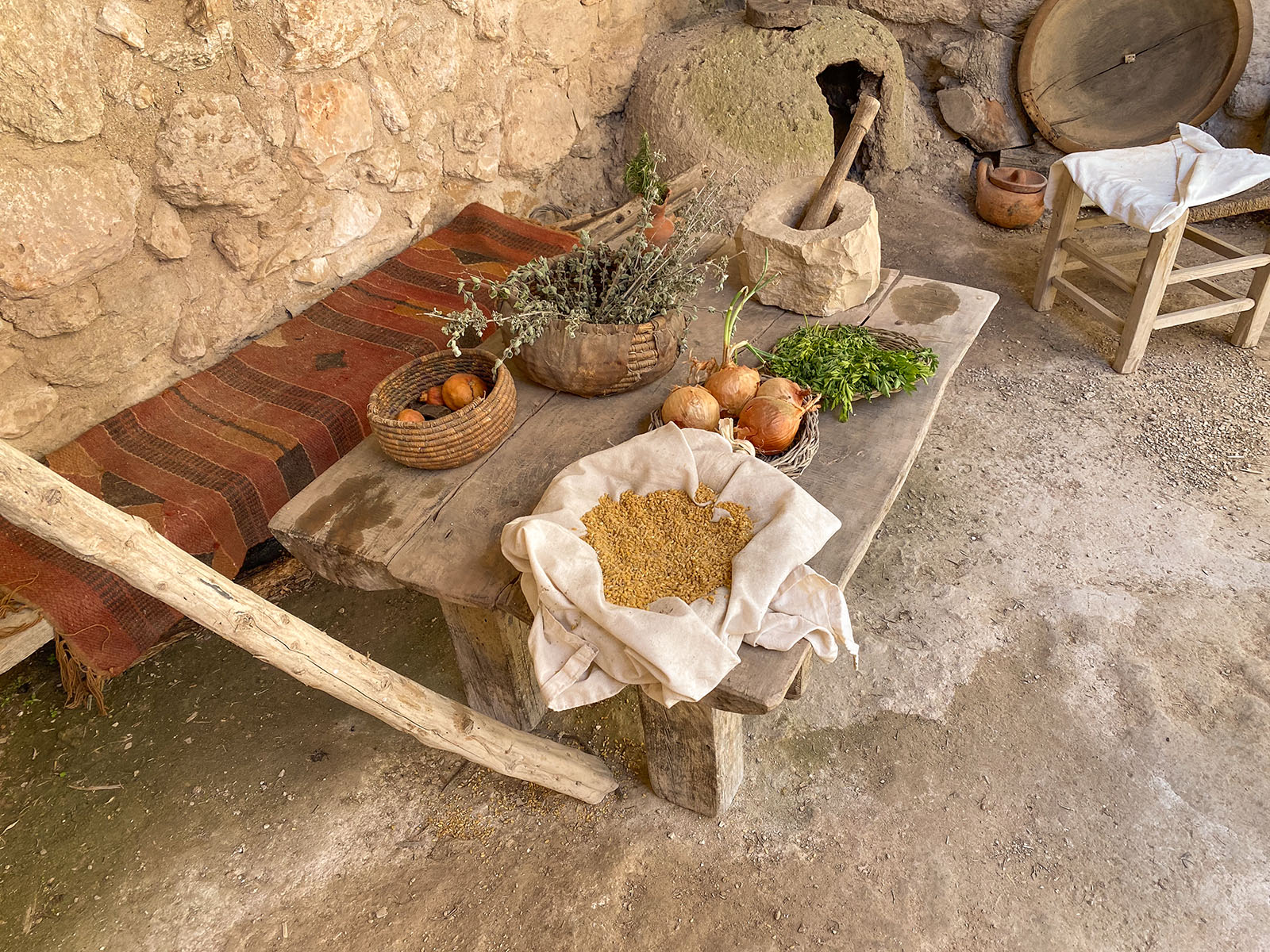
The interior of a modest Galilean home reveals the simplicity of everyday family life. Stone walls, woven mats, hand-ground grain, clay jars, and basic furnishings help visitors imagine the humble surroundings in which Jesus was raised.

Nazareth Village

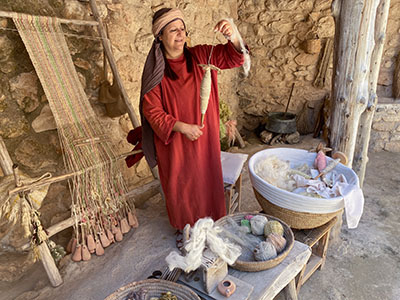
A village woman demonstrates the labor-intensive process of spinning wool into thread. Preparing yarn and weaving cloth occupied countless hours and were among the essential responsibilities of women in first-century households.

Nazareth Village

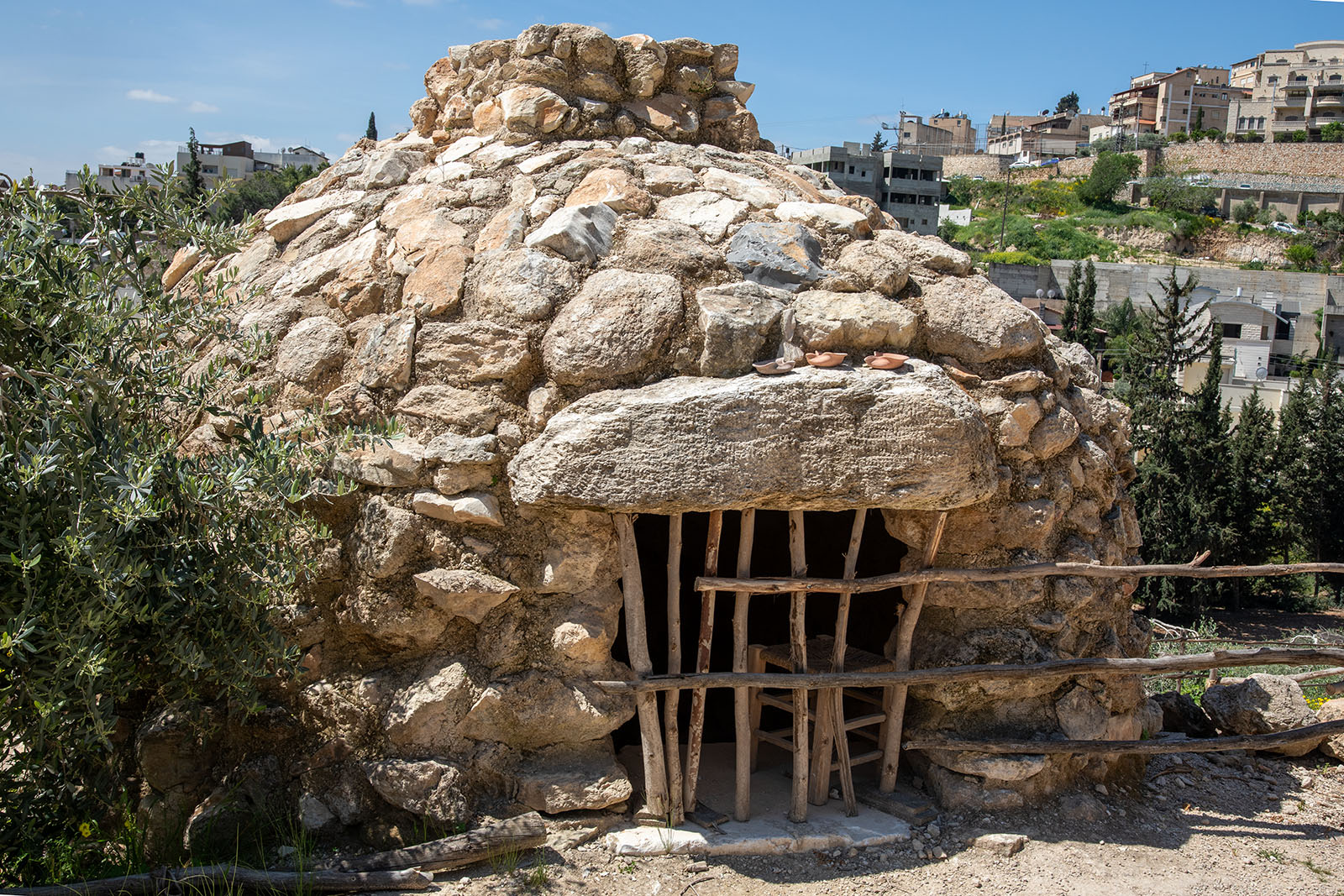
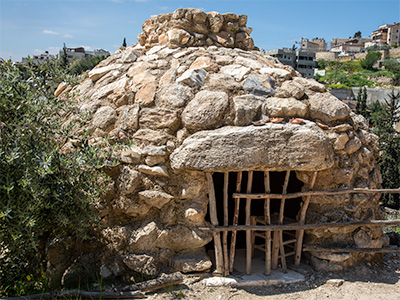
This domed stone structure is a reconstruction of a traditional first-century agricultural building. Similar structures were used for storing grain, tools, and other supplies, while others served as communal ovens or work areas. Its thick stone walls and corbelled roof reflect building techniques common throughout ancient Galilee.

Nazareth Village

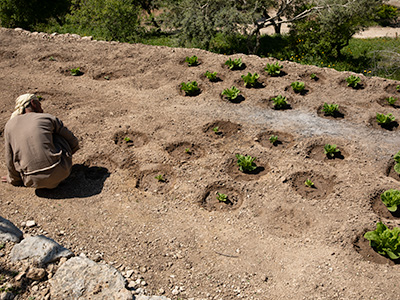
Ancient farming required constant labor and careful stewardship of the land. The gardens and cultivated plots at Nazareth Village demonstrate the small-scale agriculture that sustained Galilean families and formed the backdrop of many of Jesus' parables about sowing, harvesting, vineyards, and seeds.

Greek Orthodox Church of the Anunciation

The Greek Orthodox Church of the Annunciation preserves a tradition distinct from that of the nearby Basilica of the Annunciation. According to Orthodox belief, the angel Gabriel first appeared to Mary while she was drawing water from the village spring before the full annunciation took place. The church is built over that ancient spring, which has supplied Nazareth with water for centuries.

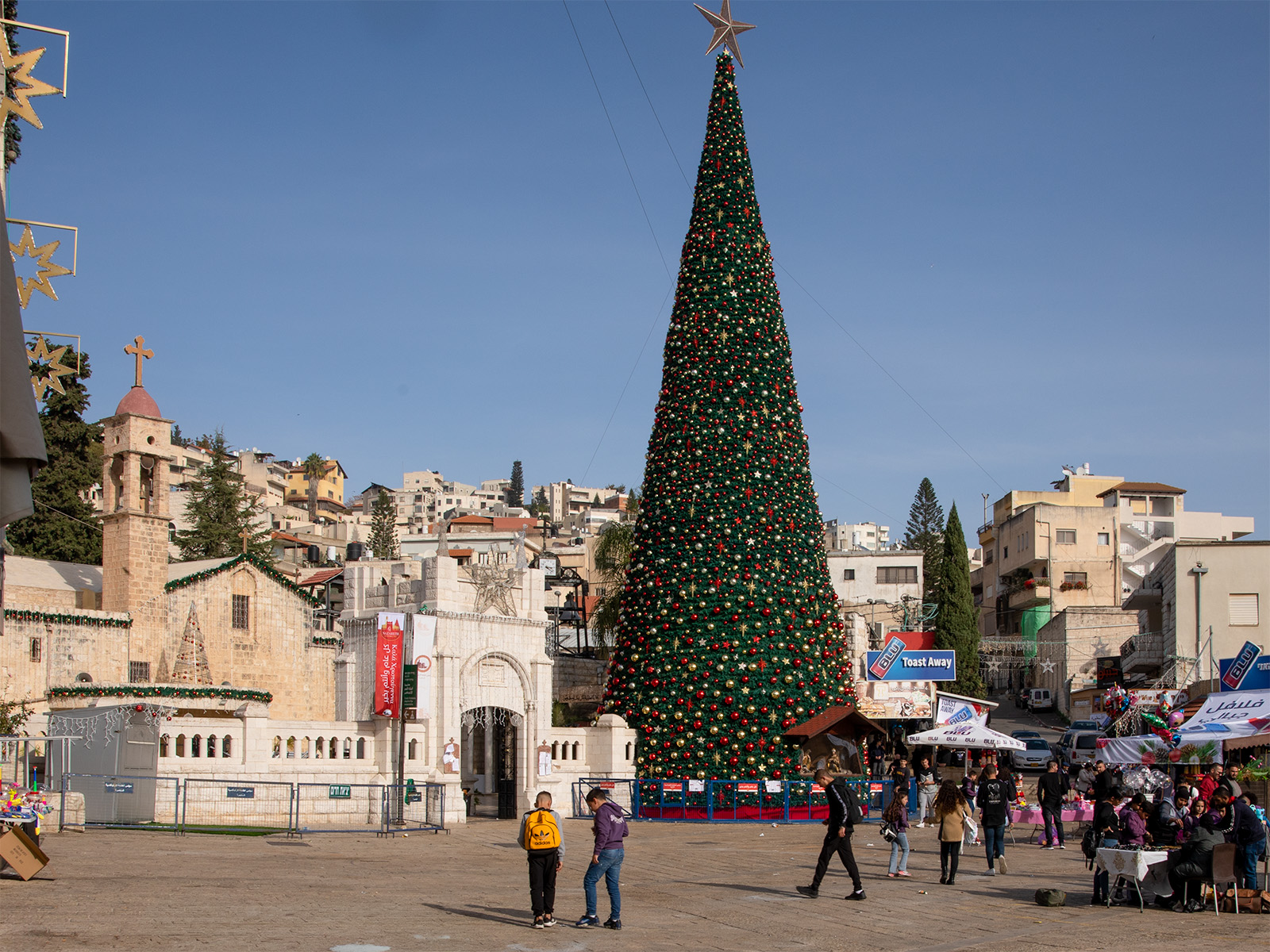
Decorated with lights and garlands during the Christmas season, the church welcomes pilgrims from around the world. The celebration reflects the central role the Annunciation plays in Christian faith—the moment when Mary accepted God's invitation to become the mother of Jesus Christ.
Greek Orthodox Church of the Anunciation

The plaza in front of the church becomes especially lively during holidays and festivals, when worshippers, pilgrims, merchants, and local residents fill the square. Much like the village streets of ancient Nazareth, it remains a place where faith and everyday life naturally come together.

Greek Orthodox Church of the Anunciation

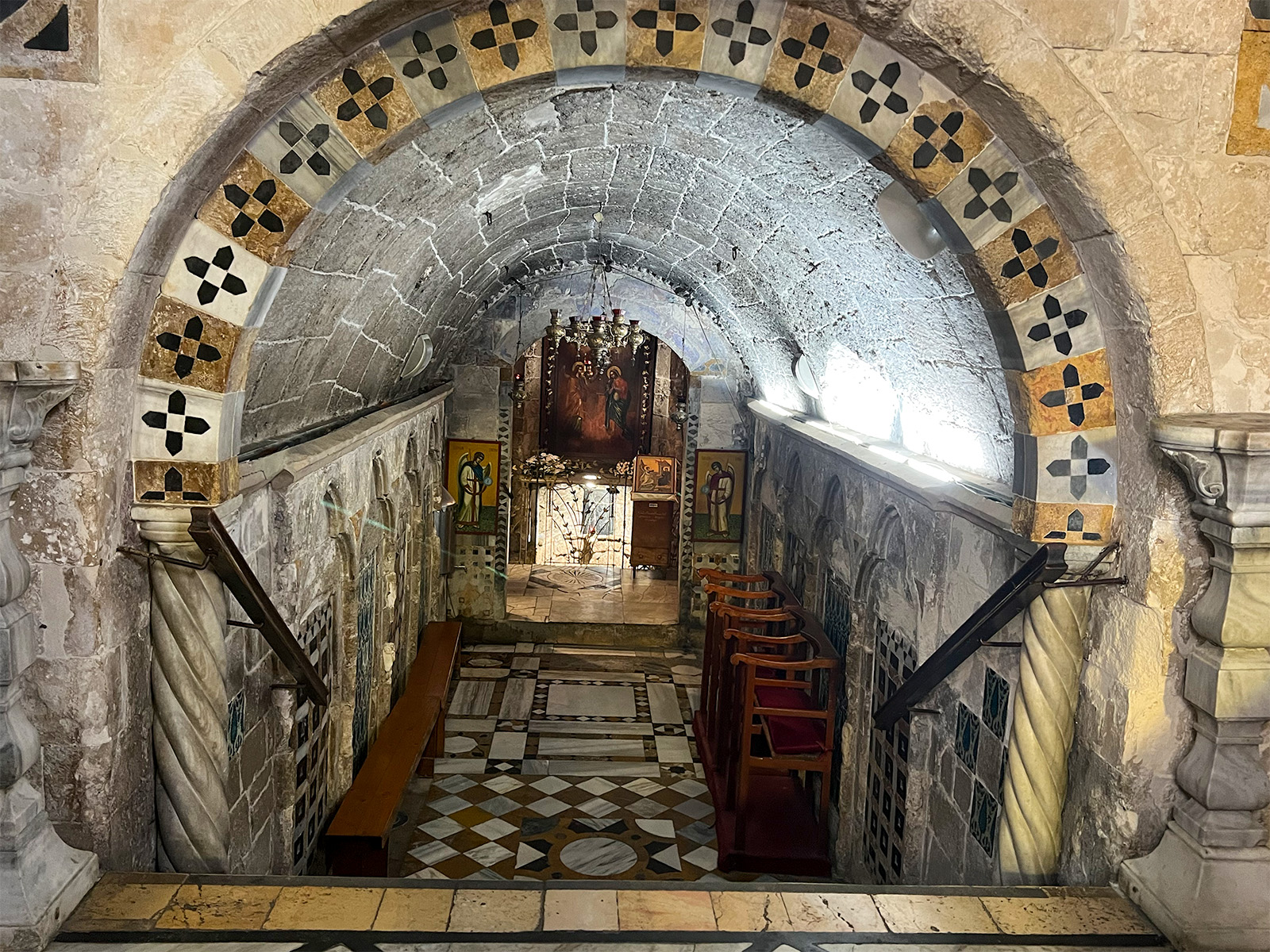
The sanctuary combines traditional Orthodox architecture with richly decorated icons, inviting worshippers into a place of reverence and prayer. Beneath the church lies the spring that has long been associated with Mary's encounter with the angel Gabriel.

Greek Orthodox Church of the Anunciation

At the heart of the church is the spring that has provided water for Nazareth since ancient times. Many visitors leave written prayers, notes, or small offerings nearby as expressions of faith and hope. While these practices are devotional traditions rather than biblical customs, they reflect the deep reverence many pilgrims feel for this sacred place.

Greek Orthodox Church of the Anunciation

This icon portrays the Annunciation, when the angel Gabriel declared that Mary would conceive by the power of the Holy Spirit and bear the promised Messiah (Luke 1:26–38). The scene has inspired Christian artists for centuries and stands as a reminder of Mary's humble faith and willing acceptance of God's plan.

Click the map to show or hide the overlay
Ein Harod Map