Scroll To Top
Scroll To Top

Capernaum Photo Gallery

Click the title to view map


Site Overview

  • Region: Northern Galilee
  • Biblical Territory: Naphtali
  • Modern Site: Capernaum National Park (Kfar Nahum), Israel
  • Nearby Landmark: Greek Orthodox Church of the Seven Apostles
  • Primary Scripture References: Matt. 4:13–16; Mark 1:21–39; Luke 4:31–44; John 6
Greek Orthodox Church of the Seven Apostles

Following His baptism and temptation, Jesus left Nazareth and made Capernaum His home during much of His Galilean ministry (Matt. 4:13). Situated along the northwestern shore of the Sea of Galilee, the town became the center from which He taught, healed, called disciples, and revealed His divine authority.

Many of the best-known events recorded in the Gospels took place here. Jesus taught in the synagogue, healed Peter’s mother-in-law, cast out unclean spirits, healed the paralytic lowered through a roof, called Matthew to follow Him, and delivered the Bread of Life discourse after feeding the five thousand.
Crowds gathered from throughout Galilee and beyond, making Capernaum one of the most frequently mentioned locations in the New Testament.

Today visitors can walk among the excavated remains of first-century homes, stand beneath the impressive white synagogue built centuries later, and view the memorial church that preserves the traditional location of Peter’s house. Few places allow visitors to visualize the setting of Christ’s earthly ministry as clearly as Capernaum.

Reflection

Capernaum witnessed extraordinary miracles and heard some of the Savior’s greatest teachings. Yet Jesus later declared that many of its inhabitants had failed to respond with faith (Matt. 11:23–24). The city reminds us that witnessing truth is not the same as accepting it. Every disciple must decide whether simply to observe Christ’s works or to truly follow Him.
Slide Presentation Major Events

Greek Orthodox Church of the Seven Apostles

Entrance to the Church of the Seven Apostles. The distinctive blue doors open into the Greek Orthodox Church of the Seven Apostles, surrounded by its peaceful gardens near the Sea of Galilee. After passing through these outer doors, visitors first enter a small shop offering icons, religious items, books, and souvenirs before continuing through another set of blue doors into the richly decorated chapel.

Capernaum White Synagogue

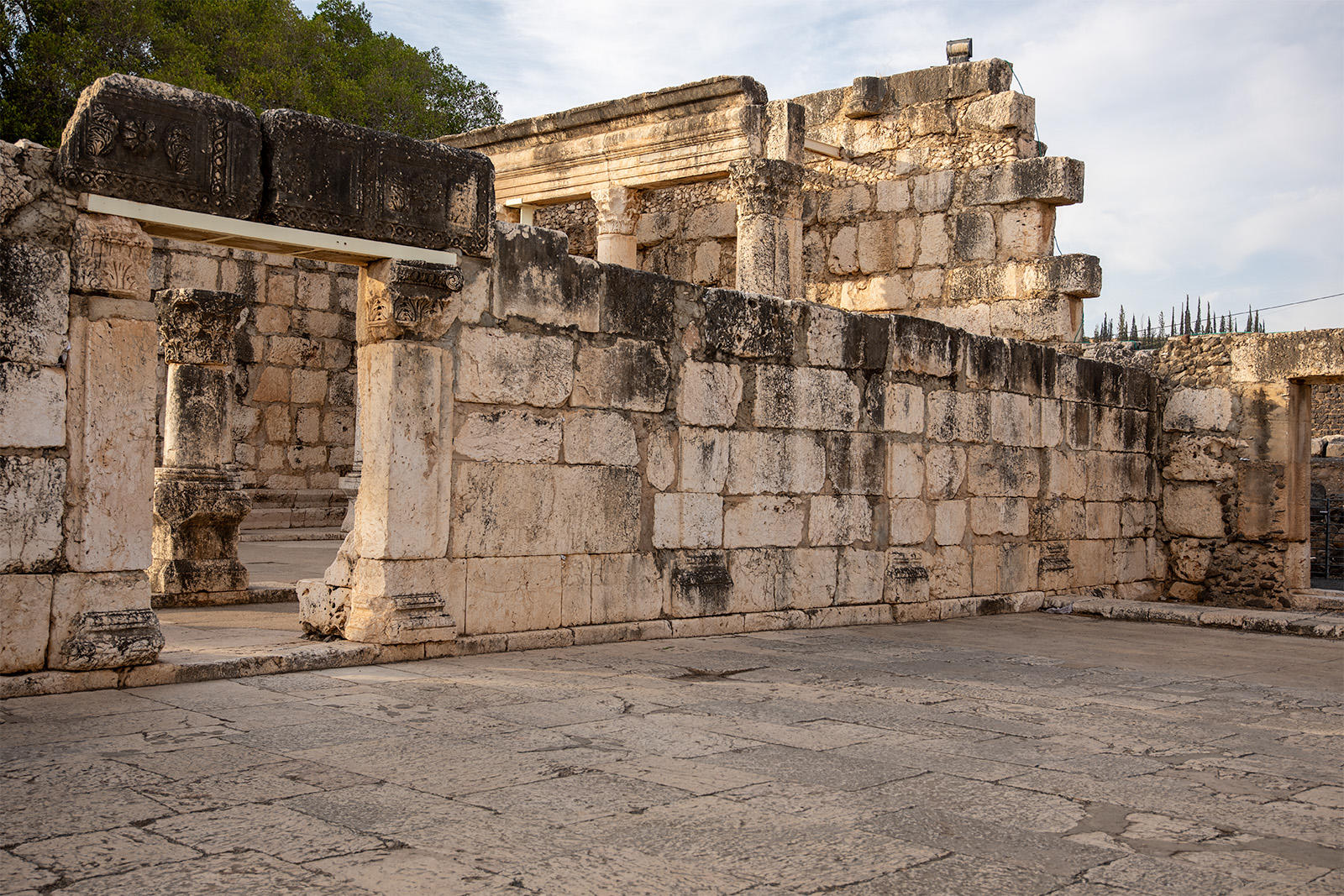
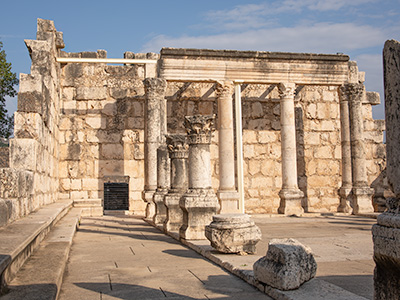
White Synagogue — Main Entrance. The monumental limestone façade of Capernaum’s synagogue dates to the Late Roman or Byzantine period, probably the fourth or fifth century AD. Its finely cut white limestone, imported from outside the immediate area, contrasts sharply with the dark local basalt used throughout ancient Capernaum. The columned entrance and elaborate architectural decoration reflect the importance of the synagogue as the center of Jewish religious and communal life.
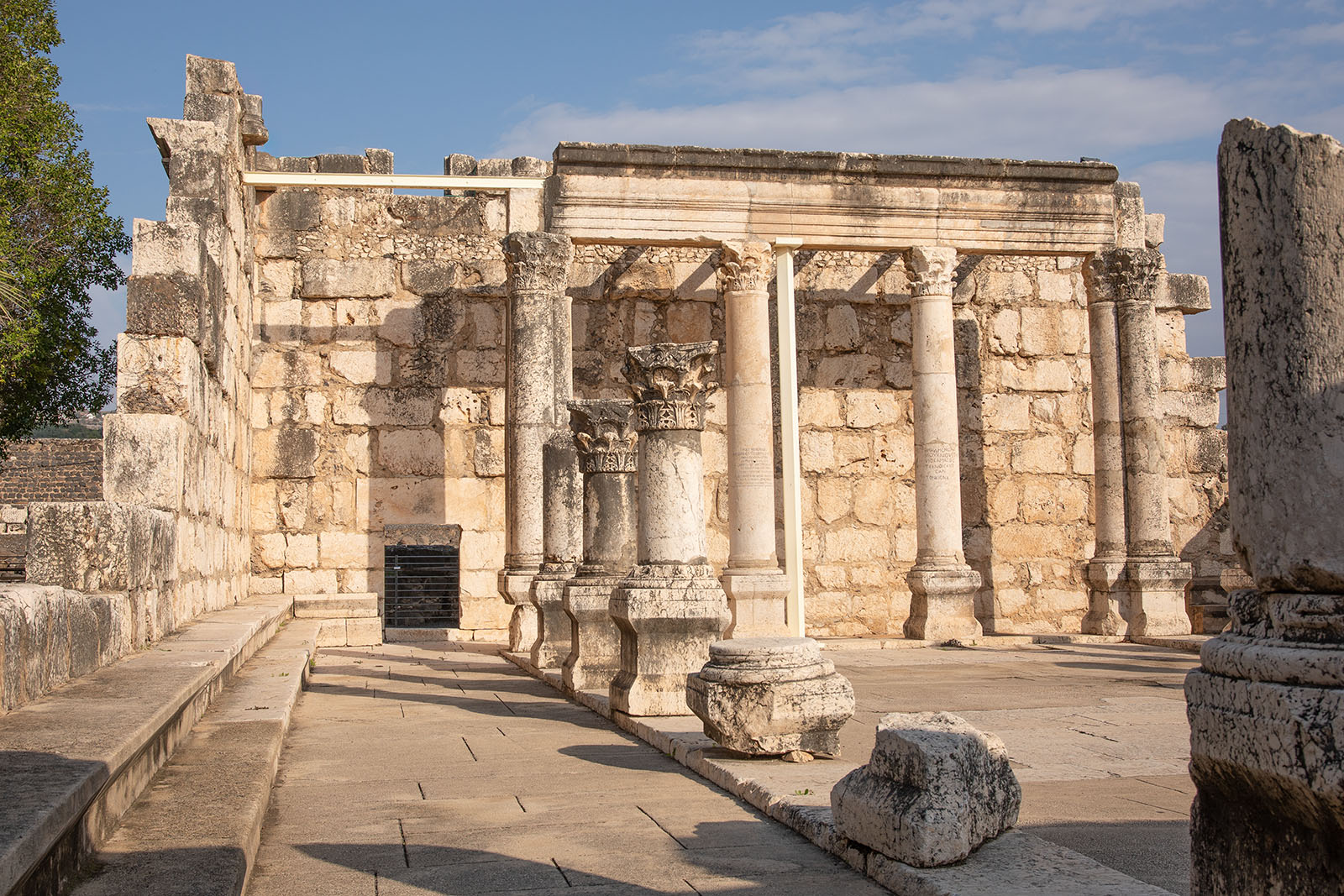
Excavations beneath this structure revealed remains of an earlier building constructed of basalt. Archaeologists continue to debate its precise date and identification, but the location is traditionally associated with the synagogue described in the Gospels, where Jesus taught during his ministry in Capernaum ( Mark 1:21–28; Luke 4:31–37; John 6:59). Thus, while the visible “White Synagogue” was built centuries after the time of Jesus, it preserves a remarkable connection with the Jewish community that continued to worship at this important site.

Capernaum White Synagogue

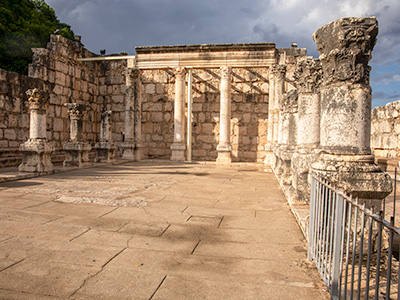
Interior of the White Synagogue. Rows of limestone columns once surrounded the synagogue’s spacious central hall, creating side aisles around the main gathering area. The surviving columns, bases, and elaborately carved Corinthian capitals illustrate the impressive scale and decoration of the building. Benches were arranged along the walls, providing seating for members of Capernaum’s Jewish community as they gathered for worship, Scripture reading, teaching, and other communal activities.

Although the visible synagogue dates several centuries after the New Testament period, it stands directly above the remains of an earlier structure traditionally associated with the synagogue of Jesus’ day. The Gospels repeatedly place Jesus teaching in Capernaum’s synagogue, including the healing of a man with an unclean spirit (Mark 1:21–28) and the discourse in which Jesus declared himself the “bread of life” (John 6:35–59). Standing within the later synagogue therefore helps visitors visualize the setting and communal environment in which some of Jesus’ most memorable teachings were delivered.

Capernaum White Synagogue

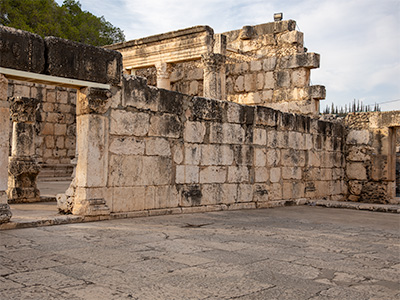
East Side of the White Synagogue. This view along the eastern side of Capernaum’s synagogue reveals the building’s massive limestone construction and some of its richly carved architectural decoration. The projecting stones, pilasters, columns, capitals, and ornamental blocks belonged to an imposing structure that would have stood out dramatically among the predominantly dark basalt houses of ancient Capernaum. A side entrance provided access to the synagogue complex in addition to the monumental entrances on the southern façade.

The visible synagogue belongs to the centuries after the New Testament, but excavations beneath its limestone walls uncovered earlier basalt foundations. These remains have often been associated with the synagogue that stood in Capernaum during the ministry of Jesus—possibly the one that, according to Luke, was built for the community through the generosity of a Roman centurion (Luke 7:1–5). The later synagogue’s placement over the earlier remains suggests that this location continued to serve as an important center of Jewish communal and religious life for generations.

Author - Dan Noorlander

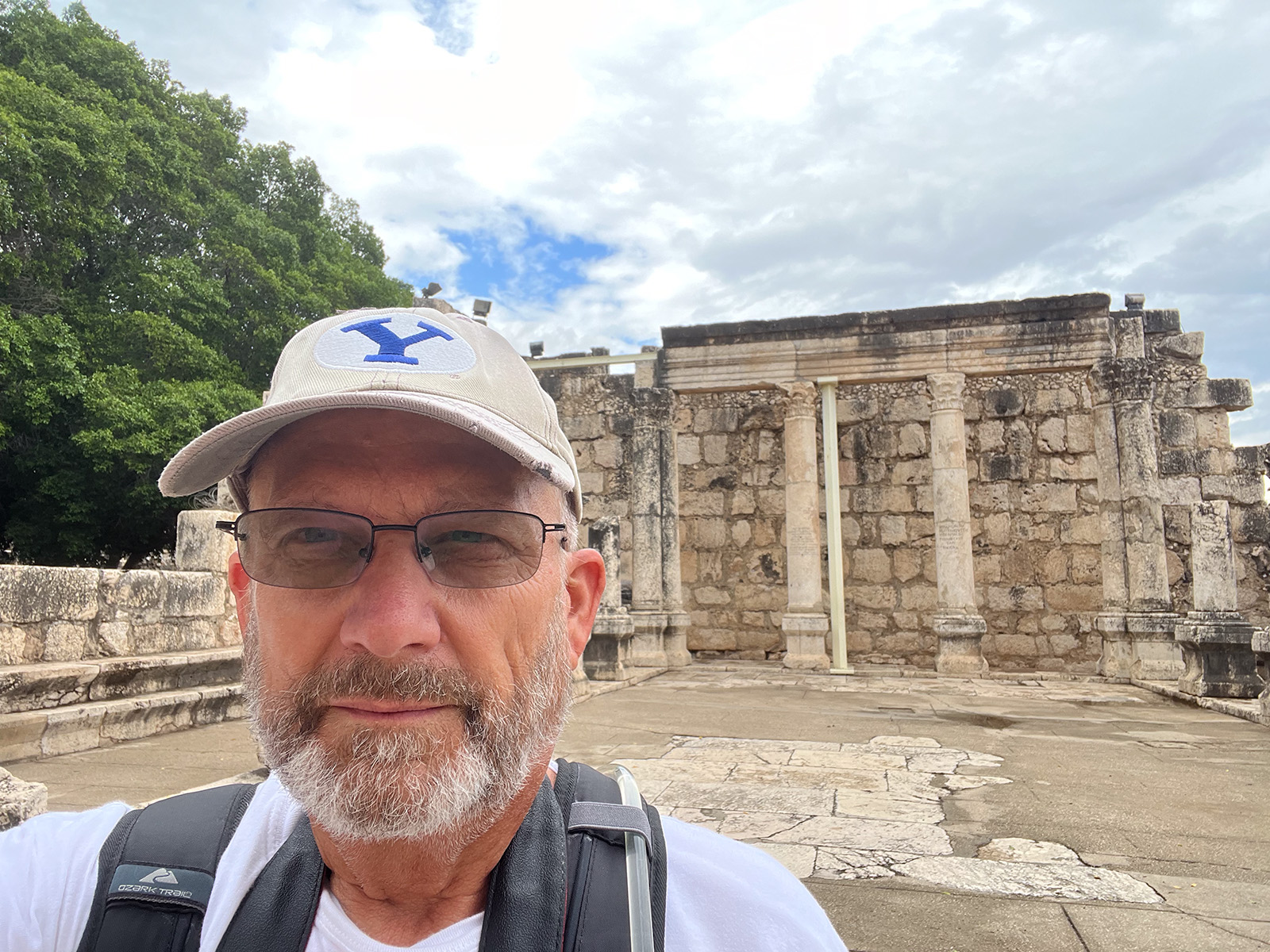
At the White Synagogue. A personal moment during my visit to Capernaum, standing inside the White Synagogue with its ancient columns and limestone walls behind me. Although the synagogue visible today was built centuries after the New Testament period, it stands over the remains of an earlier structure associated with the Capernaum of Jesus’s day.

Photographs like this are included occasionally throughout the gallery as part of my own record of traveling through the lands of the Bible. For me, visiting Capernaum was more than photographing an archaeological site. It was an opportunity to stand in the setting of events I had studied and taught for many years and to reflect on the Gospel accounts of Jesus teaching, healing, and ministering in this small community beside the Sea of Galilee.

Western Capernaum

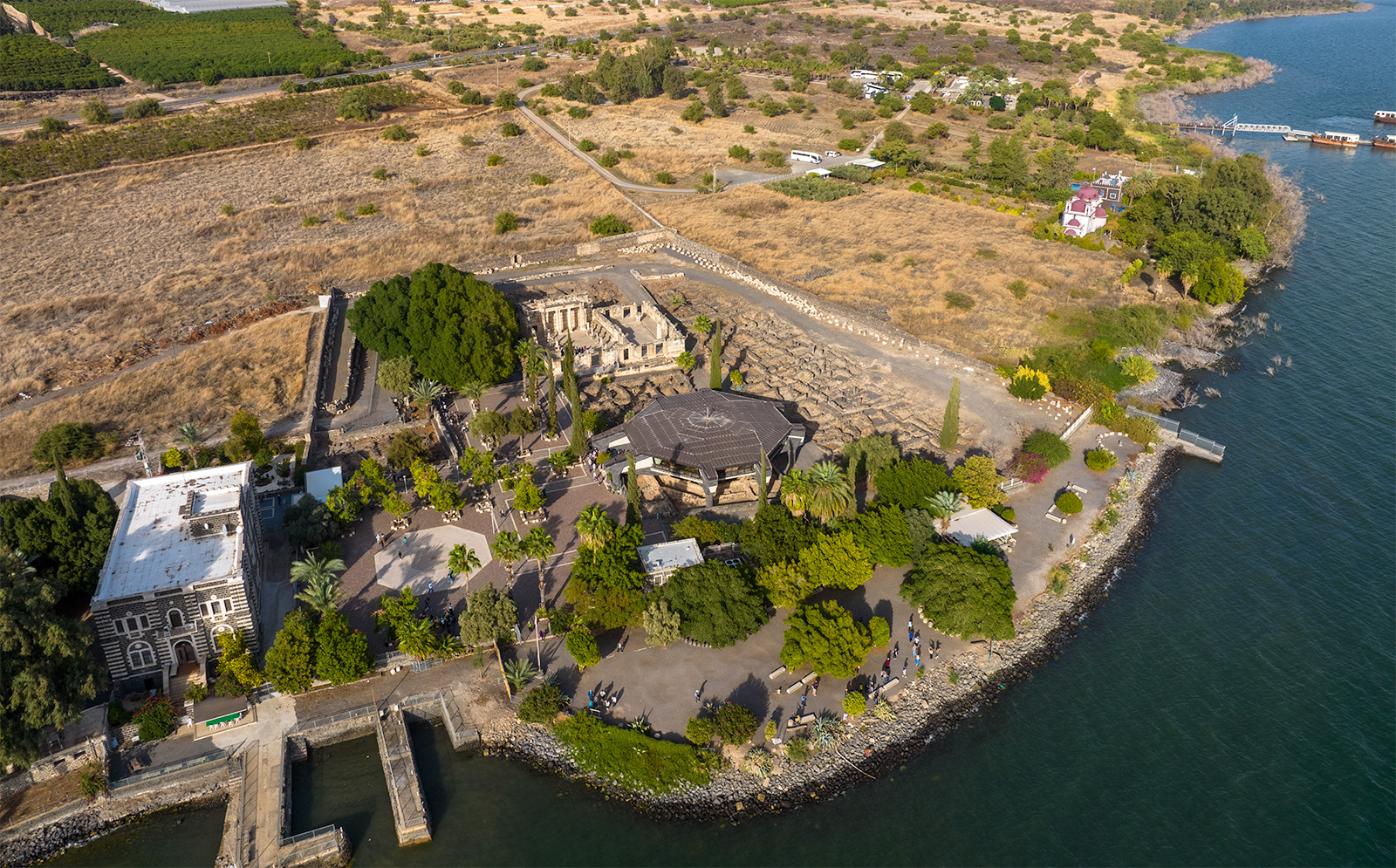
Western Capernaum Looking East. This aerial view begins over the Franciscan archaeological site of western Capernaum and looks eastward along the shoreline. The limestone White Synagogue stands near the upper part of the excavated area, while the modern octagonal Memorial Church over the traditional House of Peter occupies the center. Beyond the excavations, near the shore at upper right, the red domes of the Greek Orthodox Church of the Seven Apostles mark eastern Capernaum.

From this perspective, the relationship between the two modern archaeological and religious complexes becomes especially clear. They are separated today by property boundaries and approached through different entrances, but in antiquity they formed parts of the same settlement extending along the shore of the Sea of Galilee. The photograph also emphasizes how close Capernaum’s principal locations were to the water: the synagogue, residential neighborhoods, and traditional House of Peter all stood within a short walk of the lake that played such an important role in the daily life of the town and in Jesus’s Galilean ministry.

Western Capernaum

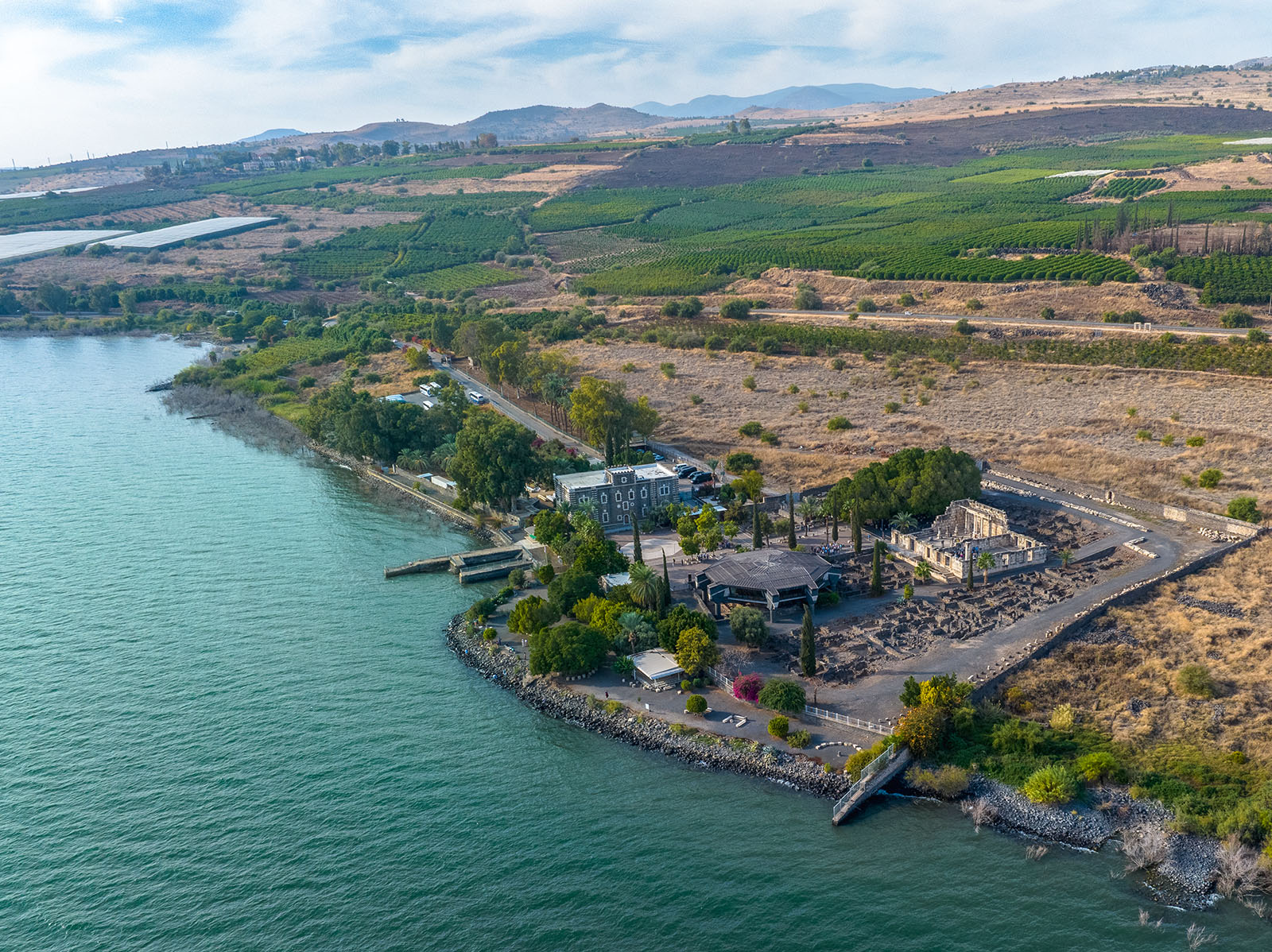
Capernaum from the Sea of Galilee. This aerial view places ancient Capernaum directly on the northwestern shore of the Sea of Galilee and shows why its location was so important. The excavated town occupies the area along the shoreline, with the prominent limestone White Synagogue visible at the right and the modern octagonal church marking the traditional House of Peter nearer the water. Beyond the site rise the fertile hills and agricultural lands of northern Galilee.

The setting helps explain Capernaum’s prominent role in the Gospel accounts. Jesus made the town a principal base for his Galilean ministry, teaching in its synagogue, healing the sick, and calling disciples from communities associated with fishing on the lake. Peter, Andrew, James, and John all lived or worked in this region, and many Gospel episodes unfolded either in Capernaum or on the waters immediately before us. The photograph therefore reveals something easily missed among the ruins: Capernaum was a lakeside community, and the Sea of Galilee was an integral part of everyday life and of Jesus’s ministry.

Capernaum - White Synagogue

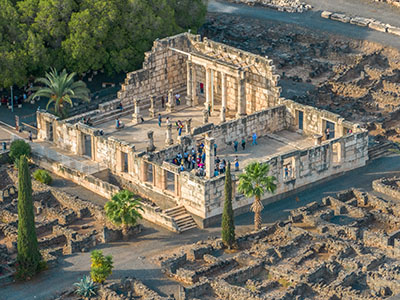
Aerial View of the White Synagogue. Seen from above, the White Synagogue stands prominently amid the dark basalt ruins of ancient Capernaum. The elevated view makes the building’s plan easier to recognize: the large main prayer hall occupies the western portion of the complex, while an adjoining courtyard lies to the east. Rows of columns once defined the interior aisles, and benches along the walls accommodated members of the congregation. The contrast between the synagogue’s imported pale limestone and the surrounding basalt construction would have made it one of the most conspicuous buildings in the town.

The surrounding ruins also place the synagogue within the densely built community in which Jesus carried out an important part of his Galilean ministry. The Gospels describe him teaching in Capernaum’s synagogue and then moving through the nearby town, including to the house of Peter, where he healed Peter’s mother-in-law (Mark 1:21–31). Although the White Synagogue visible today was constructed centuries later, remains of an earlier basalt building beneath it preserve the possibility that this same location served Capernaum’s Jewish community in the time of Jesus.

Western Capernaum

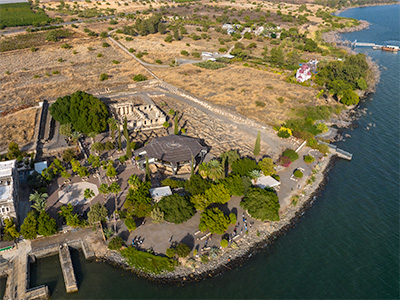
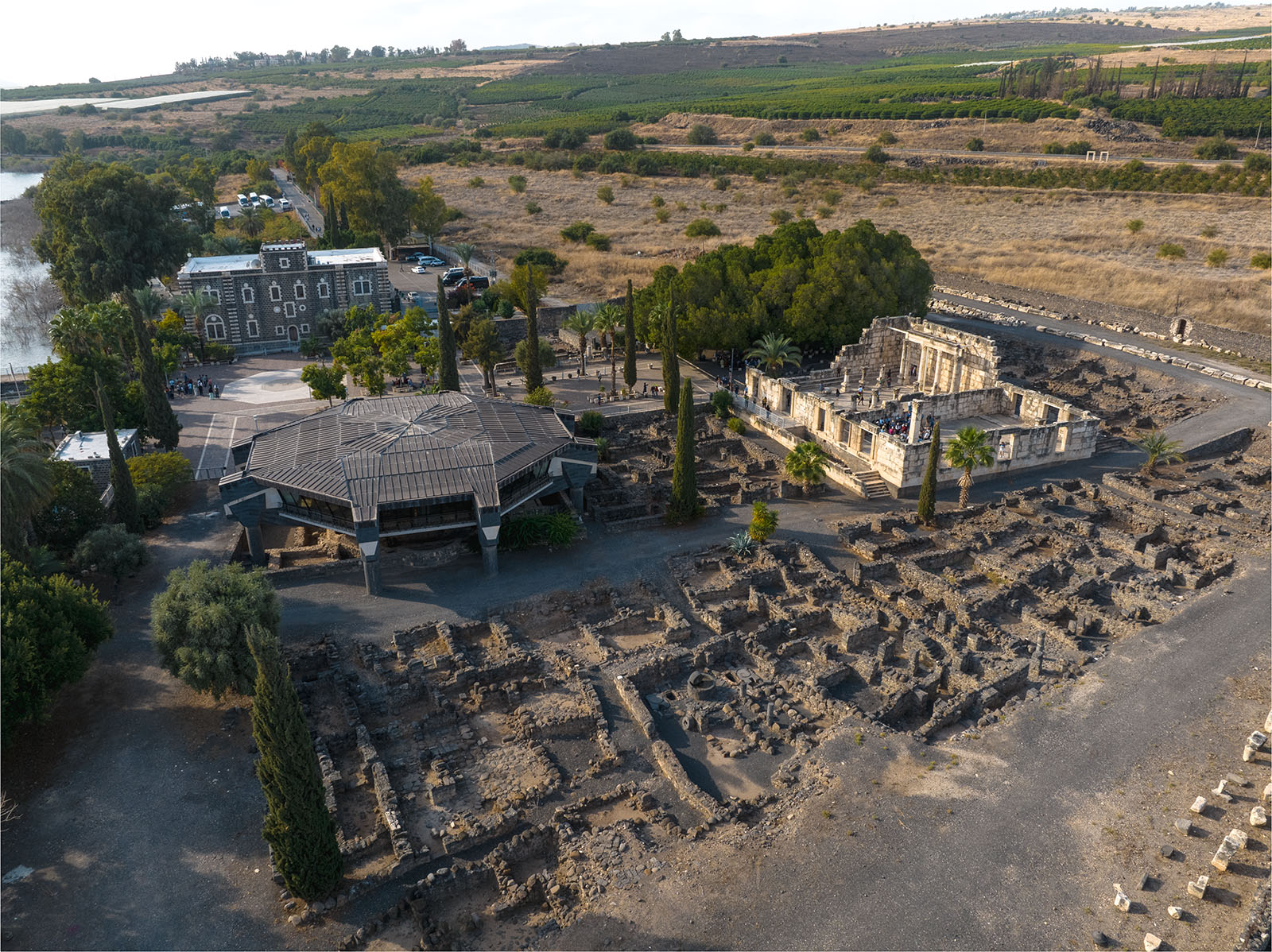
The Heart of Ancient Capernaum. This aerial view brings together three important parts of ancient Capernaum. At right stands the later limestone White Synagogue; at left, the modern octagonal Memorial Church shelters archaeological remains traditionally identified with the house of the apostle Peter. Between and around them stretches an excavated residential quarter of tightly packed basalt houses, courtyards, lanes, and work areas. The close proximity of these structures gives a sense of how compact the ancient town was and how closely domestic life was connected with its synagogue.

This setting provides a remarkable geographical context for the opening chapters of Mark’s Gospel. After teaching and healing in the synagogue, Jesus went with James and John to the nearby home of Simon Peter and Andrew, where he healed Peter’s mother-in-law. That evening, people gathered at the door bringing the sick and afflicted to him (Mark 1:21–34). The short distance visible here between the synagogue and the traditional site of Peter’s house illustrates just how naturally Mark’s account fits the physical scale of ancient Capernaum: events described successively in the Gospel could have occurred only a brief walk apart.

Western Capernaum shore

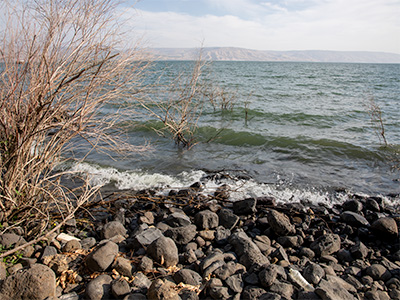
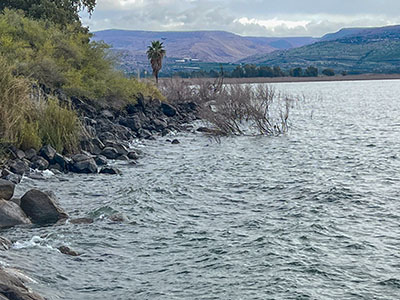
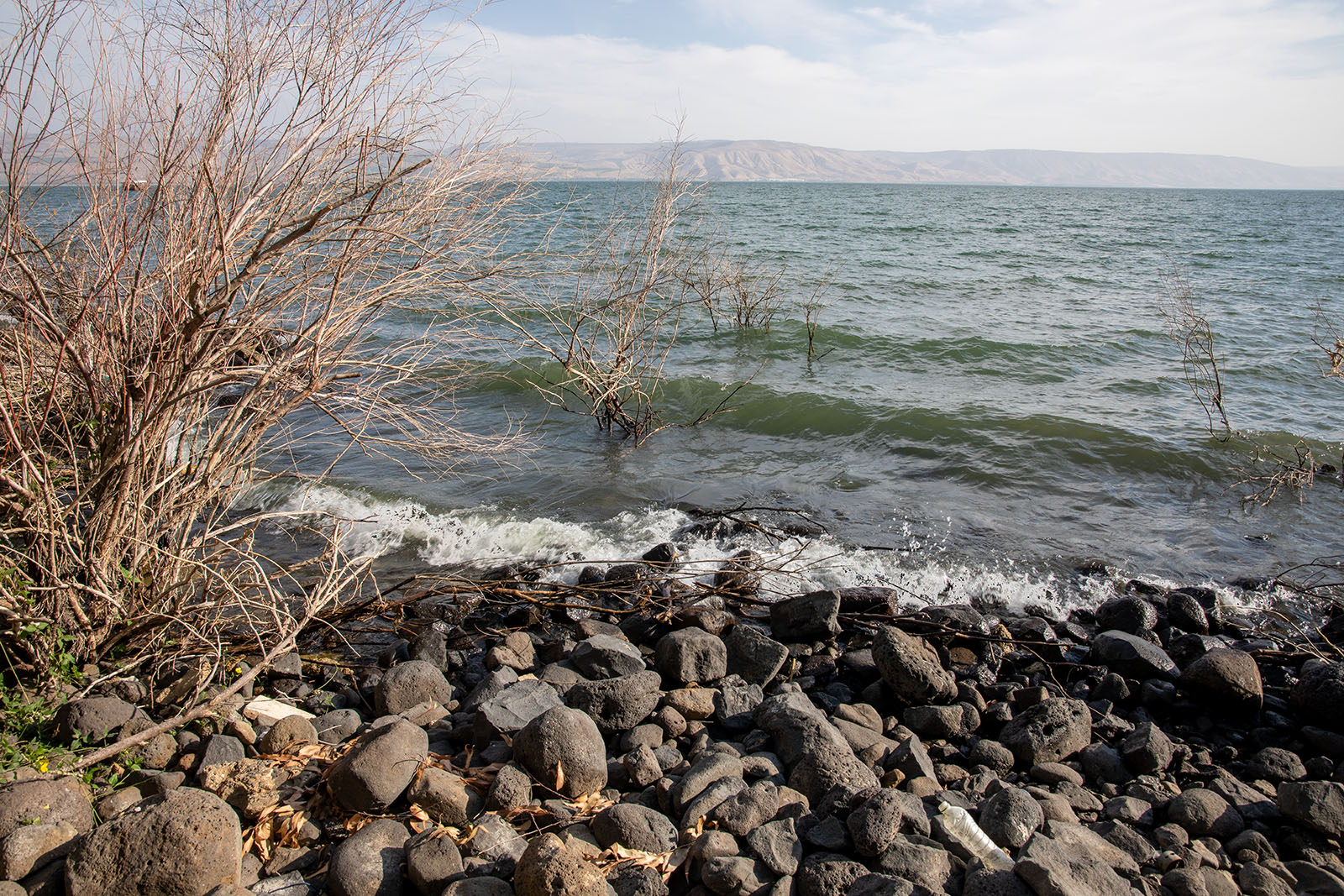
Shoreline at Capernaum. The rocky shoreline of the Sea of Galilee lies only a short distance from the excavated remains of ancient Capernaum. The dark basalt stones along the water’s edge reflect the volcanic geology of the region and are the same local material used extensively in the town’s houses and other structures. Across the lake rise the hills of the eastern shore, while the water itself formed an essential part of Capernaum’s economy, transportation, and daily life.

This shoreline also recalls the fishing world so prominent in the Gospels. Peter and Andrew were fishermen, as were James and John, and Jesus called these disciples beside the Sea of Galilee, promising to make them “fishers of men” (Mark 1:16–20). Jesus also taught crowds along the lakeshore and sometimes used a boat as a place from which to address those gathered on land (Mark 4:1–2). Although the precise locations of those events cannot be identified, scenes such as this help us visualize the landscape in which much of Jesus’s Galilean ministry unfolded.

First Centurn Capernaum foundation

Earlier Foundations Beneath the White Synagogue. Along the exterior of the White Synagogue, the contrast between the later building and the darker masonry beneath it can be clearly seen. The finely cut limestone blocks belong to the monumental synagogue constructed centuries after the New Testament period, while archaeologists discovered earlier basalt walls and floors below and around the structure. The sign identifies these remains as those of the “Synagogue of Jesus,” reflecting the traditional interpretation of the excavations.

The archaeological evidence, however, calls for some caution. While an earlier structure unquestionably lies beneath the White Synagogue, its precise date and identification as the first-century synagogue mentioned in the Gospels remain debated. The possibility is nevertheless compelling because the later synagogue was erected directly over an earlier public building at the same location. If this was indeed the site of Capernaum’s first-century synagogue, it would be associated with some of the most important episodes of Jesus’s Galilean ministry, including his teaching and healing in the synagogue (Mark 1:21–28) and his Bread of Life discourse (John 6:59).

Ark of the Covenant carving

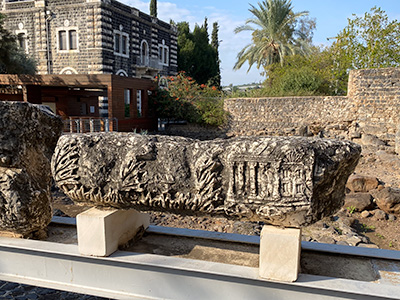
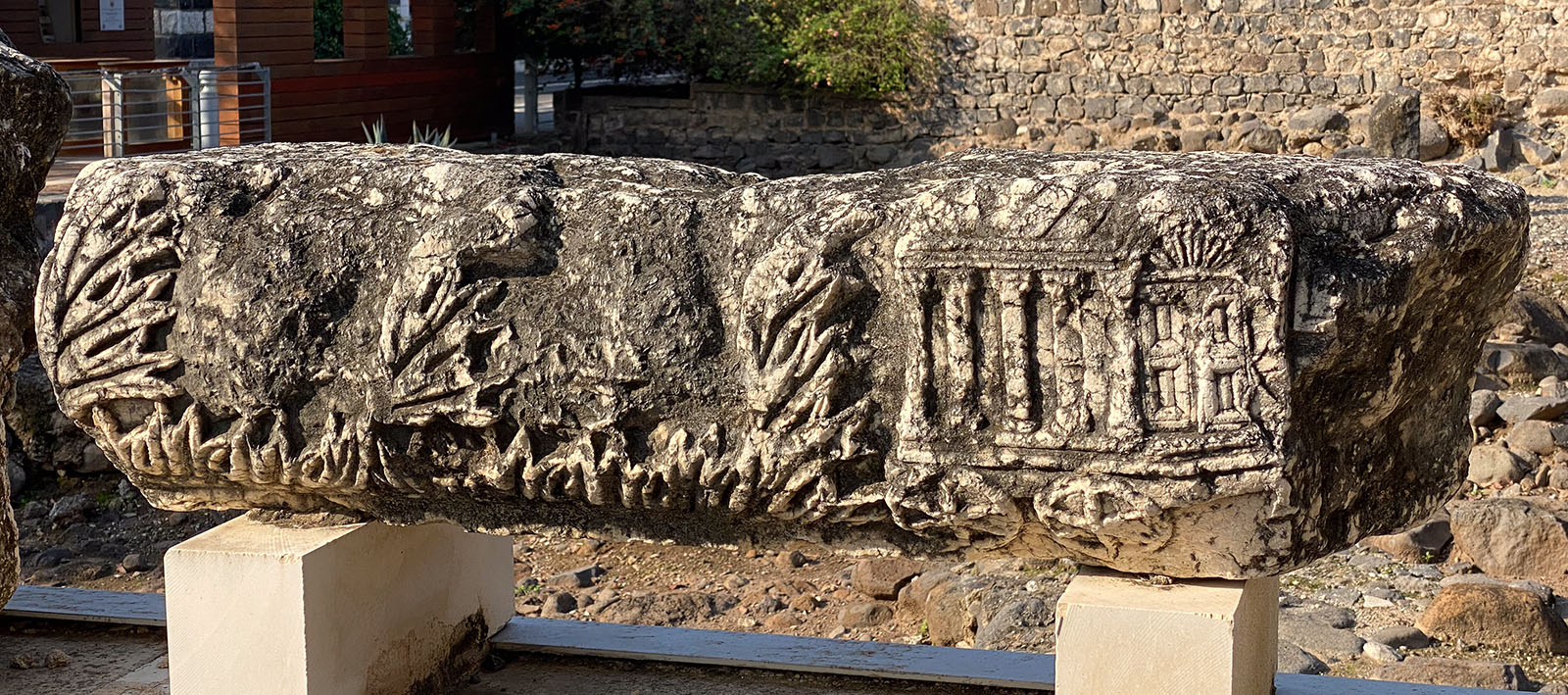
Decorated Synagogue Frieze. Among the architectural fragments preserved at Capernaum is this elaborately carved limestone block from the White Synagogue. Alongside vegetal ornamentation appears a small architectural structure with columns, a pedimented or arched roof, and paneled doors. Such carvings demonstrate the rich decorative program of the synagogue and provide glimpses of the religious imagery familiar to Jewish communities of Late Roman and Byzantine Galilee.

The small structure is sometimes popularly described as the Ark of the Covenant, but that identification is unlikely. By the period in which the White Synagogue was built, the biblical Ark had been absent from Jewish worship for many centuries. The carving is more plausibly understood as a representation of a Torah shrine or Torah ark—the architectural repository in which sacred Torah scrolls were kept—or possibly as an idealized representation recalling the Jerusalem Temple. The distinction is important: the image reflects the continuing centrality of the Torah and the memory of the Temple in Jewish religious life rather than evidence that the biblical Ark of the Covenant was present at Capernaum.

Capernaum Memorial Church

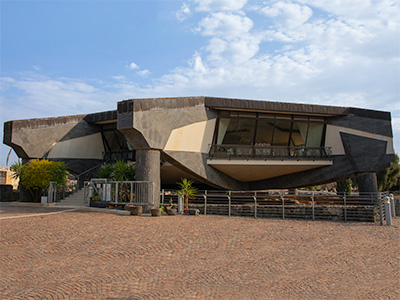
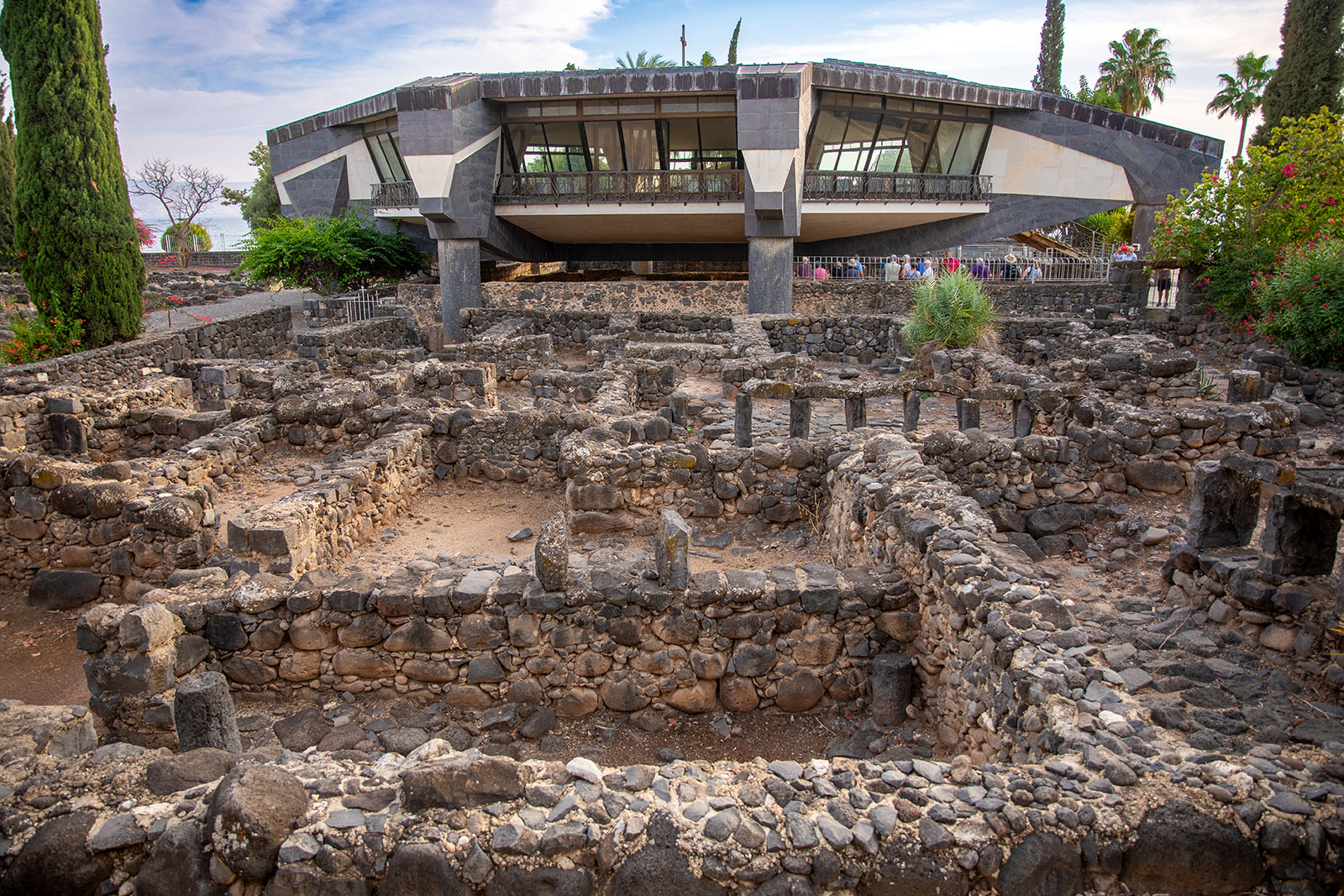
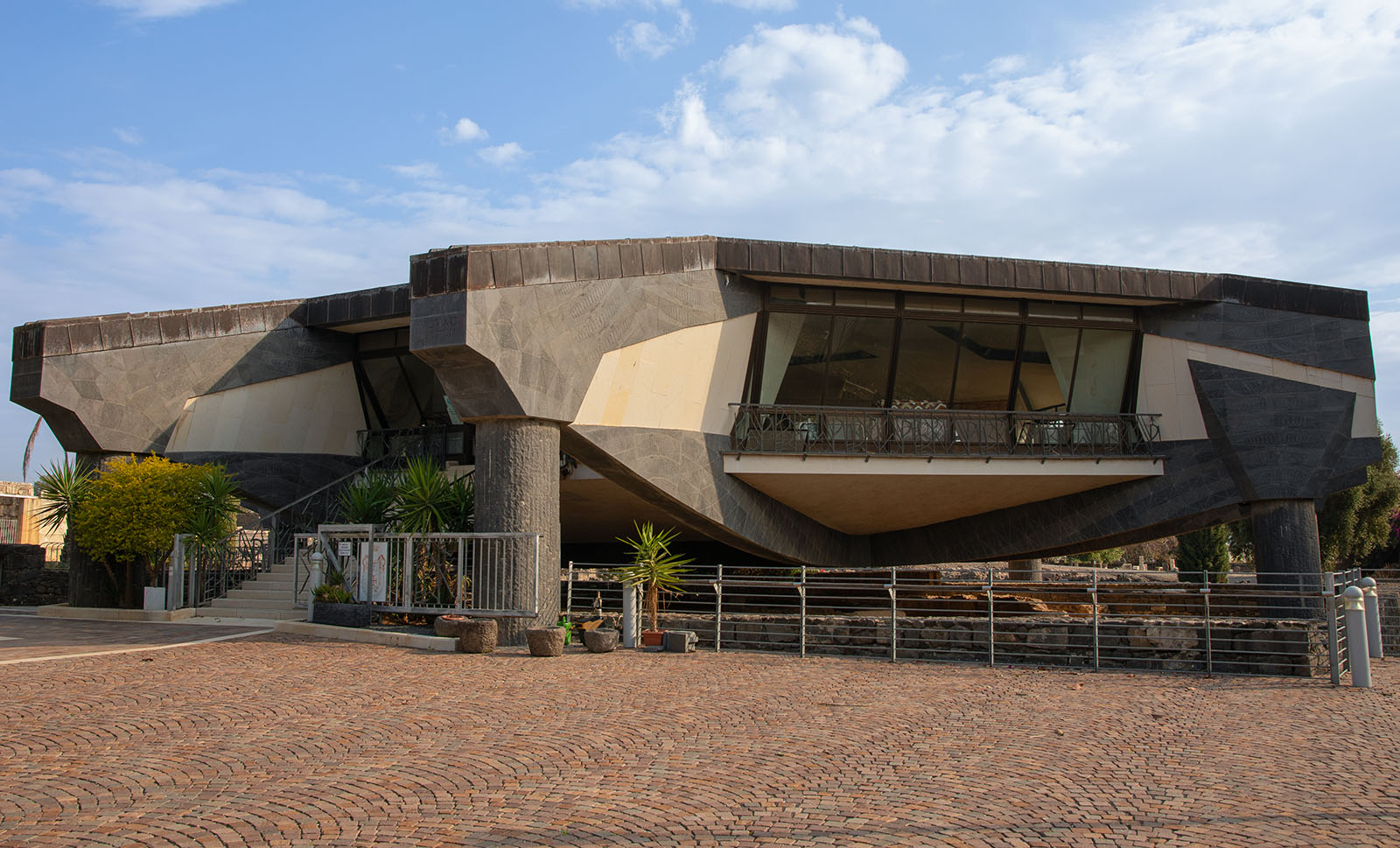
Memorial Church over Peter’s House. The modern octagonal Memorial Church rises above a cluster of basalt dwellings near the shoreline of Capernaum. Built by the Franciscans and dedicated in 1990, the church was deliberately elevated on supports so that visitors could see and preserve the archaeological remains beneath it. At the center of those remains is a first-century domestic structure traditionally identified as the house of the Apostle Peter.

The identification is based on more than later Christian tradition. Archaeologists found evidence that one room of the house was altered unusually early for communal rather than ordinary domestic use; its walls were plastered repeatedly, and later Christian graffiti included invocations associated with Jesus. During the fourth century, the house was enclosed within a larger sacred complex, and in the fifth century an octagonal church was constructed directly over it. This long sequence of Christian veneration makes Peter’s house one of Capernaum’s most intriguing archaeological sites and provides a possible setting for the Gospel account of Jesus healing Peter’s mother-in-law and receiving crowds at the house (Mark 1:29–34).

Greek Orthodox Church of the Seven Apostles

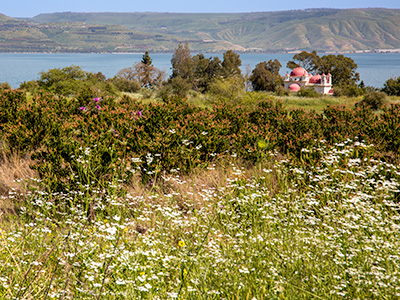
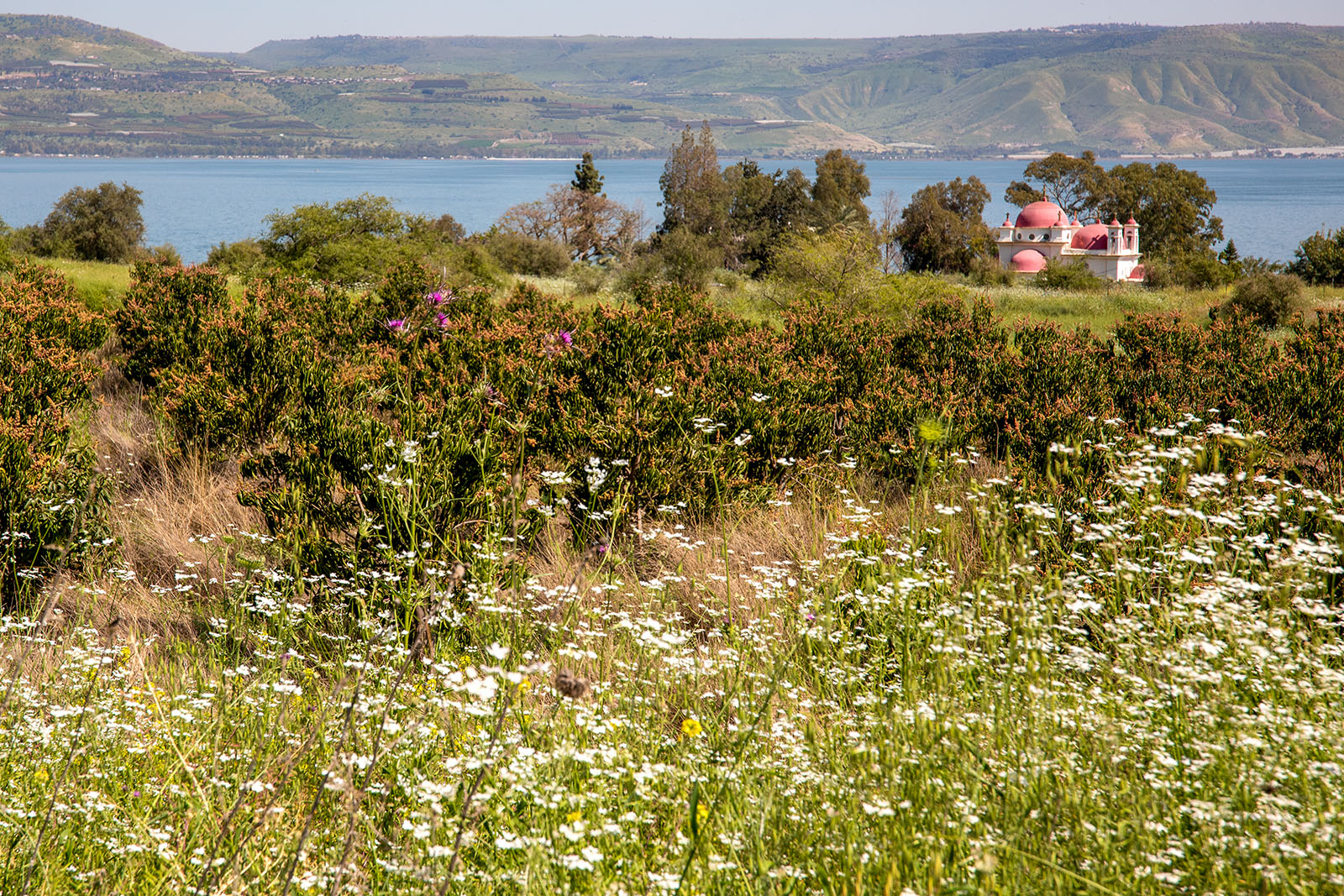
Wildflowers of Galilee. In spring, wildflowers spread across the fields and hillsides of Galilee, bringing color to the landscape around Capernaum and the Sea of Galilee. Here they fill the foreground as the Church of the Seven Apostles rises near the shore. Scenes like this recall Jesus’s invitation to “consider the lilies of the field, how they grow” (Matt. 6:28), words spoken to people who knew this Galilean landscape firsthand.

Greek Orthodox Church of the Seven Apostles

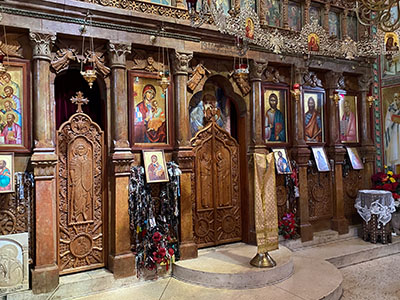
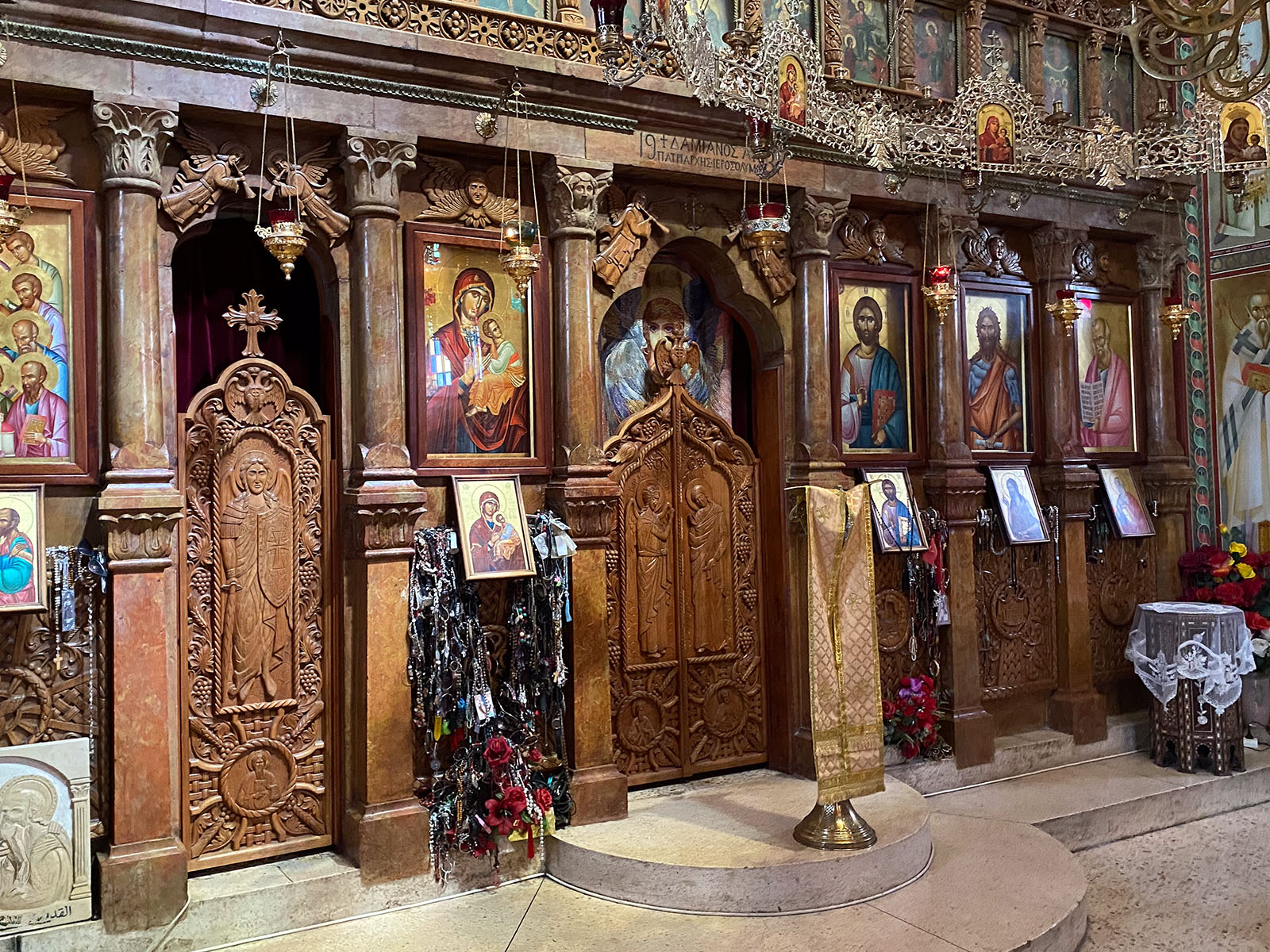
Iconostasis of the Seven Apostles Church. Inside the Greek Orthodox Church of the Seven Apostles, an elaborately carved iconostasis forms the visual and liturgical boundary between the nave, where the congregation gathers, and the sanctuary containing the altar. Icons of Christ, the Virgin Mary, John the Baptist, and other saints are incorporated into the screen, while hanging oil lamps and intricate woodcarving contribute to the richly decorated interior characteristic of Orthodox churches.

At the center are the Royal Doors, which provide the principal entrance into the sanctuary and are normally used by the clergy during the Divine Liturgy. The iconostasis is not intended simply to hide the altar; symbolically, it marks the meeting of the earthly and heavenly realms, with the icons presenting the worshipper with Christ and the community of saints. In a church dedicated to the apostles who followed Jesus around the Sea of Galilee, this traditional Orthodox arrangement connects the biblical world commemorated at Capernaum with the continuing worship of the Christian community that maintains the site today.

Capernaum Memorial Church

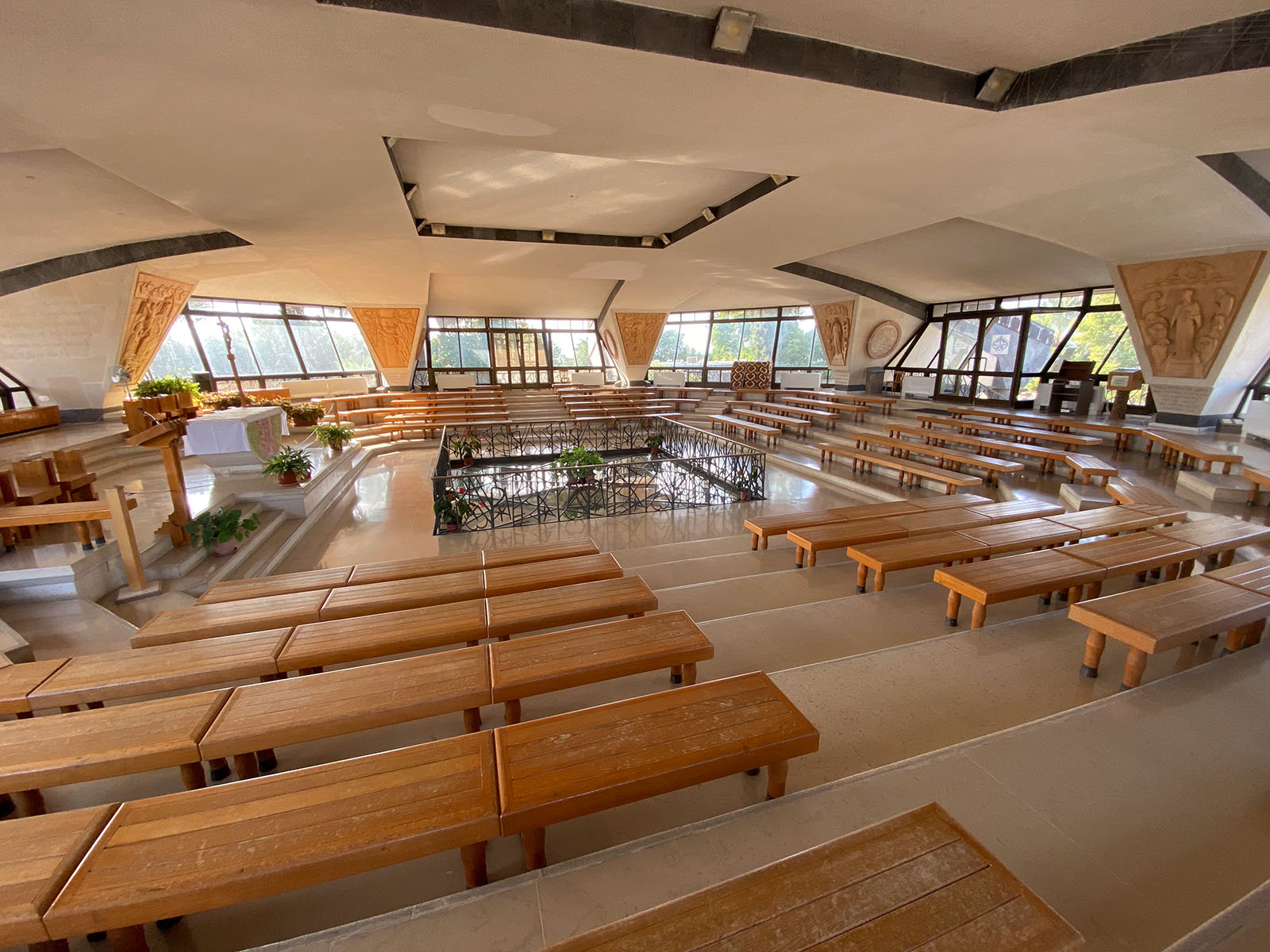
Memorial Church over Peter’s House. Completed in 1990, the modern Memorial Church of St. Peter was designed to preserve the archaeological remains beneath it while allowing Christian worship to continue at the site. Its unusual octagonal form recalls the fifth-century Byzantine church that once stood here, while the entire modern structure is elevated on concrete supports so that it does not rest directly upon the ancient remains. Visitors can therefore walk around the site and view the excavated structures beneath the church.

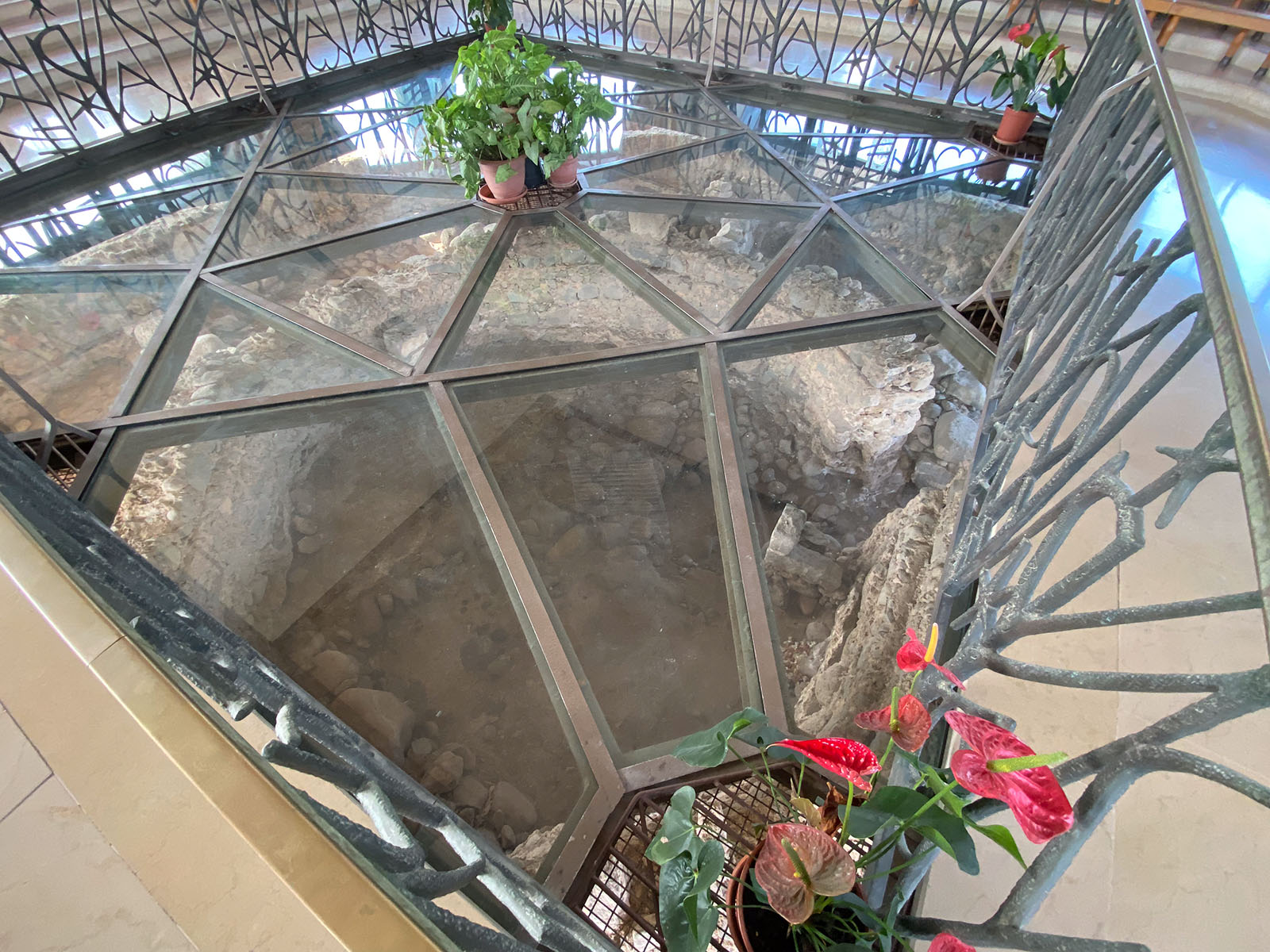
At the center of the church, a glass floor allows visitors to look directly down upon the remains traditionally identified as Peter’s house, creating a deliberate visual connection between the modern sanctuary and the first-century dwelling below. The design reflects the remarkable continuity of Christian devotion at this location: a domestic structure associated with Peter and the ministry of Jesus became a place of Christian gathering, later an octagonal Byzantine church, and ultimately the modern sanctuary seen here.

Capernaum - Peter's House Plan

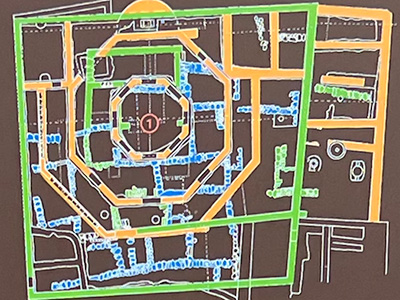
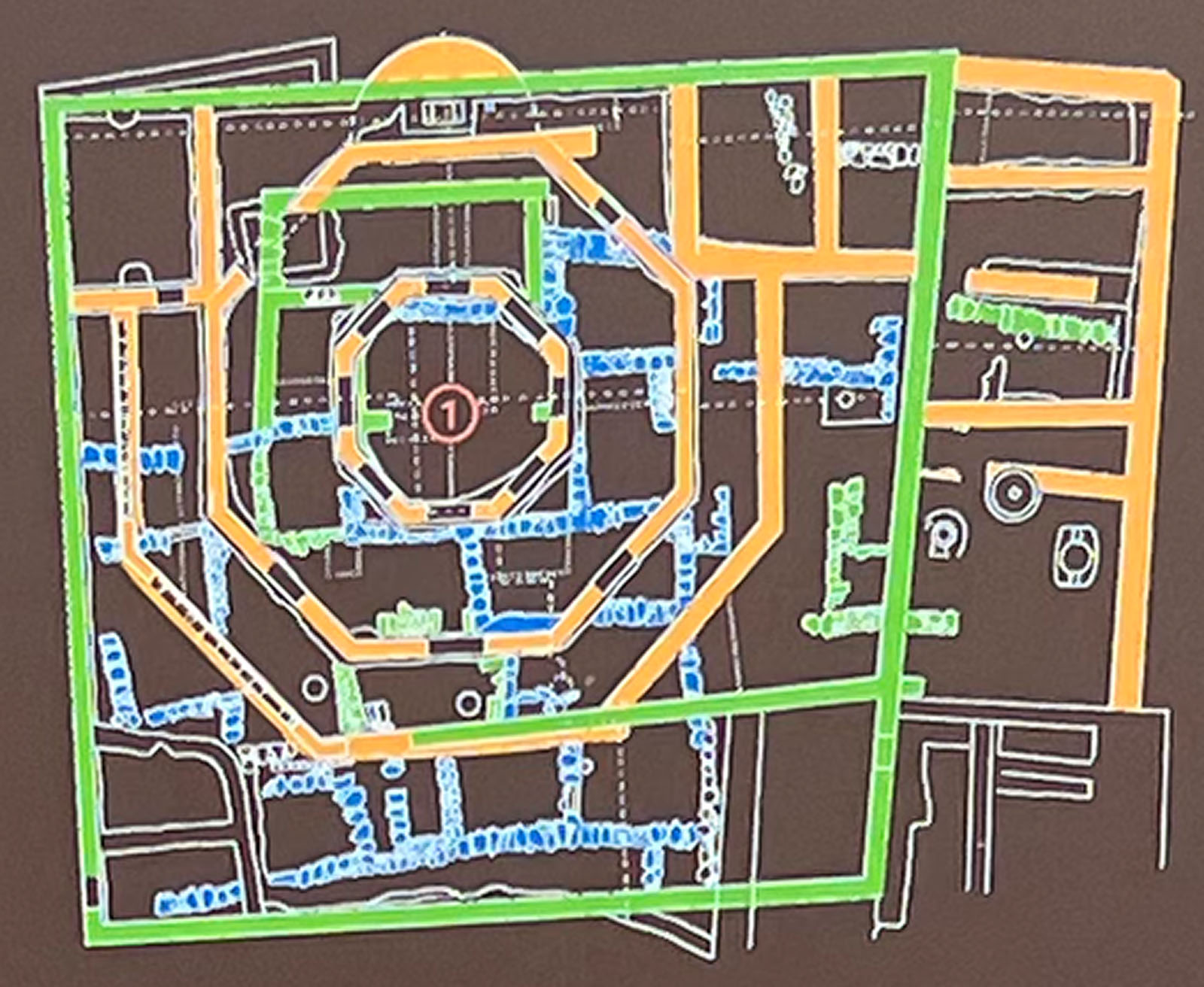
How Peter’s House Changed Through Time. This diagram displayed at Capernaum uses color to distinguish the principal stages of construction surrounding the traditional House of Peter. The blue lines represent the earlier domestic remains, including the first-century house and associated structures. The green lines mark the fourth-century domus ecclesiae, or “house-church,” when the revered house was enclosed within a larger complex and adapted more formally for Christian worship. The orange lines show the fifth-century Byzantine octagonal church subsequently constructed over the site. The white outlines indicate later or modern features associated with the preservation and presentation of the remains.

At the center, marked by the number 1, is the room traditionally identified as the principal room of Peter’s house and later venerated by Christians. The successive colored outlines make the development of the site especially clear: an ordinary first-century dwelling gradually became a recognized place of Christian gathering and pilgrimage, was eventually enclosed within a monumental Byzantine church, and today lies protected beneath the modern Memorial Church. Few places in the Holy Land illustrate so visually how a remembered New Testament location could develop into a formal Christian sacred site over the course of centuries.

Capernaum - Byzantine Church

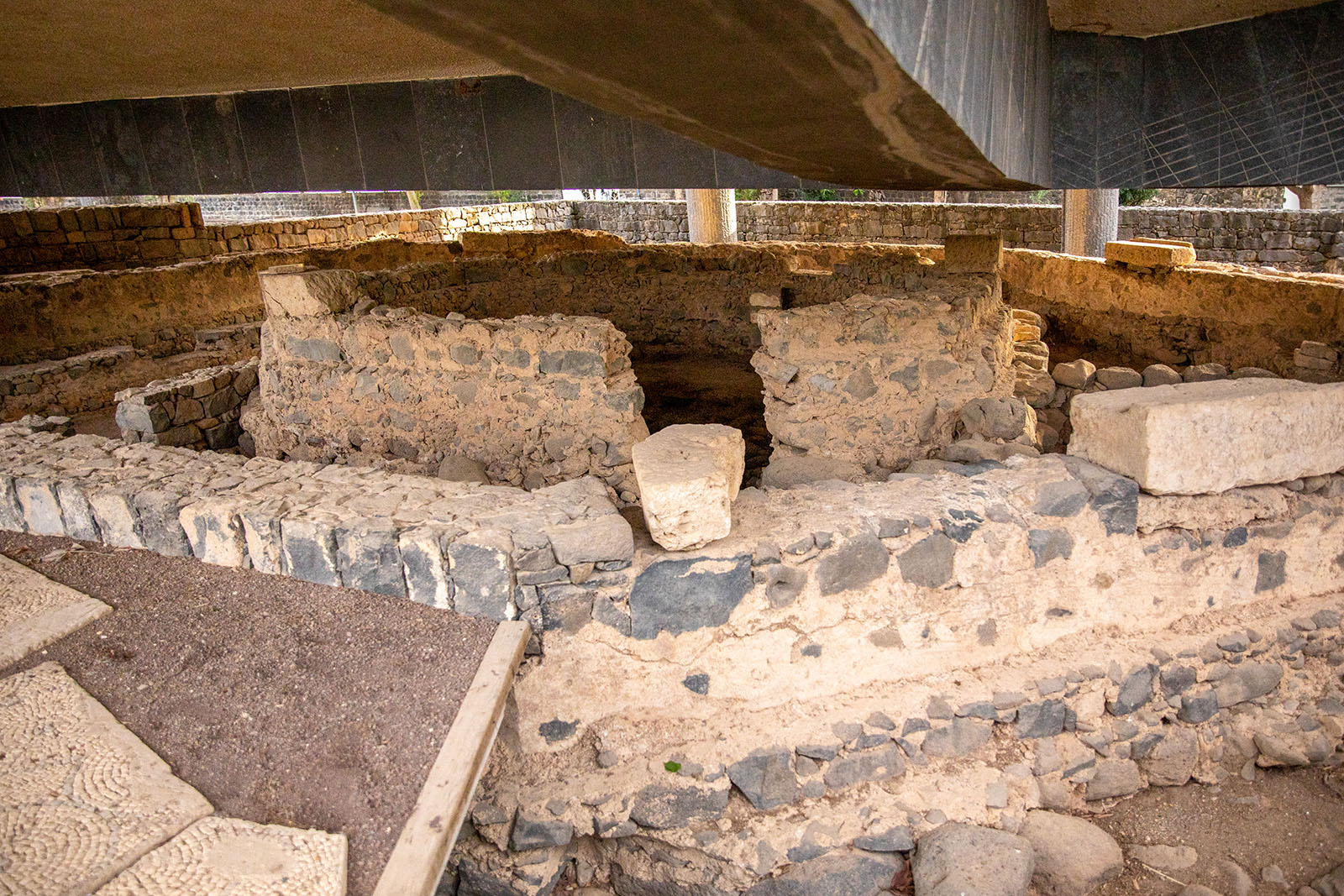
Peter’s House Excavations. Beneath the modern Memorial Church are the remains of a cluster of basalt rooms belonging to ancient Capernaum. At the center is a first-century dwelling traditionally identified as the house of the Apostle Peter. Unlike a monumental public building, the original house would have been modest, with small rooms grouped around open courtyards—the type of domestic setting typical of the town in the time of Jesus.

One room eventually became markedly different from the others. Archaeologists found evidence that its walls had been repeatedly plastered and that ordinary domestic activity ceased there, suggesting that it had been set apart as a gathering or devotional space. Later plaster bore Christian graffiti in several languages, some invoking Jesus. By the fourth century the room had become the center of a formal house-church, and a fifth-century octagonal church was later constructed over it. This unusually early history of Christian veneration is a major reason archaeologists take seriously the tradition identifying the site with Peter’s home, where the Gospels describe Jesus healing Peter’s mother-in-law and receiving the sick of Capernaum (Mark 1:29–34).

Capernaum - Memorial Church

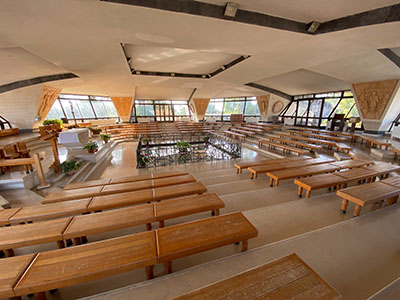
Inside the Memorial Church. The interior of Capernaum’s Memorial Church is arranged around the archaeological site beneath it. Its octagonal plan intentionally recalls the fifth-century Byzantine church that once occupied this location, while broad windows fill the modern sanctuary with light and provide views toward the surrounding ruins and the Sea of Galilee. The altar and seating surround the large central opening, making the remains below the visual as well as the historical focus of the church.

Through the glass floor at the center, visitors can look directly down upon the remains traditionally identified as the house of the Apostle Peter. This unusual design physically connects three periods of Christian history at the same location: the first-century dwelling associated with Peter and Jesus’ ministry, the early Christian place of gathering and later Byzantine church built over it, and the modern church in which Christians continue to worship today. Few archaeological sites allow visitors to see that continuity quite so directly.

Capernaum - Peter's House

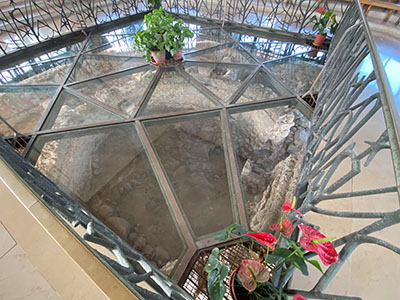
Peter’s House Beneath the Memorial Church. Through the glass floor at the center of the Memorial Church, visitors can look directly down upon the archaeological remains traditionally identified as the house of the Apostle Peter. The walls visible below belong to several phases of the site’s history, including the early domestic complex and later construction associated with Christian veneration. The glass opening was deliberately positioned above the ancient remains so that the modern church could function as a place of worship without concealing the site it was built to protect.

The location has particular significance because the Gospels describe Jesus entering the home of Simon Peter and Andrew after leaving Capernaum’s synagogue. There he healed Peter’s mother-in-law, and by evening crowds had gathered at the house seeking healing (Mark 1:29–34). Archaeology cannot prove that the room visible below belonged to Peter, but evidence that part of this first-century dwelling was set apart for Christian gathering and veneration at an unusually early date gives the identification greater historical weight than a tradition based solely on later pilgrimage.

Capernaum - Shoreline

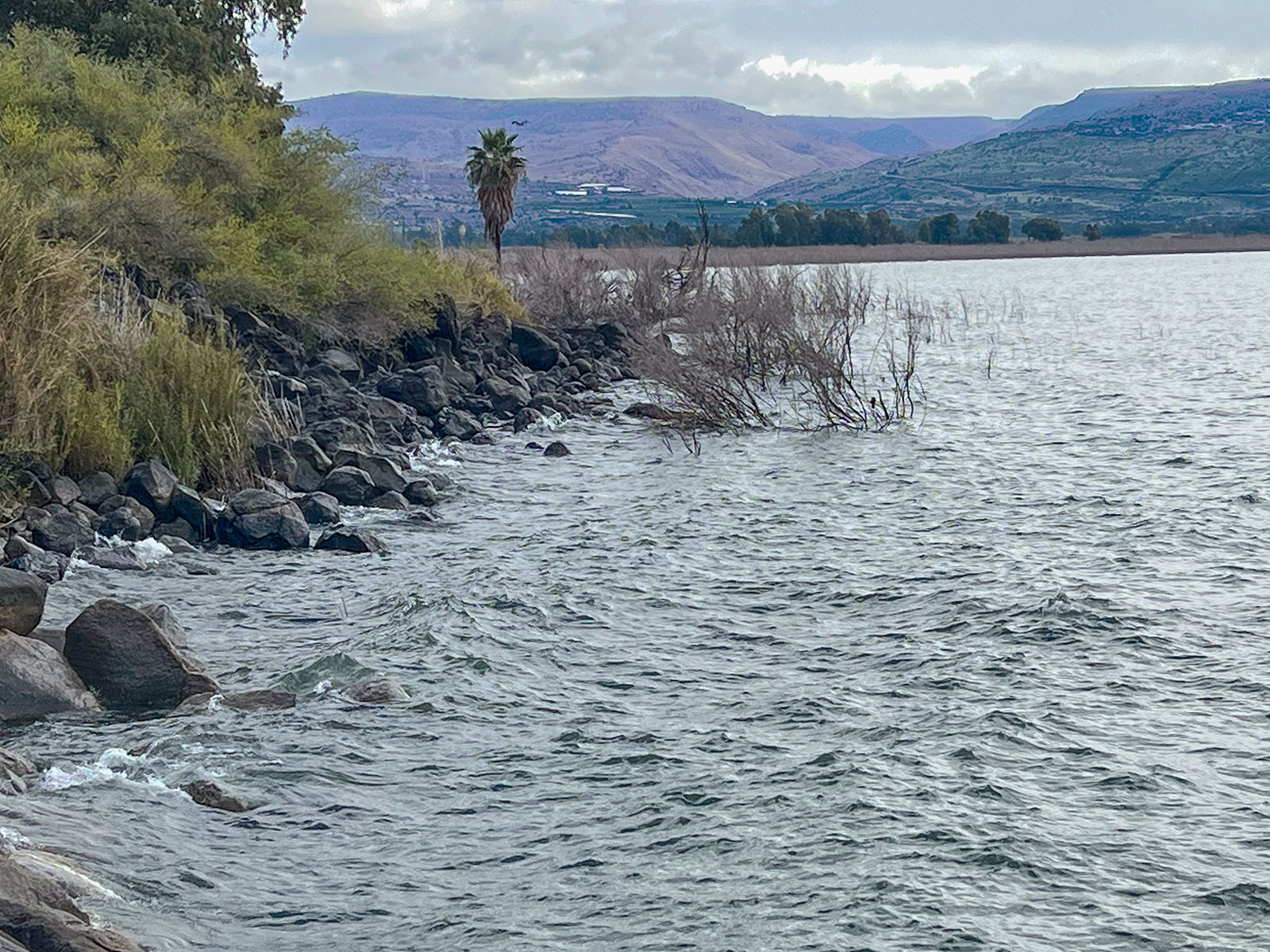
Shoreline at the White Synagogue. This rocky shoreline lies beside the archaeological site of Capernaum, near the White Synagogue. From here the view extends across the Sea of Galilee toward the hills of the eastern shore. Near the center of the distant landscape, the prominent canyon cuts eastward into the Golan Heights toward Gamla, the important Jewish settlement later famous for its resistance to the Romans during the First Jewish Revolt.

The view helps place ancient Capernaum within the wider geography of the Sea of Galilee. Fishing boats moved along these shores, fishermen worked their nets, and Jesus and his disciples repeatedly crossed the lake between the communities surrounding it. From Capernaum, the opposite shore was not an abstract or distant region but part of the visible landscape of everyday life. Standing beside the ancient town, the lake and the hills beyond help restore the geographical setting in which much of Jesus’s Galilean ministry unfolded.

Eastern and Western Capernaum

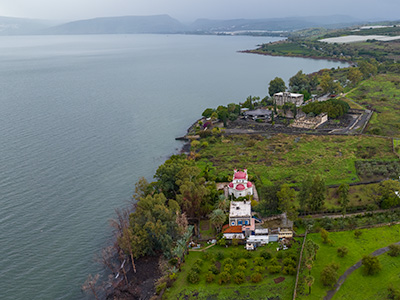
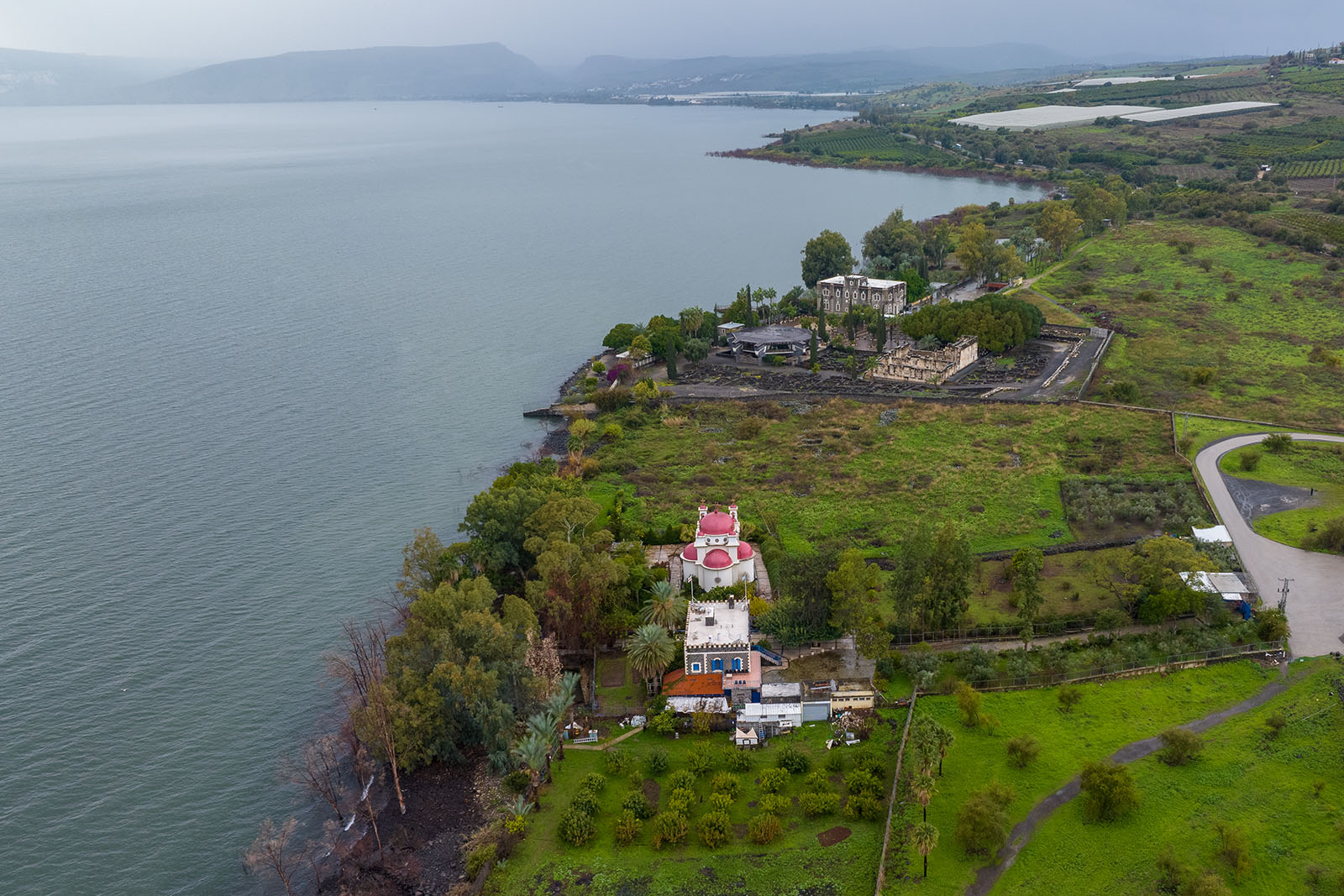
Western and Eastern Capernaum from Above. This aerial view shows the relationship between the two principal areas of Capernaum visited today. In the distance is the Franciscan archaeological site, where the White Synagogue and the Memorial Church over the traditional House of Peter stand near the shoreline. In the foreground is the red-domed Greek Orthodox Church of the Seven Apostles, surrounded by the gardens of the Greek Orthodox monastery. The two complexes are adjacent portions of the same ancient lakeside settlement, although visitors today normally enter them as separate sites.

The photograph also places Capernaum within the broader geography of Jesus’s Galilean ministry. In the distance, beneath Mount Arbel, the deep Valley of the Doves (Wadi Hamam) cuts through the cliffs and provided an important route from the Sea of Galilee westward into Lower Galilee and toward the region of Cana. The Gospel of John directly connects the two places: after the wedding at Cana, Jesus traveled to Capernaum with his mother, brothers, and disciples (John 2:11–12), and later returned to Cana when a royal official from Capernaum came seeking healing for his son (John 4:46–54). The landscape therefore helps us visualize the routes connecting places that appear together in the Gospel narratives.

Greek Orthodox Church of the Seven Apostles

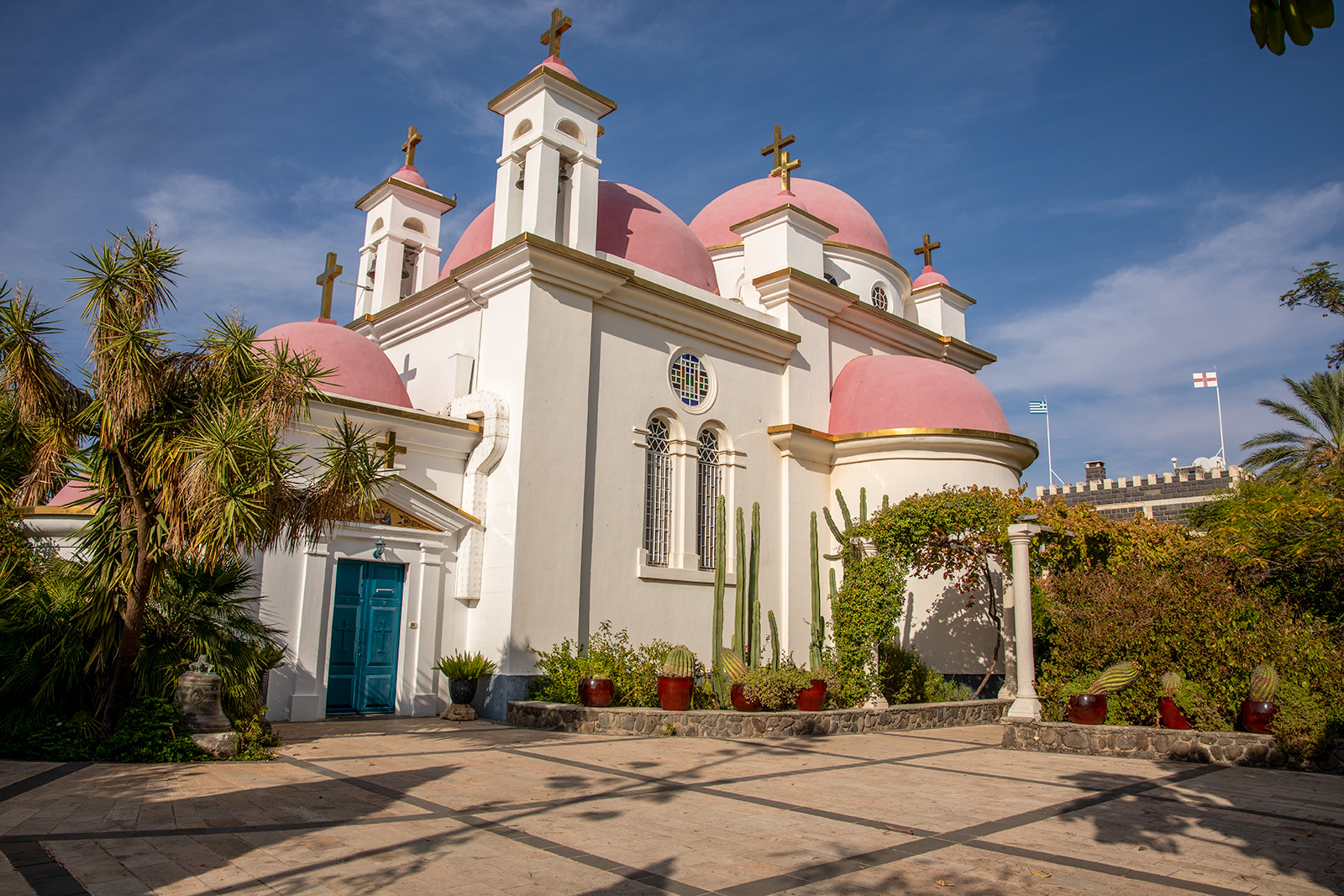
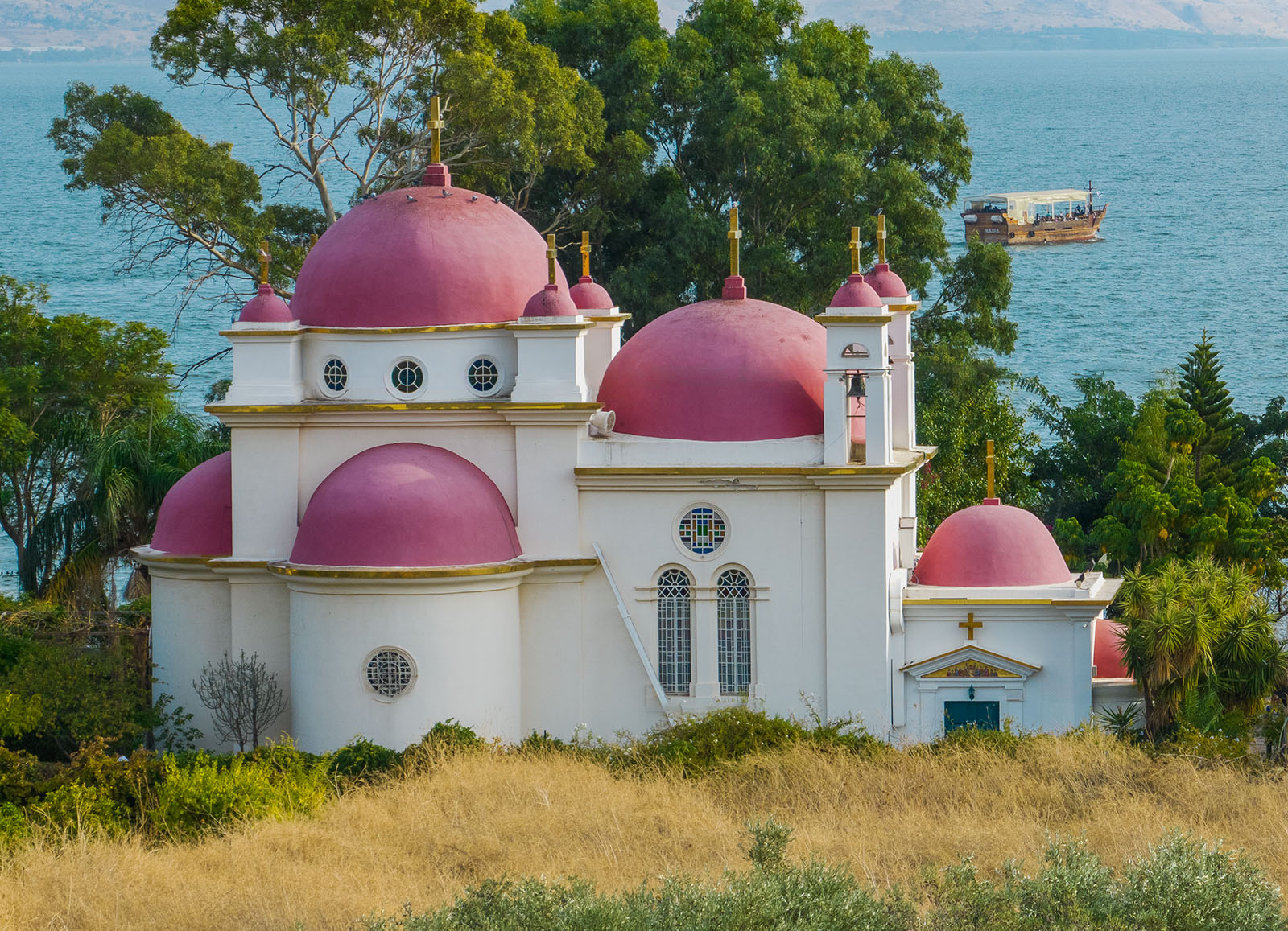
Church of the Seven Apostles. The Greek Orthodox Church of the Seven Apostles stands near the shoreline in eastern Capernaum, distinguished by its white walls and cluster of red domes. Built in the twentieth century, the church commemorates the appearance of the resurrected Jesus to his disciples beside the Sea of Galilee described in John 21. The episode culminates in Jesus’s threefold charge to Peter to “Feed my sheep” (John 21:15–17), making the church’s location especially fitting within a town so closely associated with Peter and the other Galilean disciples.

Behind the church, a modern excursion boat—often called a “Jesus Boat”—is leaving the dock at Capernaum. These wooden sightseeing boats carry visitors across the Sea of Galilee and are designed to evoke, in a general way, the fishing boats familiar from the Gospel narratives. Their presence provides an interesting modern parallel to the ancient importance of travel by water: Jesus and his disciples repeatedly crossed the lake by boat, connecting Capernaum with other communities and locations around the Sea of Galilee.

Greek Orthodox Church of the Seven Apostles

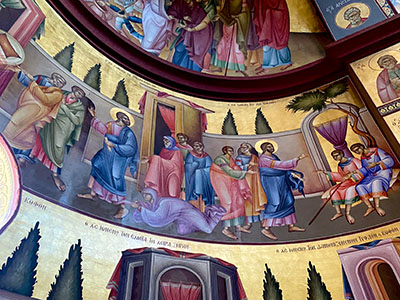
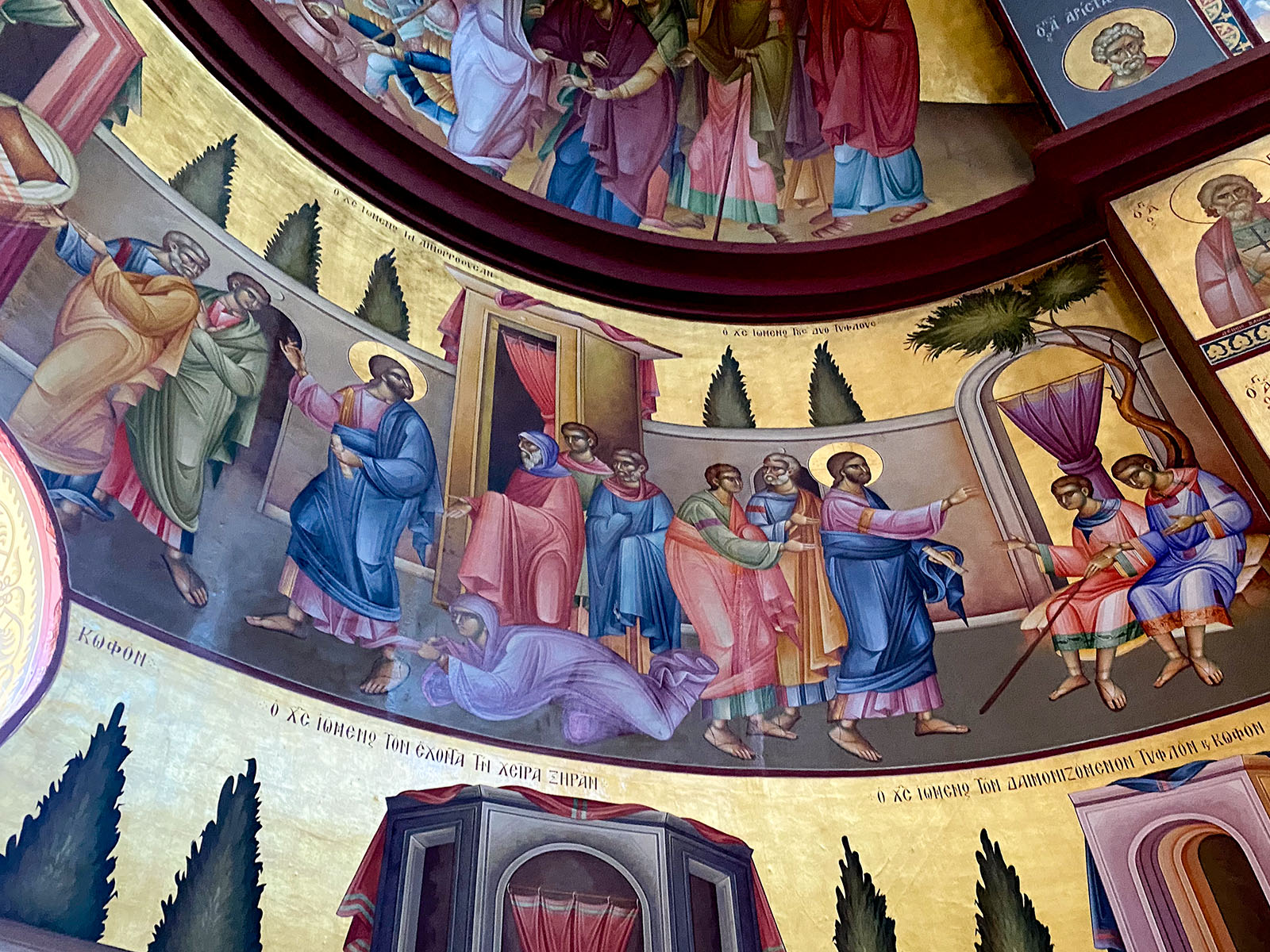
Jesus Heals at Capernaum. These frescoes depict healing miracles from Jesus’s ministry. In the central scene, a woman kneels and reaches toward Jesus’s garment, recalling the woman who believed, “If I may touch but his clothes, I shall be whole.” When she touched His garment, “straightway the fountain of her blood was dried up,” and Jesus told her, “Daughter, thy faith hath made thee whole” (Mark 5:25–34; see also Matt. 9:20–22; Luke 8:43–48).

Nearby scenes portray other encounters with the sick and afflicted. Such images are especially meaningful at Capernaum, where the Gospels describe Jesus healing many people and where His ministry of teaching and healing became a defining part of the town’s New Testament story.

Eastern Capernaum - Peacock

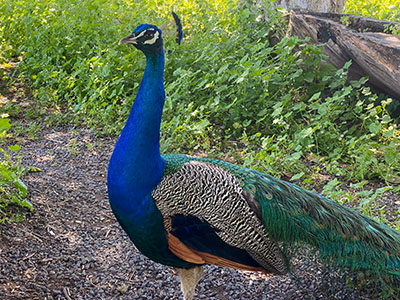
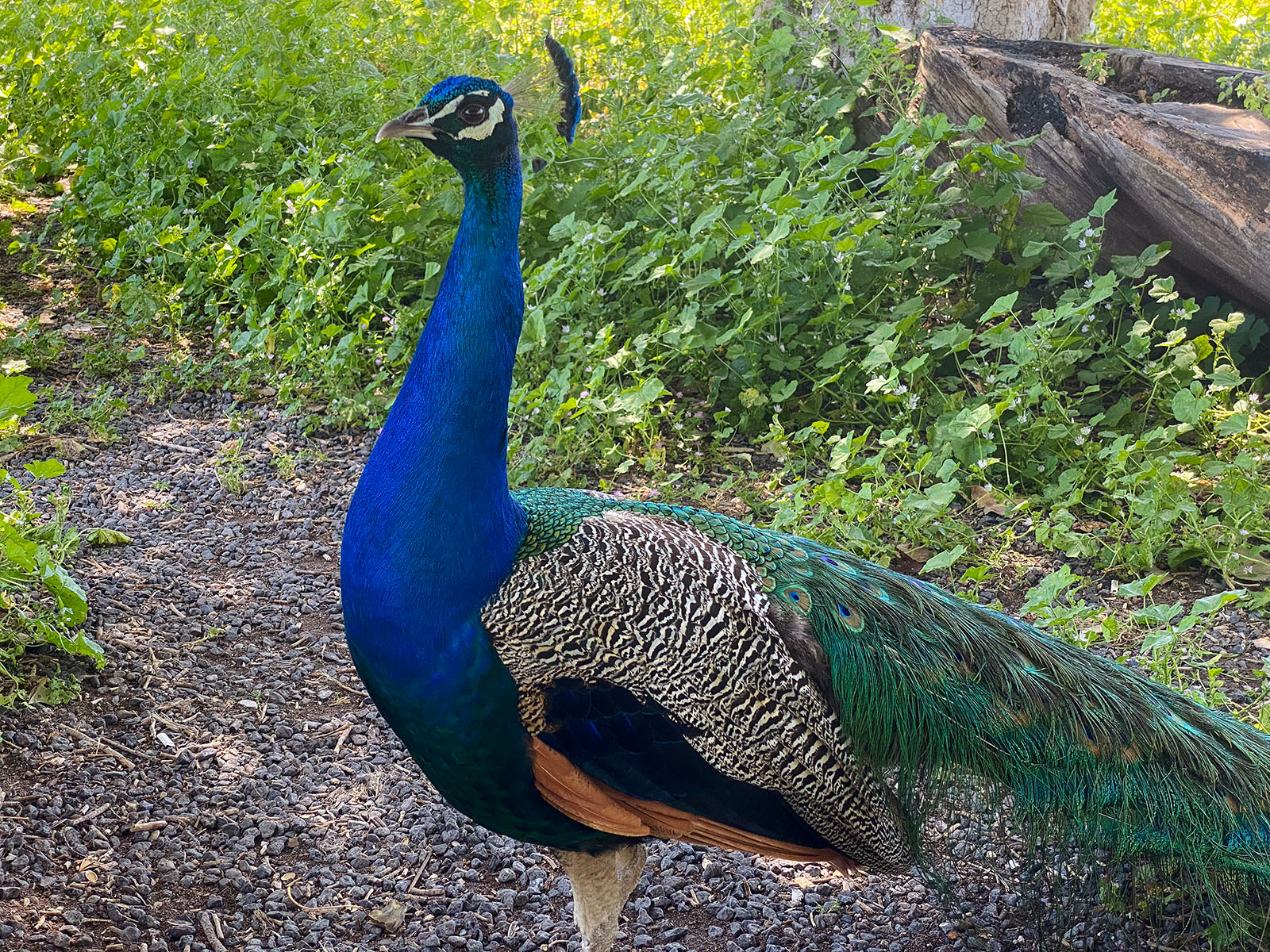
Peacocks on the Church Grounds. Peacocks wander freely through the shaded gardens surrounding the Church of the Seven Apostles. Their unhurried presence adds in a very real way to the quiet, restful character of the grounds. Together with the trees, gardens, and nearby waters of the Sea of Galilee, they help make this one of Capernaum’s most peaceful places to sit, reflect, and contemplate Jesus’s ministry.

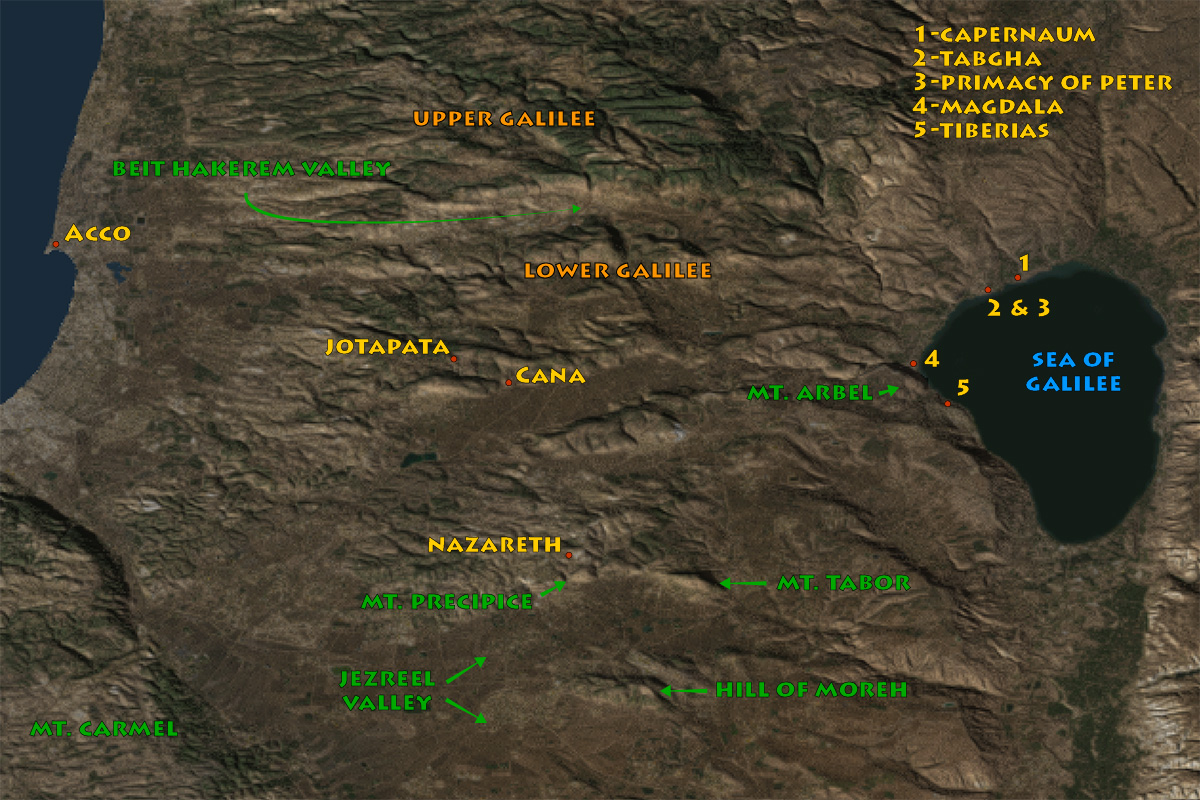
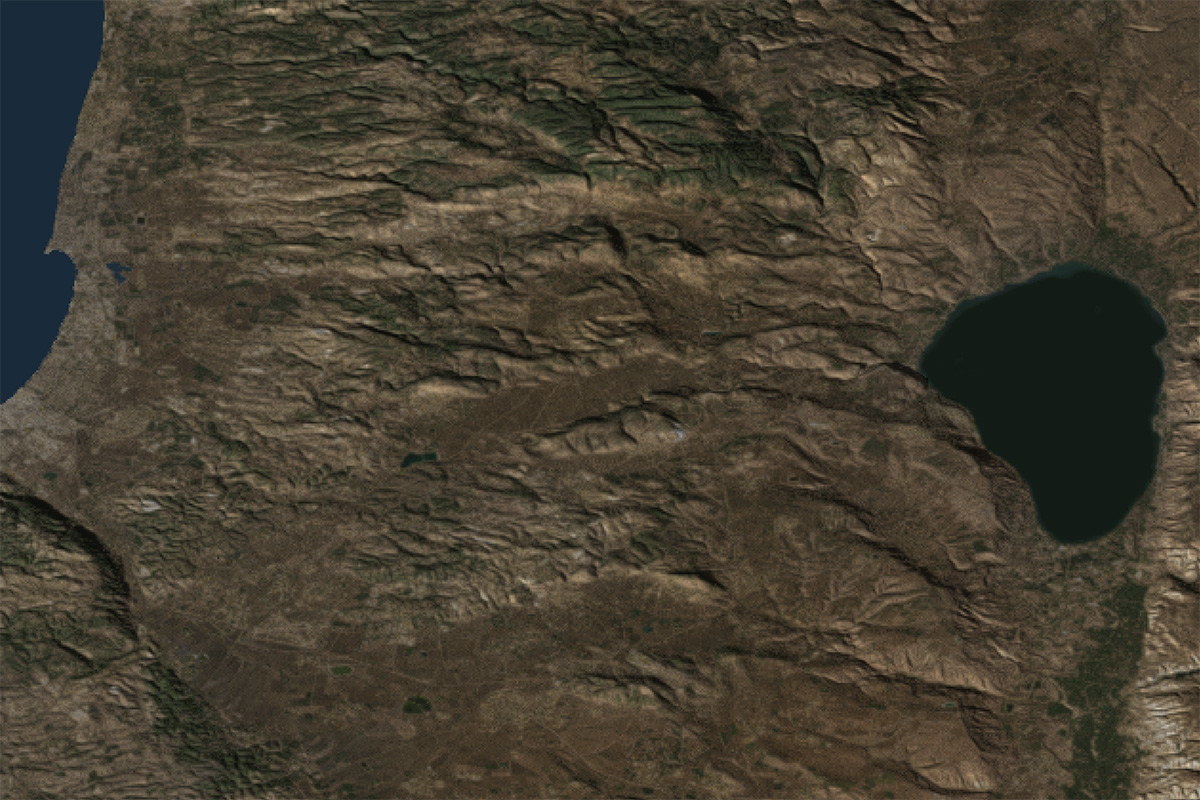
Click the enlarged map to show or hide the overlay
Map

Major Events at Capernaum

Capernaum from the Sea of Galilee. Looking north from over the Sea of Galilee, this aerial view shows Capernaum as travelers approaching by boat might have encountered its shoreline. At left are the excavations of western Capernaum, dominated by the limestone White Synagogue and, farther left, the modern Memorial Church over the traditional House of Peter. At right, the red domes of the Greek Orthodox Church of the Seven Apostles mark eastern Capernaum. The open ground between the two modern properties was once part of the larger ancient settlement extending along the lakeshore.

The perspective is especially appropriate for understanding the Gospel accounts because Jesus and his disciples frequently traveled by boat between communities around the lake. Capernaum was therefore approached not only by roads from the surrounding Galilee but also directly from the water. From the lake, the compact relationship between shoreline, homes, and synagogue becomes readily apparent, helping us imagine the setting in which fishermen became disciples and Capernaum became a principal center of Jesus’s Galilean ministry.

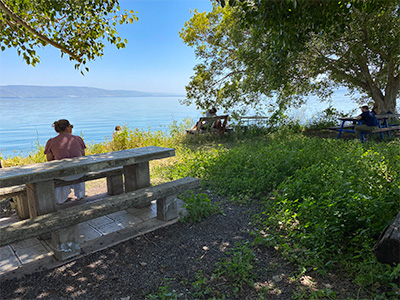
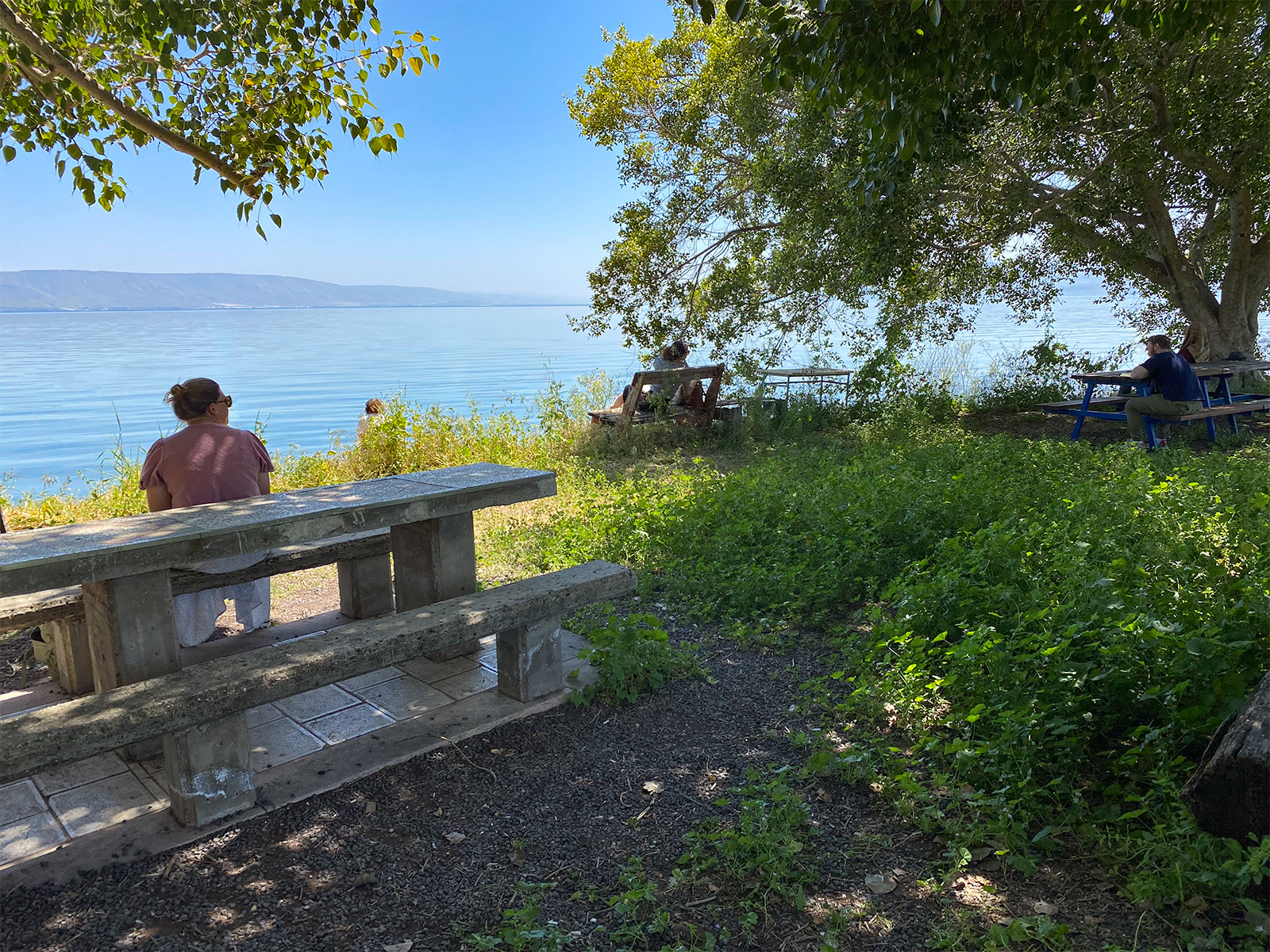
A Place for Quiet Reflection. The shaded grounds beside the Church of the Seven Apostles offer peaceful places to sit overlooking the Sea of Galilee. During my visits, I often encountered people here reading, pondering, or simply looking across the water. It is easy to understand why. Away from the busier archaeological remains of Capernaum, the quiet shoreline provides an inviting setting to reflect on Jesus’s ministry and the events that unfolded around the Sea of Galilee nearly two thousand years ago.

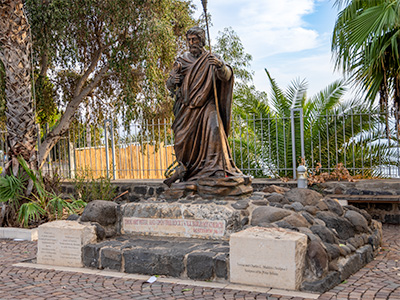
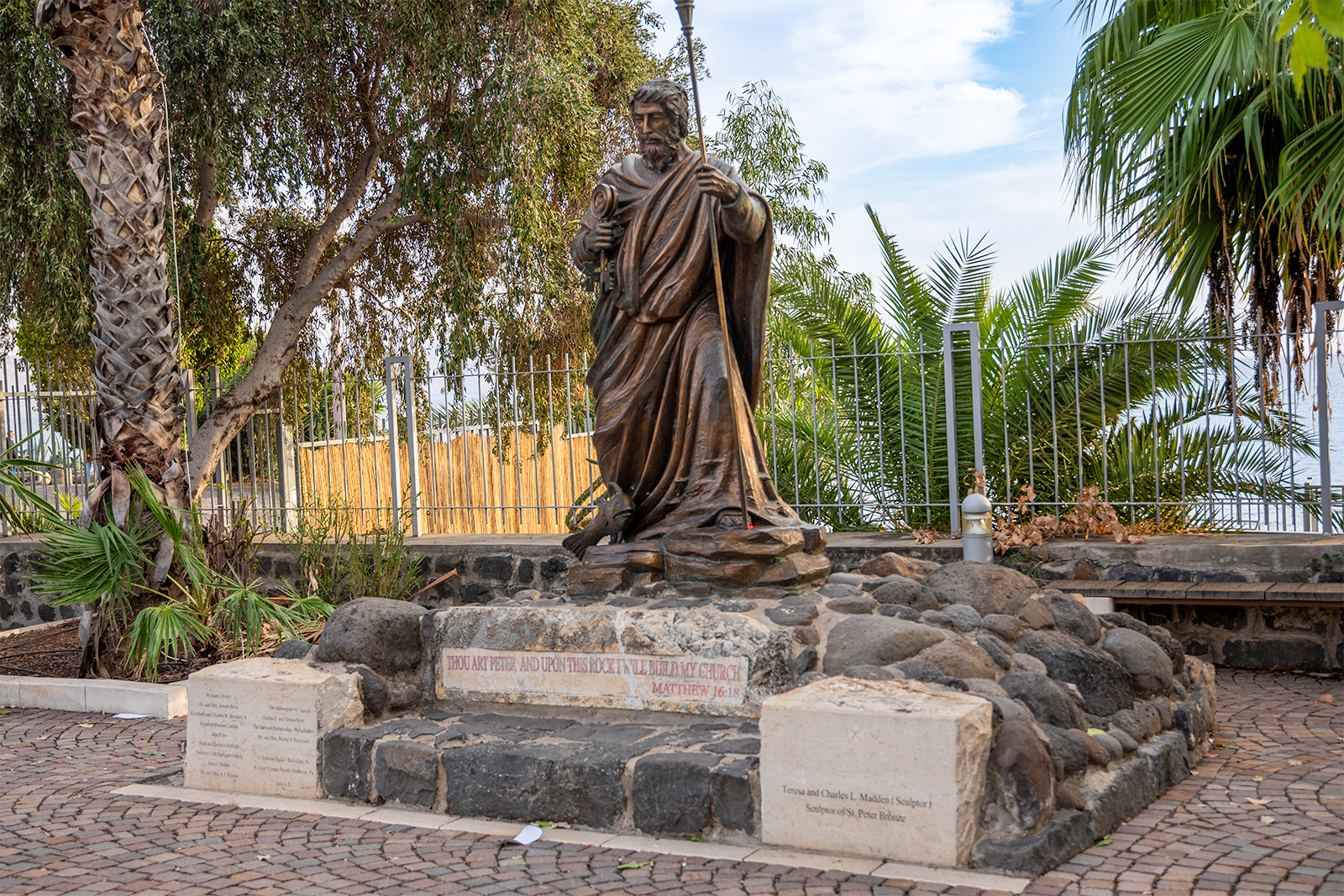
Statue of the Apostle Peter. This bronze statue in the Franciscan archaeological park at Capernaum honors the apostle whose home and ministry were closely associated with the town. Peter is depicted holding a shepherd’s staff and keys, traditional symbols reflecting Jesus’ commission to Peter and the “keys of the kingdom of heaven” (Matt. 16:18–19). The inscription beneath the statue quotes Jesus’ declaration, “Thou art Peter, and upon this rock I will build my church.”

The words commemorated here were not spoken at Capernaum. Matthew places Peter’s confession that Jesus was “the Christ, the Son of the living God,” and Jesus’ response to him, in the region of Caesarea Philippi, considerably farther north (Matt. 16:13–19). The statue is nevertheless appropriately located at Capernaum: nearby are the remains traditionally identified as Peter’s house, and the Gospels repeatedly place Peter here with Jesus. The monument therefore connects Peter’s later prominence among the apostles with the Galilean community in which much of his discipleship began.

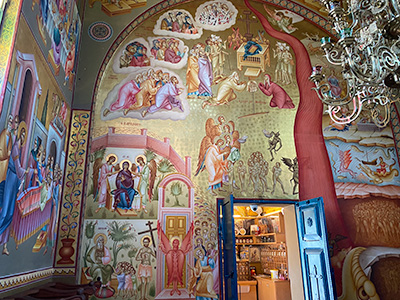
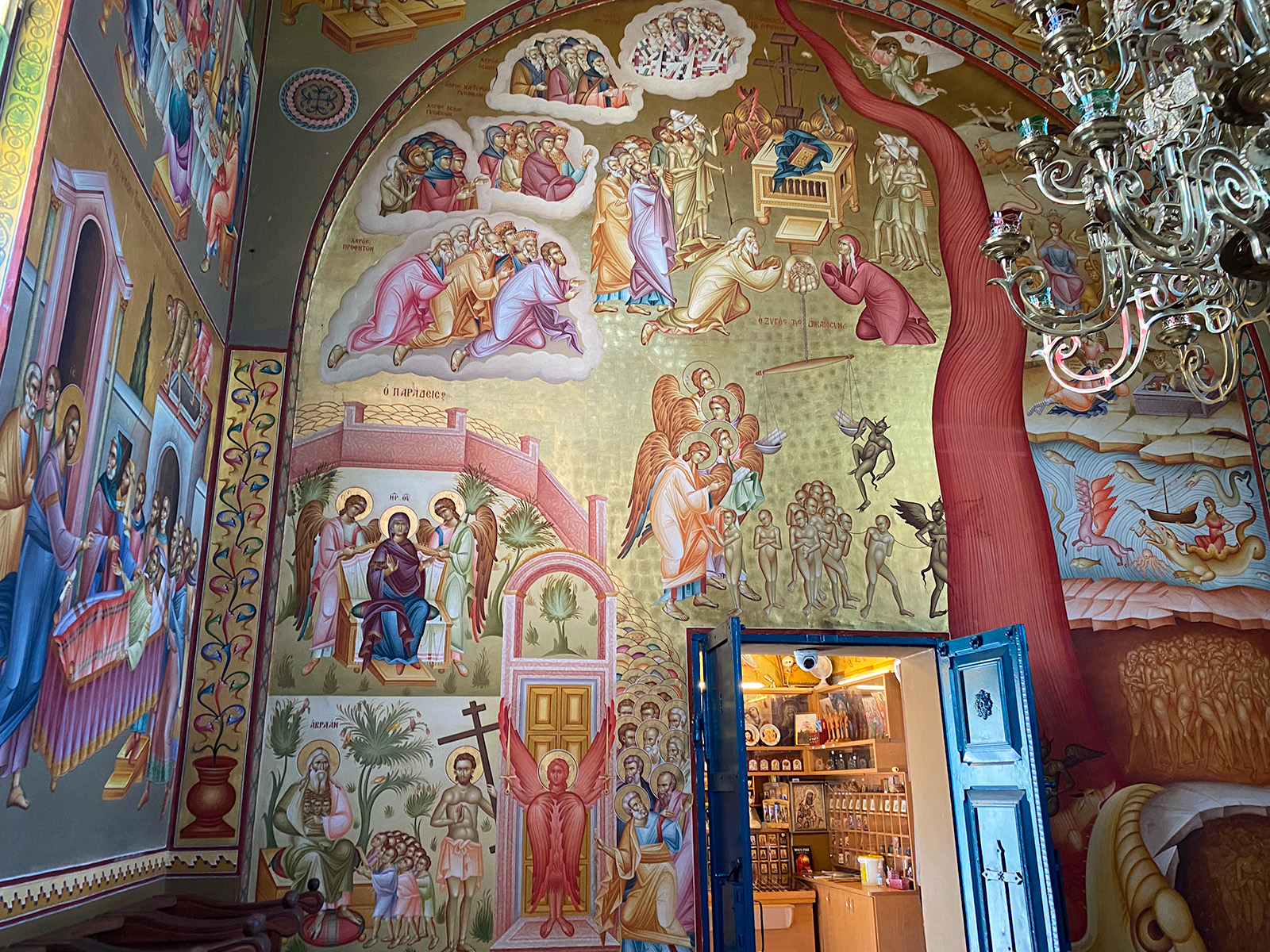
Last Judgment and Paradise. The wall near the entrance of the Church of the Seven Apostles is covered with richly colored icons illustrating the Last Judgment, Paradise, and other scenes from Christian teaching. Angels, saints, the righteous, and the condemned are arranged within a sweeping composition contrasting salvation with judgment. Like the other paintings filling the church, the imagery is intended not simply as decoration but to teach sacred truths visually and invite worshippers to contemplate God’s plan of salvation.

The open blue doors lead to the small shop visitors pass after entering the church complex, where icons, devotional objects, and souvenirs are available.

Capernaum - Church of the Seven Apostles

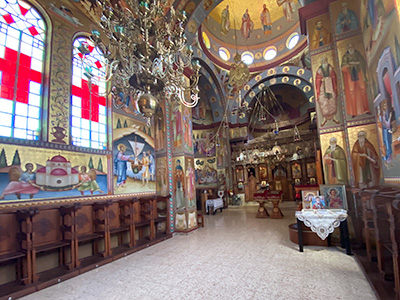
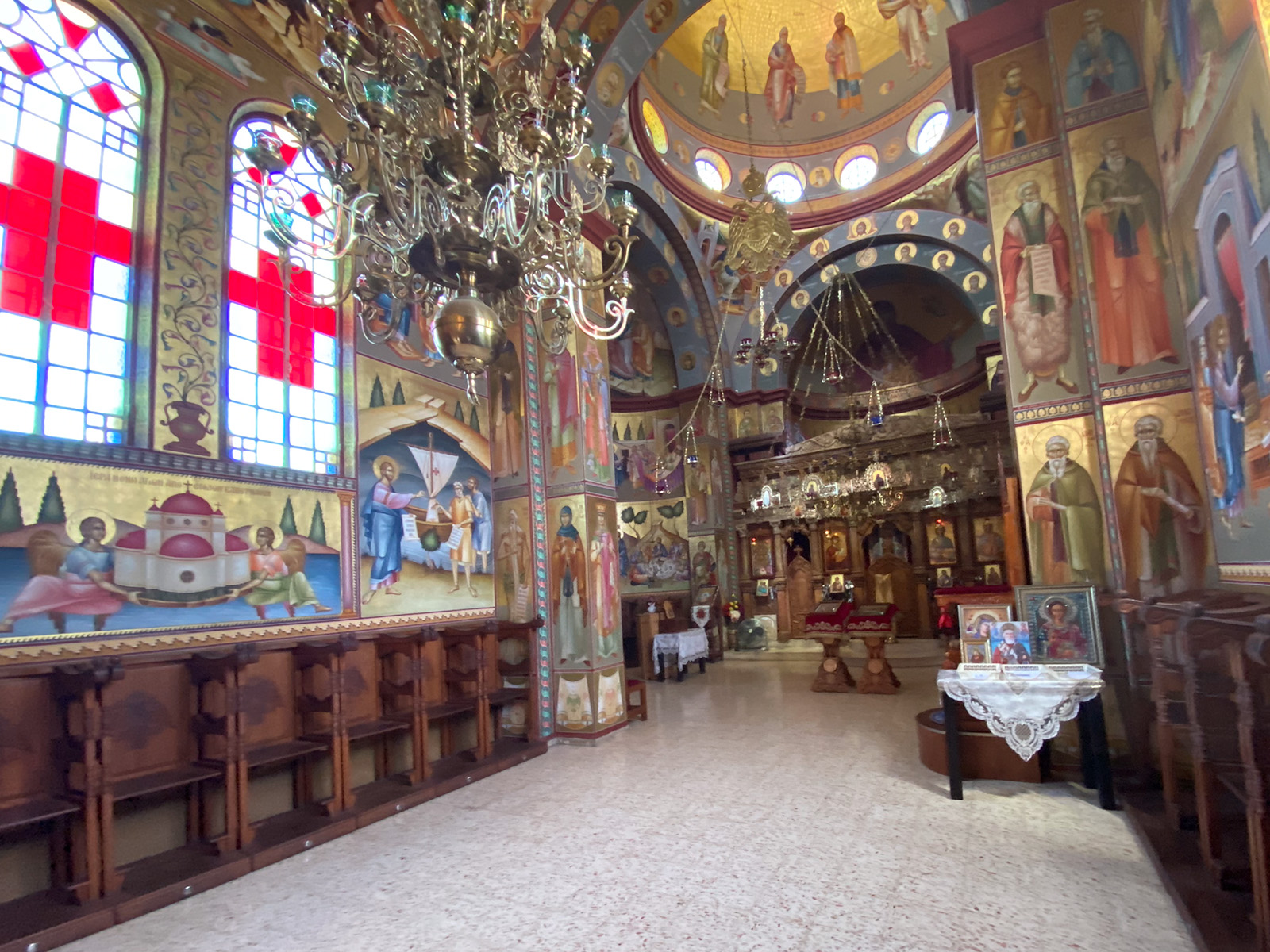
Inside the Church of the Seven Apostles. The first view inside the church reveals an interior almost completely covered with icons and biblical scenes. Even the domed ceilings above portray Christ, the apostles, and other sacred figures, continuing the Eastern Orthodox tradition of surrounding worshippers with visual reminders of the sacred.

The bright red crosses incorporated into the stained-glass windows reinforce the church’s Christian identity, while the richly carved iconostasis visible at the far end separates the nave from the sanctuary.

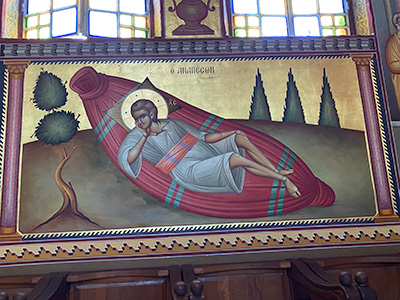
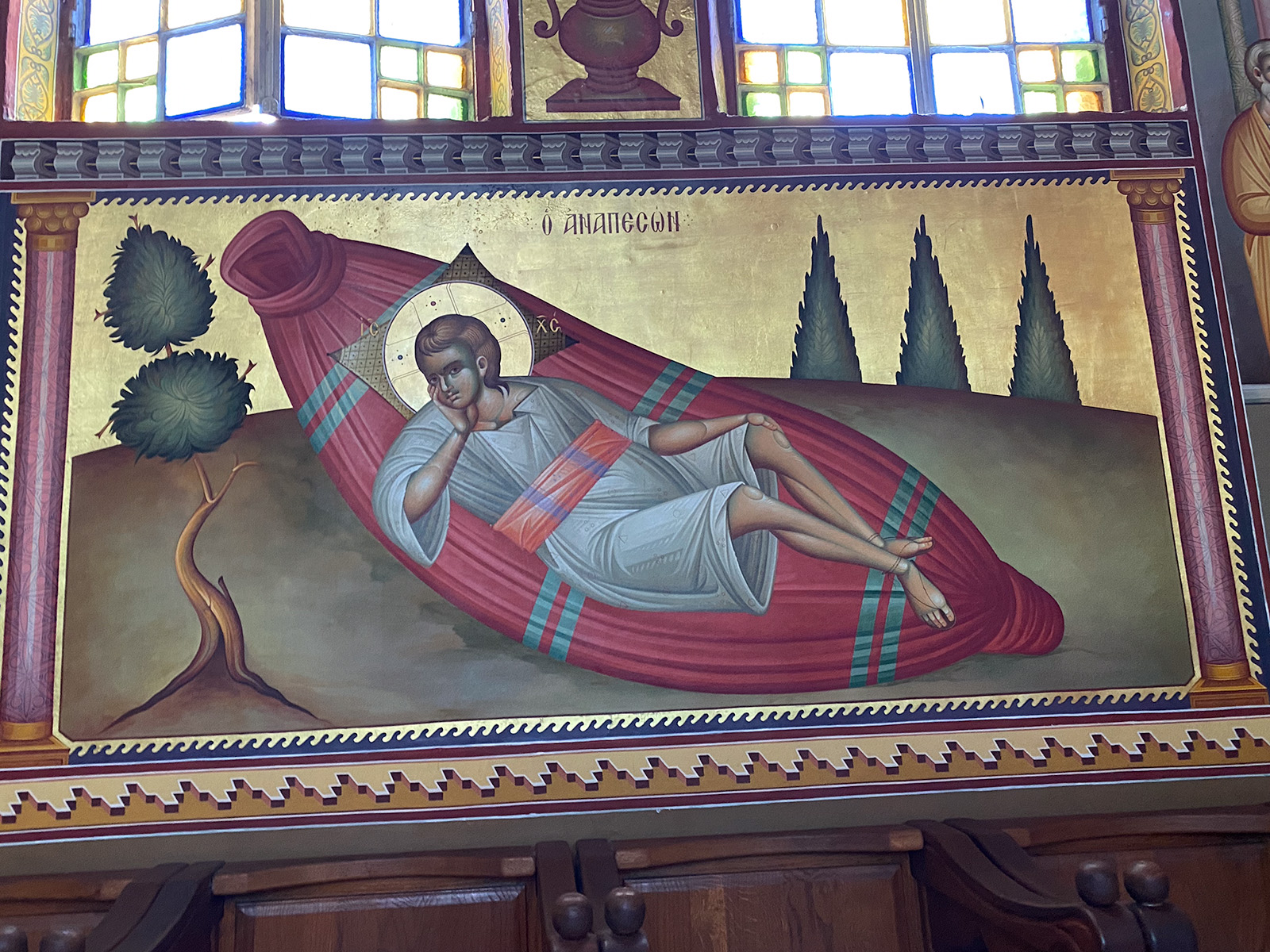
Christ the Reclining One. This symbolic Orthodox icon portrays the Christ Child resting on a royal couch. Known in Greek as Ho Anapesōn (“The Reclining One”), the image does not depict a historical event in Jesus’s life but presents a theological symbol of His redeeming mission. Christ’s peaceful repose anticipates His death and resurrection, reminding worshippers that the Savior’s ministry in Galilee was inseparably connected with the sacrifice and triumph that would follow in Jerusalem.

Capernaum National Park

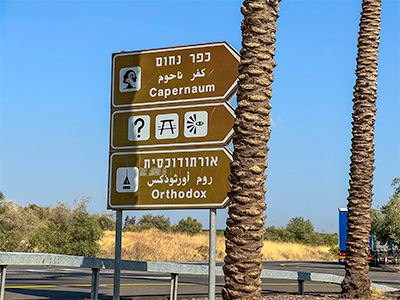
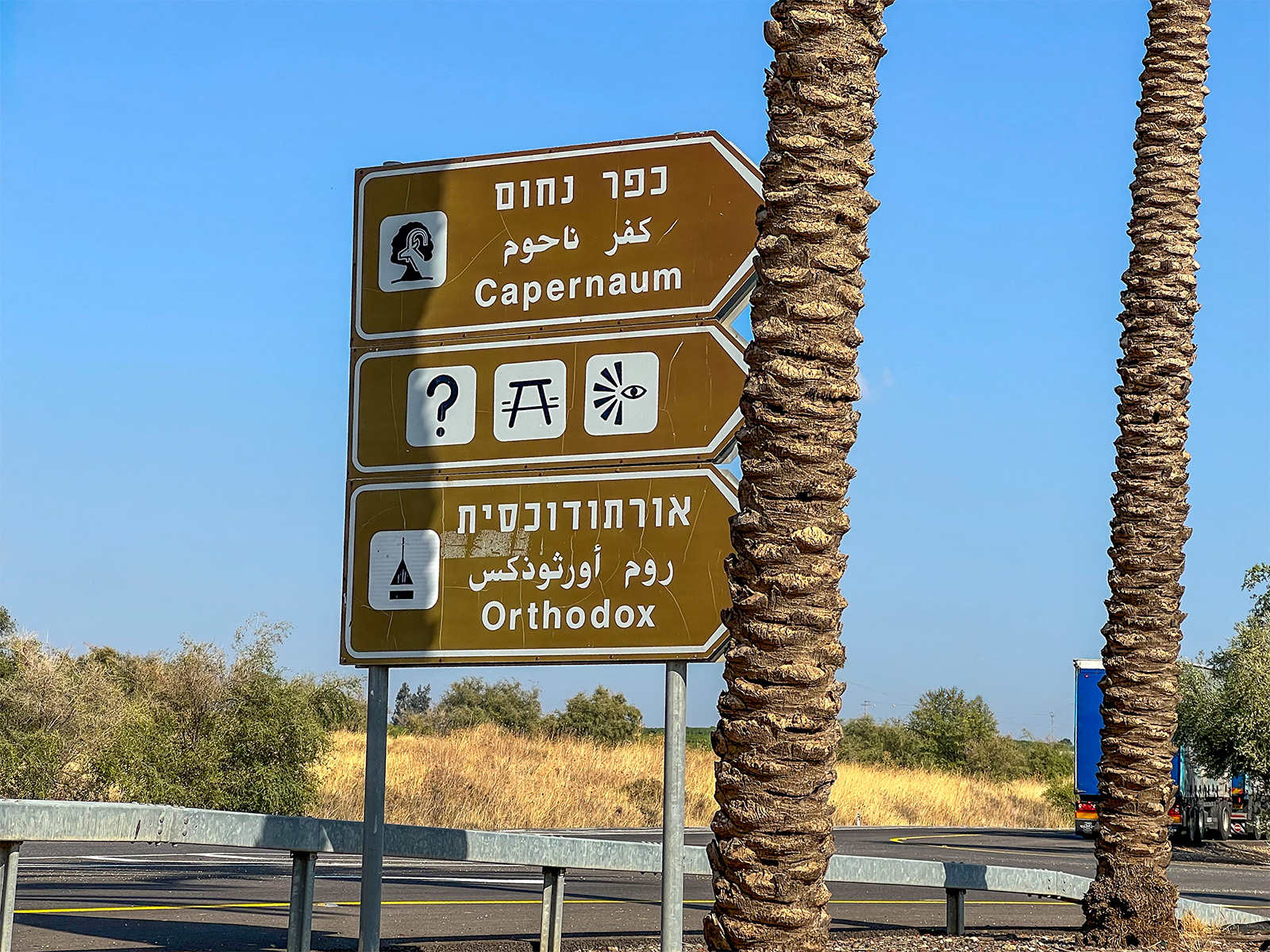
Capernaum National Park — Arrival. The roadside sign marks the entrance to Capernaum National Park along the northern shore of the Sea of Galilee. Visitors arriving by bus from Tiberias can get off here and continue on foot to the nearby archaeological remains of ancient Capernaum and the Church of the Seven Apostles.

Capernaum National Park

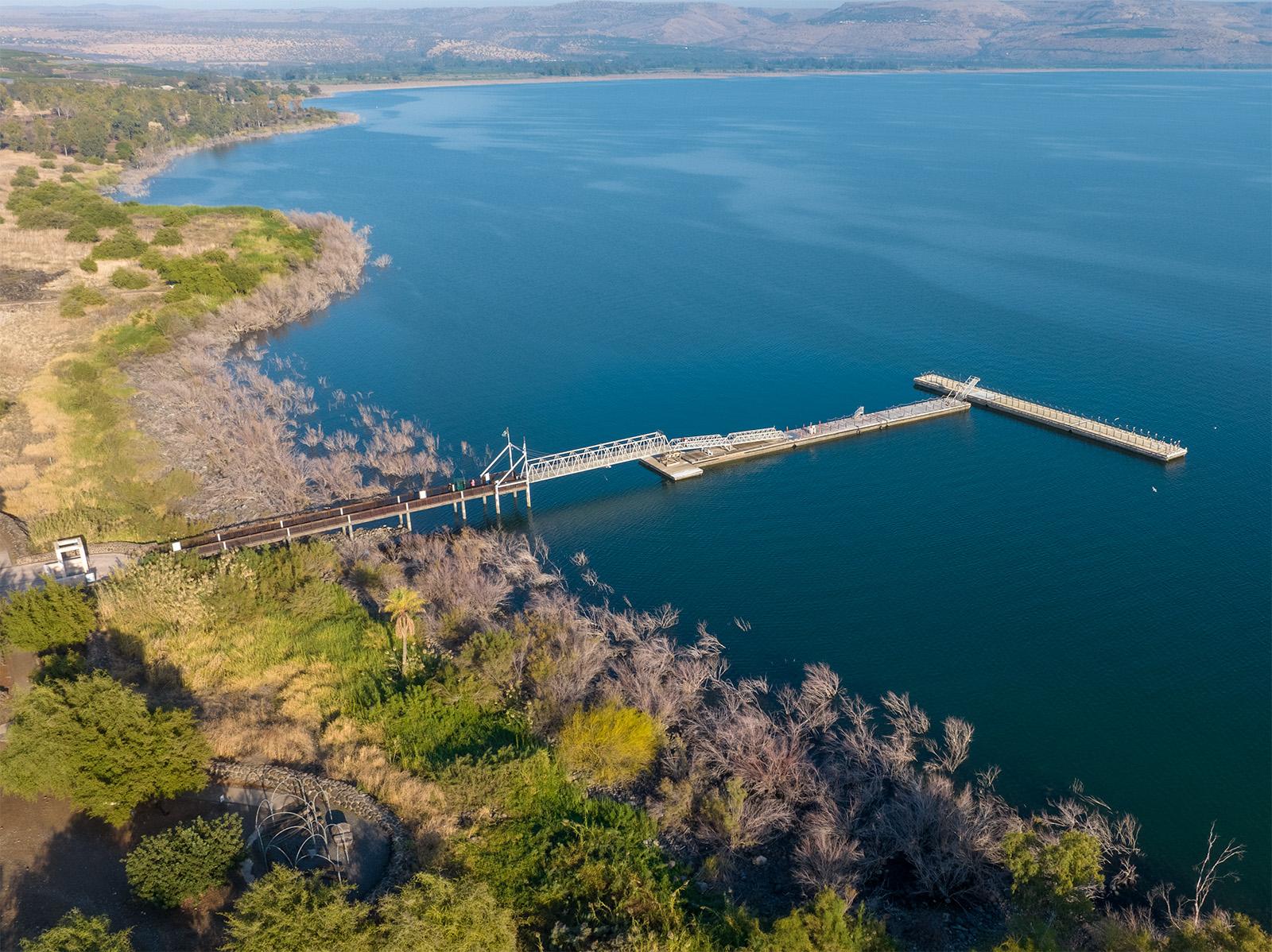
Capernaum National Park from Above. An aerial view reveals the park’s location along the northern shore of the Sea of Galilee. The landscaped grounds and shoreline provide access to the park’s pier, where tour boats arrive and depart, while a short walk connects visitors with the archaeological remains of ancient Capernaum to the west.

Capernaum National Park

Capernaum Harbor. A modern pier extends into the Sea of Galilee at Capernaum National Park, providing a landing place for tour boats traveling between Capernaum and other destinations around the lake. The pier allows visitors to approach or depart Capernaum by water, offering a modern experience that recalls the importance of boats and lake travel in Jesus’s ministry and in the daily life of ancient Capernaum.

Capernaum National Park

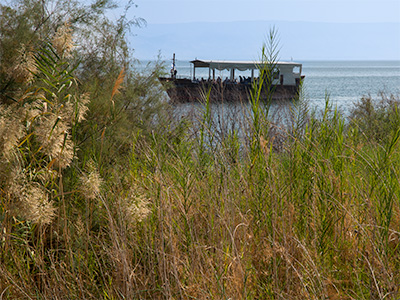
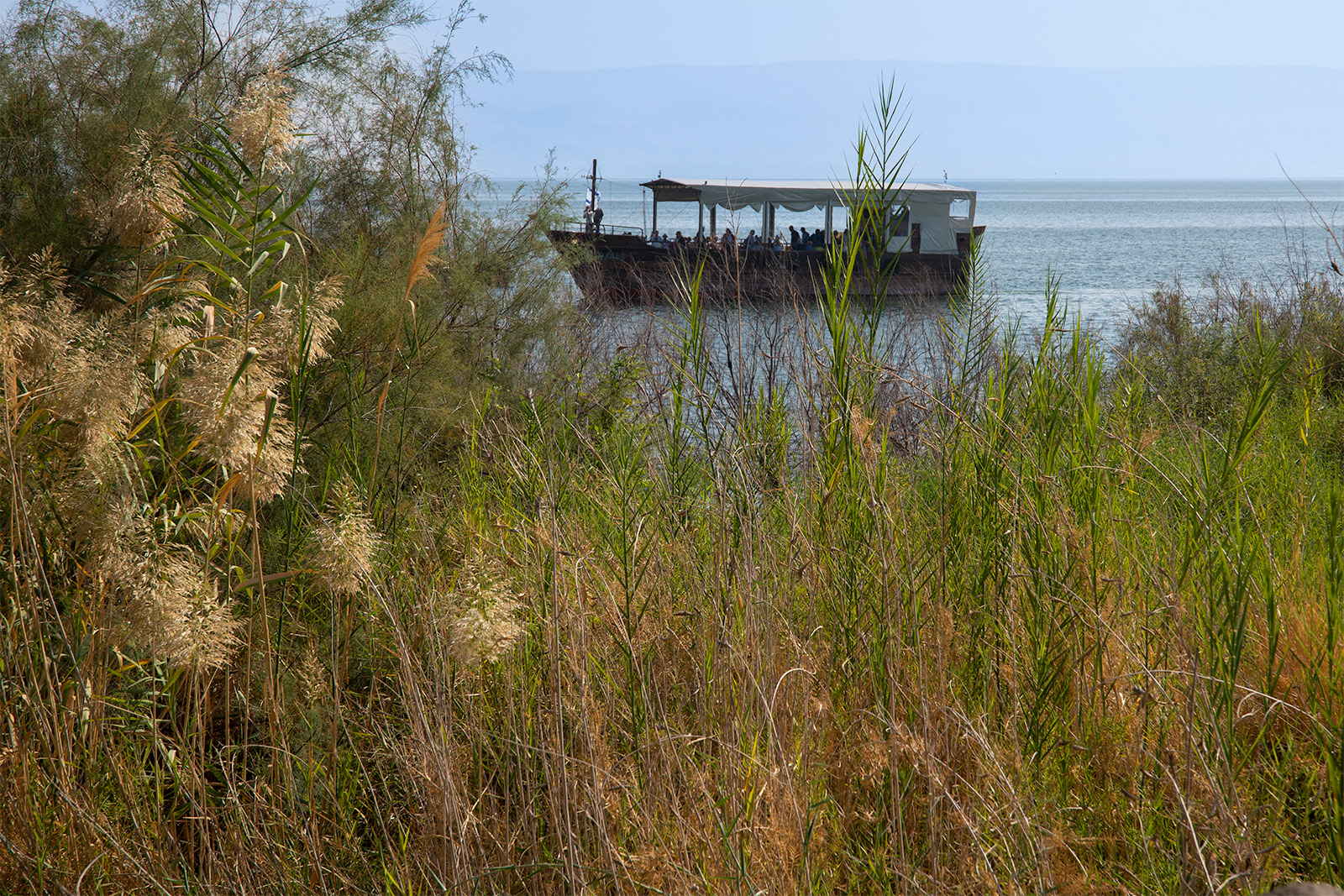
Boat on the Sea of Galilee. Seen through the reeds along the shoreline at Capernaum National Park, a modern tour boat recalls the importance of the Sea of Galilee in the life of ancient Capernaum. Fishing and travel by boat were part of everyday life here, and the Gospels frequently describe Jesus and His disciples crossing the lake as they traveled between the communities along its shores.

Capernaum National Park

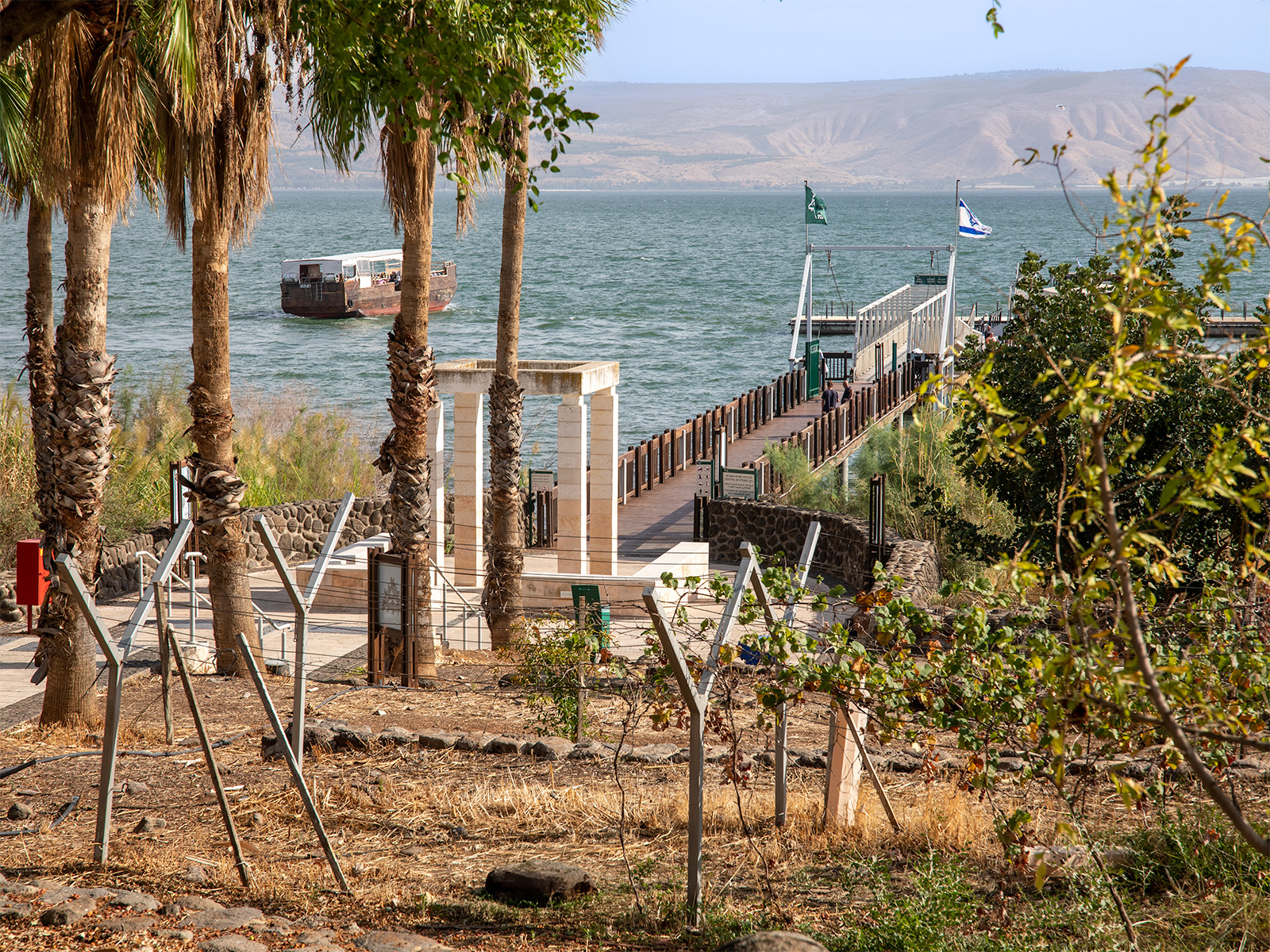
Approaching the Capernaum Dock. From the landscaped grounds of Capernaum National Park, a walkway descends toward the Sea of Galilee and the modern pier, where a tour boat waits along the shoreline. Visitors arriving or departing by boat pass through this area, making the dock a practical connection between Capernaum and other destinations around the lake.

The approach also offers a different way to experience Capernaum’s setting. As the shoreline and open water come into view, it becomes easier to appreciate how naturally the ancient town was oriented toward the Sea of Galilee. For fishermen, merchants, and travelers in the New Testament period, the lake was not simply a scenic backdrop but an important avenue of work, transportation, and communication.

Capernaum National Park

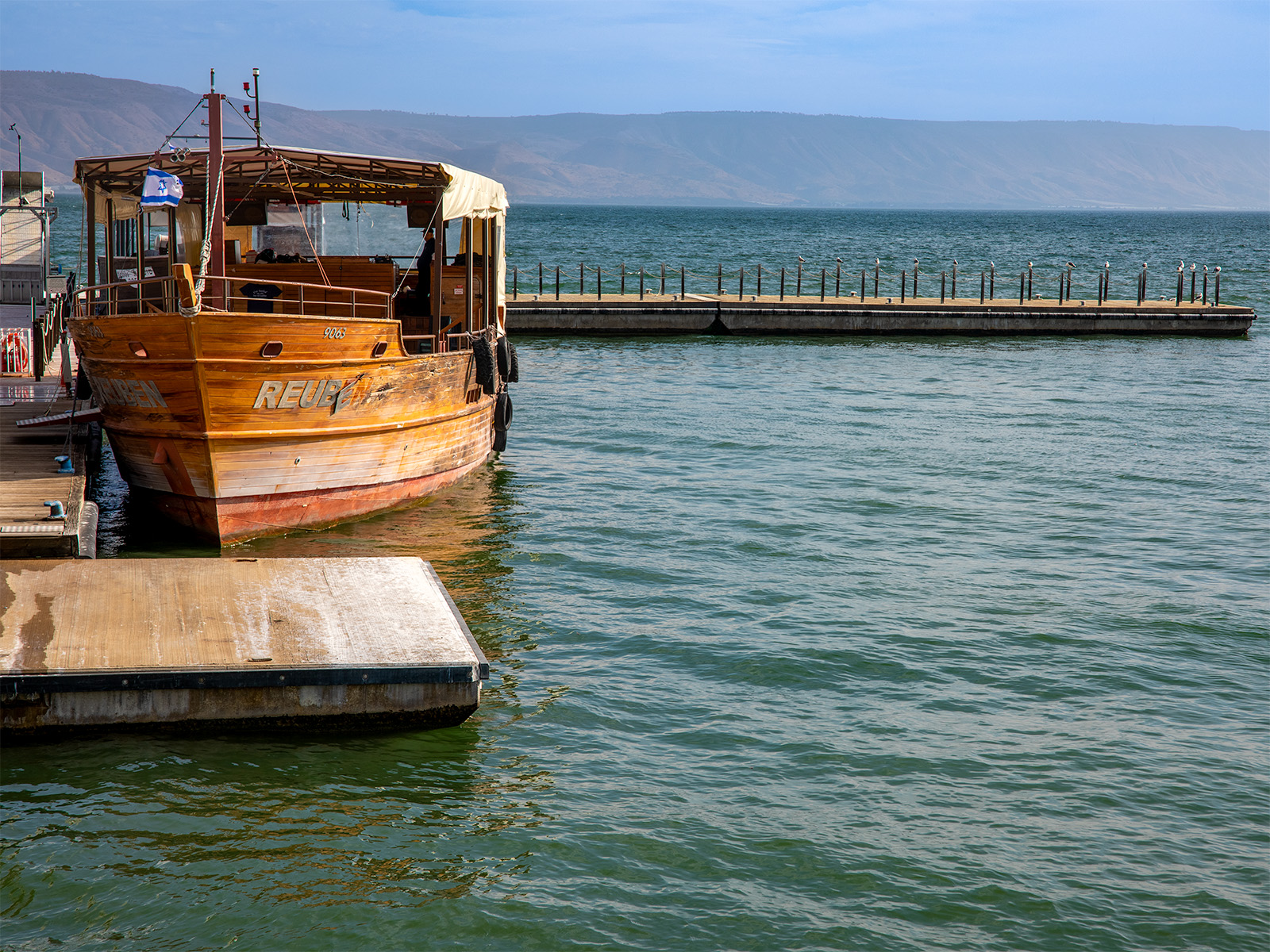
Tour Boat at Capernaum. Since this gives us our clearest view of the boat, this is where I would explain the so-called “Jesus boats”—modern wooden tour boats styled to evoke the traditional appearance of boats on the Sea of Galilee. We should be careful to distinguish these modern excursion boats from the actual first-century “Jesus Boat” preserved at the Yigal Allon Centre at Ginosar.

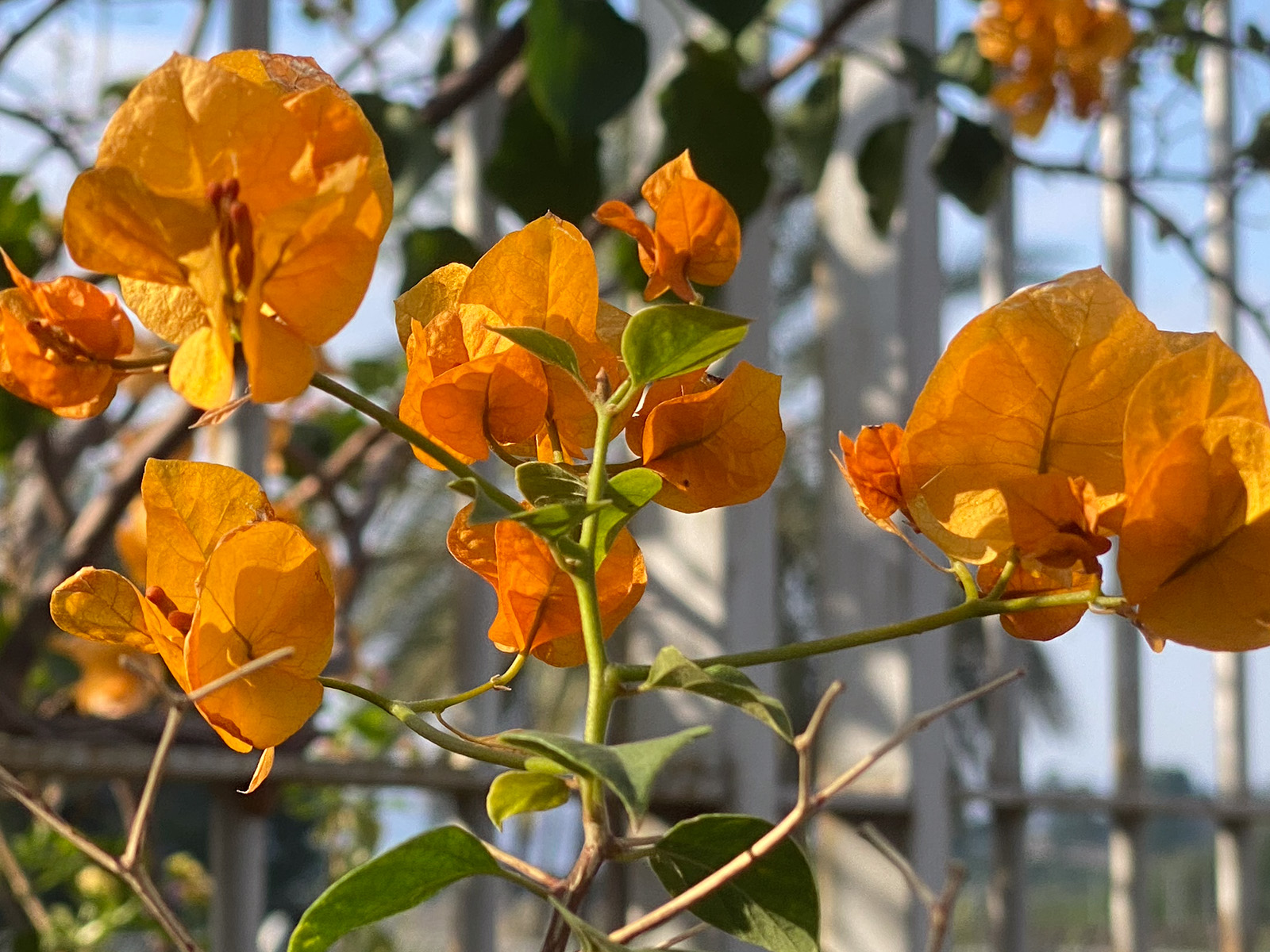
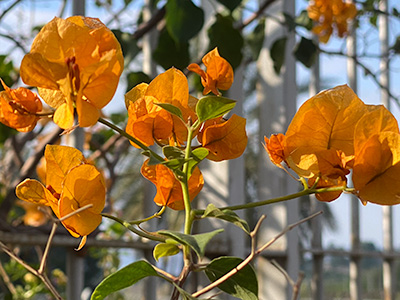
Flowers of the Field at Capernaum. Colorful flowers and flowering plants grow throughout Capernaum, adding splashes of red, orange, pink, purple, and white to the landscape. Their beauty provides a natural reminder of Jesus’s teaching delivered nearby in Galilee: “Consider the lilies of the field, how they grow; they toil not, neither do they spin” (Matt. 6:28). For visitors walking through Capernaum today, the flowers make this familiar teaching especially easy to visualize.