Scroll To Top
Scroll To Top

Cana of Galilee Photo Gallery

Click the title to view map


Site Overview

  • Jesus performed His first recorded miracle in Cana by turning water into wine during a wedding feast (John 2:1–11). This miracle revealed His divine glory and strengthened the faith of His first disciples.
  • Jesus later returned to Cana, where He healed the son of a royal official with only His spoken word. (John 4:46–54)
  • Several sites have been proposed as biblical Cana (Cana of Galilee), with modern Kefar Kanna and nearby Khirbet Qana receiving the greatest scholarly attention.
  • This gallery explores the biblical setting, historical evidence, and enduring significance of the place where Christ’s public ministry began.

Introduction

Jesus turns water into wine
Jesus Turns Water into Wine

Among the villages of Galilee, Cana occupies a unique place in the ministry of Jesus Christ. It was here, during an ordinary village wedding, that He performed His first public miracle by changing water into wine. John describes this event as "the beginning of miracles," when Jesus first manifested His glory and His disciples believed in Him (John 2:11). The miracle was more than an act of compassion for an embarrassed host. It announced that the long-awaited Messiah had arrived and that God's blessings would now be revealed through His Son.

Jesus heals nobleman's son
Jesus Heals Nobleman’s Son

The precise location of biblical Cana has been debated for many years. Most Christian pilgrims visit Kefar Kanna, a town northeast of Nazareth that has preserved a long tradition identifying itself as Cana. Many modern archaeologists, however, favor Khirbet Qana, several miles farther north, where excavations have uncovered remains from the time of Jesus along with evidence of early Christian pilgrimage. While the archaeological discussion continues, the Gospel message remains unchanged regardless of which location proves correct.

This gallery focuses primarily on the miracle itself and its setting. Along the way, we will also consider Jesus' later return to Cana, where He healed the son of a royal official by the power of His word alone. Together these two miracles reveal the Savior's authority over both creation and disease and mark Cana as one of the most significant villages in the Gospel record.

Slide Presentation

Jesus turns water into wine

Jesus heals nobleman's son

Khirbet Qana

From the eastern end of an ancient trail, this view looks westward across the valley toward the mound of Khirbet Qana, one of the leading candidates for biblical Cana. The well-traveled route linked Cana with nearby Jotapata, making it part of the network of roads that connected villages throughout Lower Galilee.

Khirbet Qana

Looking north from Khirbet Qana, the hills of Lower Galilee stretch toward the horizon. Nestled among these ridges, Cana occupied a fertile setting surrounded by vineyards, olive groves, and the network of villages that characterized Galilee in the time of Jesus.

Khirbet Qana

Seen from the slopes of nearby Mt. Turan, the mound of Khirbet Qana rises along the edge of the broad Beit Netofa Valley in the upper right. This strategic location placed the village near one of the principal east-west corridors through Lower Galilee, connecting communities across the region. The modern Arab town of Kefar Manda is visible in the upper left.

Khirbet Qana

Looking west from the summit of Khirbet Qana, the trail winds through the valley toward Jotapata. This natural corridor would have served travelers, merchants, and local residents for centuries, illustrating that Cana was not an isolated village but part of a larger Galilean landscape.

Khirbet Qana

The excavated ruins of Khirbet Qana overlook the Beit Netofa Valley, with the eastern end of Mount Turan rising in the distance. This southwest view illustrates the commanding position of the village above one of Galilee’s principal travel corridors.

Khirbet Qana

Looking west across the excavations, the western slopes of Mount Turan form the backdrop beyond the Beit Netofa Valley. In the first century, these hillsides were dotted with small Jewish villages much like those found throughout Lower Galilee today, placing Cana within a thriving network of neighboring communities rather than in isolation.

Khirbet Qana

The footpath from the modern Arab village of Kefar Manda winds through orchards and fields before climbing to Khirbet Qana. For visitors arriving on foot, this quiet trail offers an approach that echoes the agricultural landscape that has characterized Lower Galilee for thousands of years.

Khirbet Qana

The trail ends at the sunlit hill of Jotapata, visible in the upper right. Best known as the fortress where the Jewish commander Josephus made his famous stand against the Romans during the First Jewish Revolt (AD 67), Jotapata will be explored in greater detail on its own page.

Khirbet Qana

Looking east from above Khirbet Qana, the Beit Netofa Valley extends across one of Galilee’s most important natural travel routes. For centuries, merchants, pilgrims, armies, and ordinary travelers passed through this fertile corridor, making Cana far more connected to the surrounding world than its small size might suggest. The road runs to the Sea of Galilee, eventually reaching Capernaum, where Jesus established the center of His Galilean ministry.

Kefar Kanna

The Franciscan Wedding Church stands over a long Christian tradition identifying Kefar Kanna as the site of Jesus’s first miracle—the turning of water into wine (John 2:1–11). Although many scholars favor nearby Khirbet Qana, this church has welcomed pilgrims for centuries and remains one of the Holy Land’s most popular places for couples to celebrate or renew their marriage vows. On the day this photograph was taken, a wedding was being held inside the church, a reminder that the tradition continues today.

Kefar Kanna

During the Christmas season, the Franciscan church displays an elaborate nativity scene celebrating the birth of Christ. Such displays are common throughout Israel’s Christian communities, reminding visitors that the Savior who performed His first public miracle at Cana entered the world in the humble surroundings of Bethlehem.

Kefar Kanna

The dome of the Greek Orthodox Church of St. George rises above the surrounding buildings in the historic center of Kefar Kanna. Like the neighboring Franciscan church, from which this photo was taken, the Greek Orthodox tradition also identifies this village with biblical Cana and preserves its own places of worship commemorating Jesus’s miracle.

Kefar Kanna

This building serves as the local Greek Orthodox Patriarchate of Jerusalem, while the dome of the nearby Church of St. George rises behind it. Together they illustrate the close relationship between the Orthodox church complex and the traditional site of Cana in the heart of modern Kefar Kanna.

Kefar Kanna

The nearby Roman Catholic Church of the Apostle Bartholomew honors Nathanael, whom Christian tradition identifies with the Apostle Bartholomew. John’s Gospel describes Nathanael as being “of Cana in Galilee” (John 21:2), linking one of Jesus’s earliest disciples with this village.

Kefar Kanna

The main altar of the Franciscan Wedding Church centers worship on Christ’s first recorded miracle at Cana. During my visit, a wedding ceremony was being prepared, allowing the usual barriers before the sanctuary to be removed and providing this uncommon close-up view.

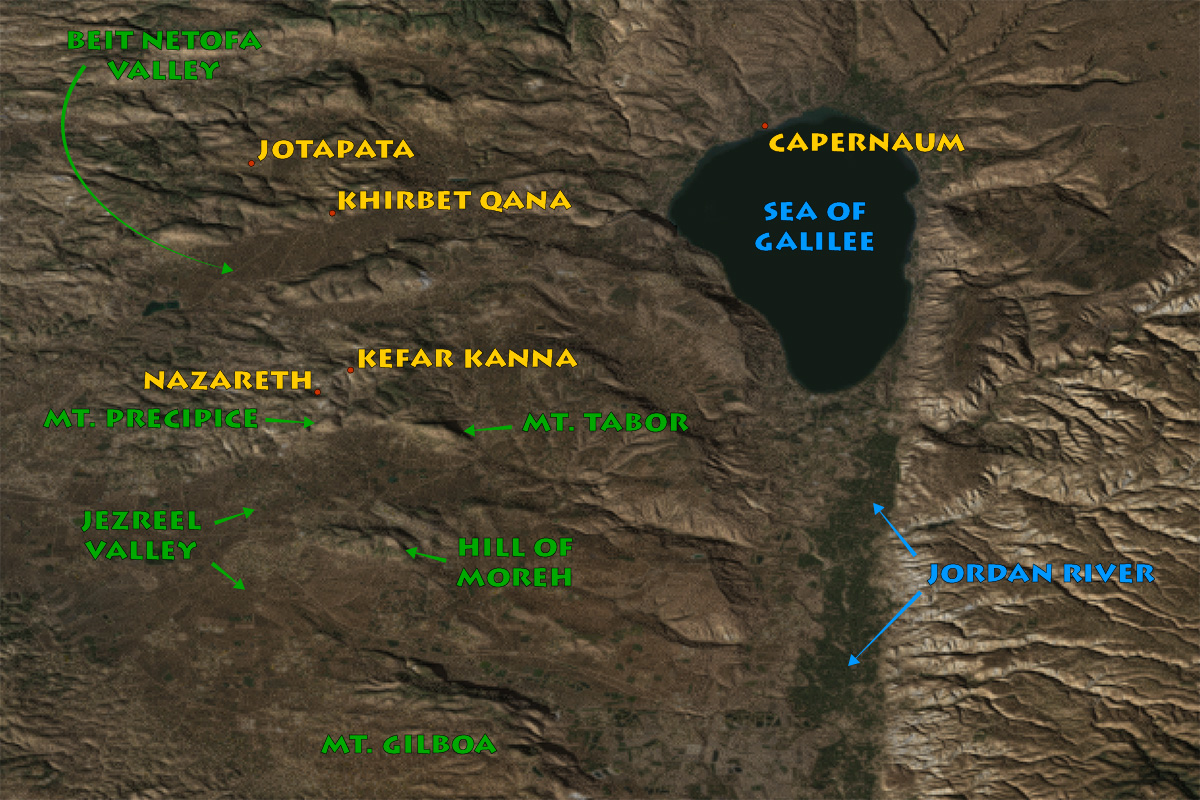
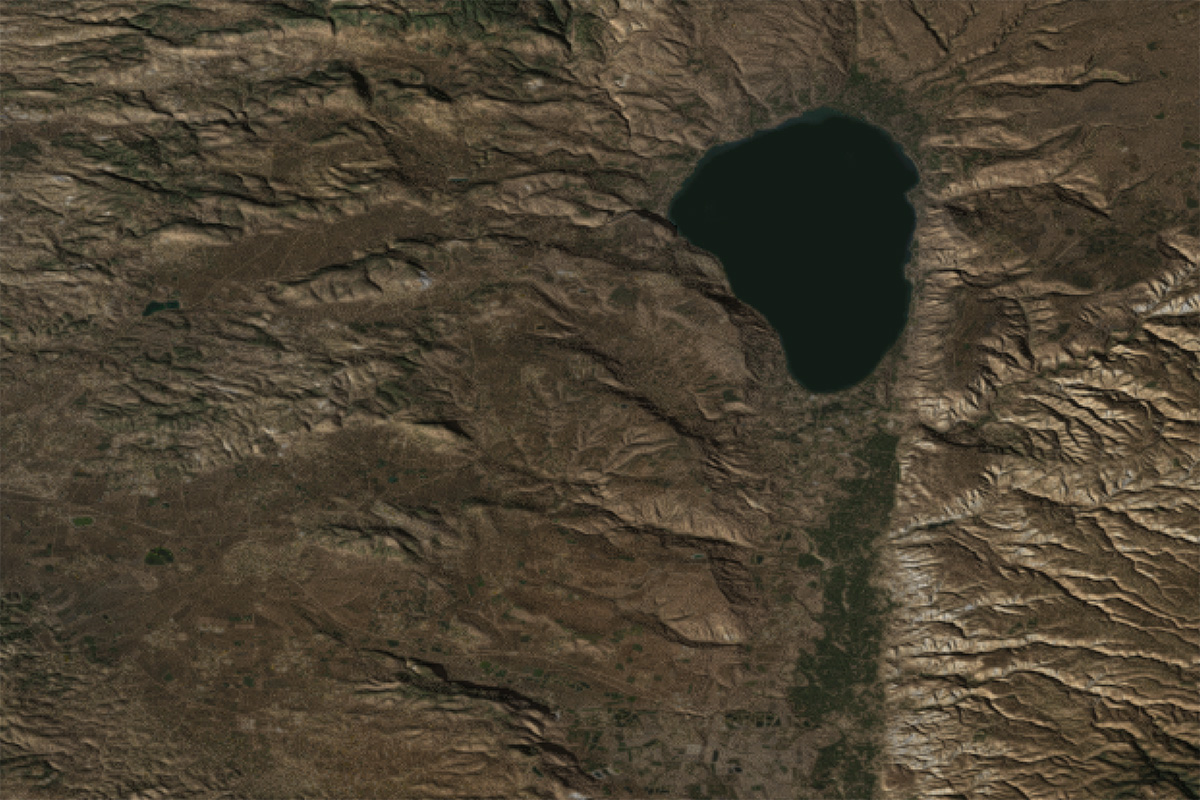
Click the map to show or hide the overlay
Ein Harod Map